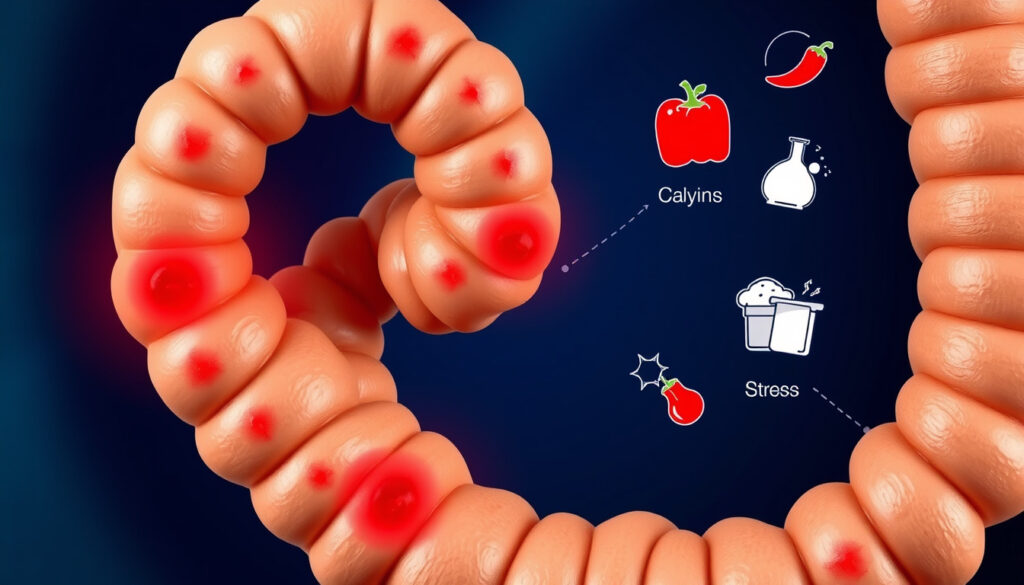
Symptoms of Crohn’s Disease: Early Signs and Triggers
When the bathroom becomes the first stop every morning, or when your energy dips after what should be a normal night’s sleep, it’s easy to dismiss it as stress or a bad meal. For the estimated 3 million Americans living with Crohn’s disease, these early signs often hide in plain sight—folded into everyday complaints that patients and even doctors overlook for months. This guide walks through what the condition actually feels like, backed by clinical sources, and flags the symptoms that tend to show up first versus those that emerge later.
Lifelong Condition: Yes ·
Peak Diagnosis Age: 15-35 years ·
Most Common Symptom: Chronic diarrhea ·
Other Frequent Signs: Abdominal pain, fatigue ·
Extraintestinal Symptoms: Joint pain, mouth sores
Quick snapshot
- Chronic diarrhea and abdominal pain are core symptoms (Cleveland Clinic)
- Weight loss of 5% body weight in 3 months signals possible Crohn’s (AARP)
- Fatigue and iron-deficiency anemia frequently appear together in women 30-45 (Ubie Health)
- Why Crohn’s develops remains under active research (Mayo Clinic)
- Precise flare triggers vary between individuals (Mayo Clinic)
- Symptoms develop gradually or suddenly; flares last days to months (St. Vincent’s Health)
- Chronic abdominal pain over 3 months is an early indicator (AARP)
- Diagnosis typically involves endoscopy, imaging, and blood work (Mayo Clinic)
- Early treatment helps manage flares and reduce complications (Mayo Clinic)
Five facts about Crohn’s, one pattern: the condition often hides in common complaints until it suddenly doesn’t.
This table summarizes key clinical parameters doctors use when evaluating potential Crohn’s disease.
| Fact | Detail |
|---|---|
| Typical Onset Age | Teens to 30s |
| Affected Areas | Anywhere in GI tract |
| Chronic Nature | Lifelong with flares |
| Cancer Risk | Slightly elevated long-term |
| Life Expectancy Impact | Near normal with management |
“Eating often worsens symptoms during a flare or active inflammation.”
— Dr. Singhania, St. Vincent’s Health
What are early warning signs of Crohn’s disease?
When Crohn’s first appears, it rarely announces itself loudly. Mayo Clinic describes the most common early symptoms as diarrhea, fever, fatigue, belly pain, blood in stool, and mouth sores. For many patients, the first signs are subtler than a textbook list would suggest—things like a creeping sense of exhaustion that doesn’t lift with rest, or an urgent need to use the bathroom that interrupts sleep.
Common early symptoms
According to Cleveland Clinic, the hallmark triad is abdominal pain, chronic diarrhea, and weight loss. These often show up together, but not always at once. Some people experience primarily fatigue and mild cramping for months before any digestive red flags appear. Crohn’s and Colitis Canada notes that symptoms vary significantly depending on which part of the digestive tract is affected.
“Your diet needs to be individualized to keep it as expansive as possible while reducing the risk of nutrient deficiencies and malnutrition.”
— Romanwell Health Blog, aggregated from 9 research studies
Patient-reported first signs
AARP reports that nighttime diarrhea is a particularly telling early warning sign—waking multiple times to use the bathroom is not normal, even occasionally. They also note that losing more than 5% of your body weight in under three months, without trying, warrants a conversation with a doctor. North Shore Gastro lists early signs including appetite loss, fever, joint pain, nausea, and even eye redness or skin bumps that seem unrelated to digestion.
Progression to full flare
St. Vincent’s Health explains that when flares hit, symptoms intensify dramatically. Patients experience intense cramping, frequent diarrhea, and sometimes rectal bleeding. These episodes can last anywhere from days to months.
Doctors often miss early Crohn’s because its symptoms look like dozens of less serious conditions. If you’ve had unexplained diarrhea and abdominal pain for more than a few weeks, pushing for a second opinion—or at minimum a blood test—can make the difference between months of suffering and an actual diagnosis.
What could be mistaken for Crohn’s?
One of the most frustrating parts of getting diagnosed with Crohn’s is that its symptoms overlap with many other conditions. Ubie Health specifically notes that Crohn’s in women is frequently misdiagnosed as IBS or endometriosis due to shared symptoms like abdominal pain, irregular bowel movements, and pelvic discomfort.
IBS and ulcerative colitis
The two most common mimics are irritable bowel syndrome and ulcerative colitis. While IBS causes similar digestive symptoms, it doesn’t produce the inflammation or intestinal damage that defines Crohn’s. Ulcerative colitis affects only the colon and rectum, whereas Crohn’s can involve any part of the digestive tract from mouth to anus. Mayo Clinic emphasizes that the two conditions require different management approaches, making accurate diagnosis essential.
Infections mimicking Crohn’s
Bacterial infections, parasitic infections, and even certain viral illnesses can cause diarrhea, cramping, and weight loss that resemble Crohn’s symptoms. These typically resolve with treatment, whereas Crohn’s is chronic and relapsing. Medical News Today notes that distinguishing between an acute infection and inflammatory bowel disease often requires specific blood tests and imaging.
Other inflammatory conditions
Celiac disease, lupus, and Behçet’s disease can all present with some of the same symptoms—particularly fatigue, joint pain, and mouth sores. Crohn’s and Colitis Canada notes that some patients have features of both Crohn’s and ulcerative colitis, which complicates diagnosis even further.
The tangled diagnostic path for women aged 30-45 means symptoms like menstrual irregularities and anemia often get treated as gynecological issues first, delaying the actual diagnosis.
The pattern: Women in this age group face an especially convoluted route to diagnosis because symptoms get attributed to stress, diet, or hormonal changes rather than investigated further.
What foods trigger Crohn’s disease?
There’s no universal Crohn’s diet, but research consistently points to certain foods that worsen symptoms for many patients. Romanwell aggregated findings from nine research studies and found fatty and greasy foods rank as the most commonly reported trigger, appearing in six of those nine studies.
High-fiber triggers
Raw fruits, raw vegetables, corn, nuts, and seeds are frequently reported as problematic. Crohn’s and Colitis Canada specifically lists corn, whole nuts, seeds, and raw vegetables as common triggers that can exacerbate symptoms. For patients with the strictures subtype of Crohn’s, these high-fiber foods can actually cause blockages, making careful food selection medically necessary.
Dairy and processed foods
Dairy products are a top trigger food, flagged in six of nine studies reviewed by Romanwell. Many patients with Crohn’s are also lactose intolerant, which compounds the issue. Ultra-processed foods—including items like biscuits, crisps, and ready meals—have been linked to increased Crohn’s risk by Crohn’s & Colitis UK, who note that the additives and poor nutritional content appear to play a role. High animal protein and processed meats also increase IBD risk, according to Crohn’s and Colitis Canada.
Lettuce and raw veggies
Raw vegetables, particularly lettuce and other leafy greens, are notorious among patients. Allied Digestive Health lists fried and greasy foods, dairy, high-fiber items, caffeine, and alcohol as common flare triggers. Colorectal Wellness Center adds processed foods, raw veggies, seeds, popcorn, and beans to their trigger list. For many patients, cooked versions of vegetables that cause problems raw are tolerated much better.
Avoiding trigger foods can feel like shrinking your world small—but the alternative, eating normally and suffering through frequent flares, shrinks it faster. Patients who identify and eliminate their personal triggers report fewer disruptions to daily life than those who try to eat normally and manage symptoms reactively.
What are symptoms of Crohn’s disease in women?
Women with Crohn’s face a distinctive set of challenges that go beyond digestive symptoms. Gastro1 outlines how the condition affects everything from menstrual cycles to bone density, creating health risks that men with Crohn’s typically don’t experience.
Gender-specific presentations
According to Ubie Health, women in their 30s and 40s commonly experience fatigue, iron-deficiency anemia, and joint pain as notable early symptoms. Gastro1 explains that anemia in women with Crohn’s stems from intestinal bleeding, poor nutrient absorption, and heavy menstrual bleeding—a triple hit that men don’t face.
Menstrual and fertility impacts
Medical News Today reports that hormonal imbalances caused by Crohn’s flares can lead to menstrual irregularities. Gastro1 adds that irregular and painful periods result from nutrient malabsorption and chronic inflammation affecting hormone regulation. Additionally, active Crohn’s inflammation can cause pain during intercourse, and the condition is associated with reduced fertility and elevated osteoporosis risk.
Weird or extraintestinal signs
Beyond digestion, Crohn’s commonly causes mouth ulcers, joint pain, eye inflammation, and skin conditions. Ubie Health notes that symptoms may worsen around menstrual cycles, suggesting hormonal fluctuations interact with disease activity. Gastro1 emphasizes that osteoporosis risk and reduced fertility are elevated in women with Crohn’s, creating health concerns that extend far beyond the digestive system.
Women need regular blood tests to monitor iron levels and prevent severe anemia complications, according to Gastro1. Iron-deficiency anemia left untreated can worsen fatigue, impair immune function, and strain the cardiovascular system.
The implication: If you’re experiencing unexplained fatigue alongside digestive symptoms, asking your doctor to check your iron levels—rather than just assuming it’s stress—could catch a treatable issue early.
How to diagnose Crohn’s disease?
Diagnosing Crohn’s typically requires a combination approach, since no single test gives a complete picture. Mayo Clinic usually starts with blood tests to check for anemia or infection, then moves to more targeted imaging and procedures.
Symptom tests and exams
Initial diagnosis often begins with stool tests to detect hidden blood or infections, blood panels to check inflammatory markers, and complete blood counts to identify anemia. North Shore Gastro notes that family history of IBD is an important factor—having a close relative with Crohn’s or ulcerative colitis significantly increases your risk and should prompt earlier investigation.
Imaging and endoscopy
Mayo Clinic typically uses colonoscopy to examine the entire colon and end of the small intestine, CT or MRI enterography to visualize bowel wall inflammation and complications like fistulas or abscesses, and capsule endoscopy where you swallow a tiny camera that takes pictures of your small intestine. These procedures can identify the characteristic patchy inflammation that distinguishes Crohn’s from other conditions.
Ruling out mimics
AARP emphasizes that anal fistulas, abscesses, or family history of IBD are strong early indicators that warrant prompt investigation. Cleveland Clinic notes that ruling out mimics like IBS, ulcerative colitis, infections, and celiac disease is essential before confirming a Crohn’s diagnosis. The process can take time, but accurate diagnosis is worth the patience.
If you’ve had persistent diarrhea, unexplained weight loss, or abdominal pain lasting more than a few weeks, don’t wait for symptoms to worsen. Early diagnosis and treatment of Crohn’s improves long-term outcomes and reduces the risk of complications like strictures, fistulas, and nutritional deficiencies.
What this means: Pushing for appropriate testing when symptoms persist—even when doctors suggest waiting—can prevent irreversible intestinal damage and improve quality of life significantly.
Related reading: Common symptoms of Crohn’s disease · Crohn’s disease symptoms and causes
gastro1.com, crohnsandcolitis.ca, northshoregastro.org, allieddigestivehealth.com, colowellness.com, medicalnewstoday.com
Frequently asked questions
What is the life expectancy of a person with Crohn’s disease?
With modern treatment and proper management, life expectancy for people with Crohn’s is nearly normal. The condition is chronic and incurable, but most patients live full lives with appropriate medical care, dietary management, and regular monitoring.
At what age is Crohn’s disease usually diagnosed?
Crohn’s is most commonly diagnosed between ages 15 and 35, though it can develop at any age. Peak diagnosis age falls in the teens to thirties range, with a growing number of cases being identified in older adults as diagnostic techniques improve.
What were your first signs of Crohn’s?
Patient-reported first signs commonly include persistent fatigue, urgent bathroom needs especially at night, unexplained weight loss, mild cramping, and loss of appetite. Some patients also report joint pain, fever, or mouth sores before digestive symptoms become prominent.
What is the root cause of Crohn’s disease?
The exact cause remains unknown, but research suggests a combination of genetic predisposition, immune system dysfunction, environmental factors including diet and microbiome, and possibly bacterial or viral triggers. Mayo Clinic notes that family history significantly increases risk.
What causes Crohn’s disease?
Doctors believe Crohn’s results from an abnormal immune response where the body attacks harmless bacteria in the digestive tract, combined with genetic susceptibility and environmental triggers. Factors like smoking, high-fat diets, processed foods, and certain medications may increase risk or trigger flares.
Can Crohn’s disease kill you?
Crohn’s itself is rarely fatal directly, but complications like severe infection, bowel perforation, or colorectal cancer can be serious. With proper management and regular monitoring, most people with Crohn’s live normal or near-normal lifespans.
Is Crohn’s disease cancer?
No, Crohn’s disease is not cancer. It’s an inflammatory bowel disease where the immune system attacks the digestive tract. However, long-standing Crohn’s affecting the colon does carry a slightly elevated colorectal cancer risk, which is why regular surveillance colonoscopies are recommended for some patients.
Why can’t you eat lettuce with Crohn’s?
Lettuce and other raw leafy greens are difficult to digest and can irritate an already inflamed intestinal lining. Many patients find that raw vegetables worsen cramping and diarrhea during flares. Cooking lettuce and other greens often makes them tolerable, though some patients still avoid them regardless of preparation method.
For anyone experiencing persistent digestive symptoms, the message is clear: keep a symptom journal, push for appropriate testing, and don’t dismiss ongoing fatigue, bathroom urgency, or unexplained weight changes as stress or poor diet. Catching Crohn’s early changes the trajectory of the disease.
More related posts
 iPhone 17 Pro Max Colors: All 3 Finishes Compared
 Tan-Luxe Face Drops: How to Use for a Natural Glow
 Trinity College Cambridge: Admi ion , Pre tige, and Vi iting
 What Foods Are High in Fibre? Top Sources & Daily Needs
 Small Town, Big Story Review: Worth Watching in 2025
 Pat Kenny Signs Off: Weekday Show Ends, Weekend Role Begins
 Rainbow Six Siege X: Year 11 Rebrand and Free Access
 Du Plessis vs Chimaev: UFC 319 Winner, Scorecard & Stats