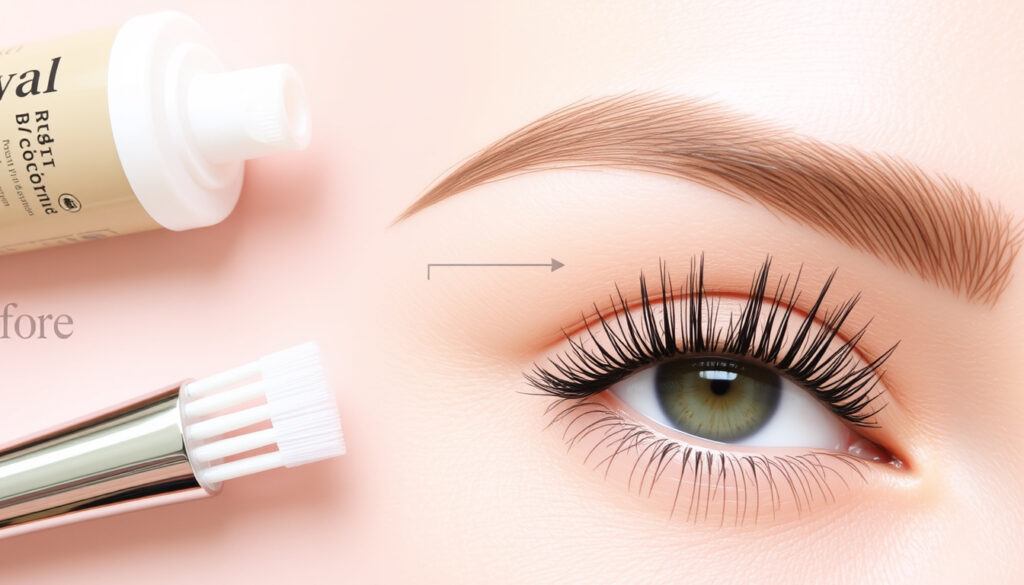
What Is Brow Lamination? Process, Cost, Risks
If you’ve stared at a row of brow lamination before-and-after photos and found yourself wondering whether this is the fluffy-brow fix you’ve been looking for, you’re not alone. This procedure promises effortless, brushed-up brows for weeks, but comes with trade-offs that aren’t always shown in the highlight reel.
Key Facts at a Glance
- Brow lamination is a chemical perm that sets existing hairs upward for a fluffier look.
- Microblading is a form of tattoo that creates hair-like strokes with pigment.
- Each carries a very different maintenance schedule, cost, and risk profile.
- Average session: 45–60 minutes, in the same price range as most beauty services.
- Results last 4–8 weeks, meaning touch-ups are needed every month or two.
- Maintenance sessions (every 4-6 weeks) cost the same as initial treatment.
- Because the skin isn’t pierced, infection risk is generally lower than microblading.
- The leading concerns are chemical irritation — redness, swelling, peeling, itching.
- Damage to the hair shaft itself is possible if the formula is left on too long or applied incorrectly.
- 2026 brow trends lean toward natural, fluffy brows with soft definition — lamination fits this.
- Yet no single procedure is universally “most natural”; it depends on your starting brow and the outcome you want.
- Live demonstrations and seasonal campaigns have pushed lamination into the spotlight as a quick lift rather than a long-term commitment.
Is brow lamination better than microblading?
The most common mix-up is treating brow lamination and microblading as if they’re two routes to the same destination. They aren’t. Brow lamination is a chemical process that sets the hairs you already have into a lifted, brushed-up position. All About Vision (eye care and beauty education resource) explains that lamination uses no needles or tattoos, so it does not puncture the skin — which is why it typically carries less infection risk than microblading.
Microblading, on the other hand, is a semi-permanent pigmentation technique. A technician uses a fine blade to deposit pigment into the upper layers of the skin, creating fine strokes that mimic real brow hairs. Healthline (medical and wellness information platform) notes that this method is better suited for people who have sparse brows and want to build fullness and definition rather than simply styling what’s already there.
The practical divide is what you’re actually solving for: lamination is a styling treatment for existing hair, while microblading is a cosmetic tattoo that alters the shape and volume of the brow area. If you have thick, unruly brow hairs that won’t stay in place, lamination addresses that. If you have thin gaps or no tail hairs, microblading gives you structure.
How much do laminated brows cost?
Pricing for brow lamination is one of the first things people look for, and it’s surprisingly consistent across the industry. A formal eyebrow lamination appointment typically runs between $50 and $150 per session, according to Healthline. That price usually includes the lamination itself, a neutralizer, and a conditioning treatment. Some salons pair it with brow tinting for an additional $25–$50, which makes the fluff look fuller but increases the total cost.
The real budget catch is frequency. Lamination results last roughly 4–8 weeks, and the brows gradually relax back to their original direction. Hello Bailey (brow and beauty studio resource) notes that most clients rebook every six to eight weeks to maintain the lift. That means a year of lamination adds up to about six to eight sessions — a total of $300 to $1,200 annually, depending on your city and salon.
| Cost Consideration | Brow Lamination | Microblading |
|---|---|---|
| Initial session | $50–$150 | $400–$800 |
| Touch-up frequency | Every 4–6 weeks | Every 12–18 months |
| Long-term yearly cost (est.) | $300–$1,200 | $300–$600 average |
| Pain level | Low (tingling sensation) | Moderate (needling sensation) |
What this means for most people: lamination looks cheaper upfront, but the repeat visits even it out over a year. Microblading demands a higher initial outlay but buys you a much longer stretch before you need a refresh.
What the Touch-Up Schedule Really Looks Like
If you’re considering lamination, the ongoing commitment is where most people underestimate the demand. The procedure itself is quick — a session lasts between 45 and 60 minutes, and the results are immediately visible once the neutralizer is applied. Studio expert at Nourish + Gel (specialist beauty studio) notes that the immediate effect is a lifted, slightly glossed appearance that settles as the brow hairs relax over the following days.
However, the effect is not permanent. All About Vision says the lifted shape typically lasts four to six weeks, after which the hairs start to return to their natural growth direction. The process of regrowth means there is no “fade” like microblading; instead, the brow slowly loses its structured shape and becomes flatter.
There’s also an awkward phase in the weeks after the treatment. Healthline cautions that as the lamination wears off, the brows may appear bent, creased, or less orderly — particularly in the area where the hairs have started to grow out in their natural pattern. The standard advice is to book a maintenance session before that phase fully sets in, usually every four to five weeks for the first few cycles.
The ongoing cycle is manageable but not “set it and forget it.” You’re committing to a recurring appointment, and each visit costs the same as the first one. Frame Lash Studio (brow and lash specialist) notes that maintenance sessions are typically priced identically to initial treatments, so there’s no discount for being a repeat client, at least at the standard studio level.
Lamination After 50: What Changes
Does brow lamination make brows thicker?
Lamination doesn’t add new hairs; it coats existing hairs to appear thicker and smoother. The effect is purely structural — the lifted, brushed-up position makes each hair more visible, creating the illusion of density. For those with already full brows, this can look significantly thicker. For sparse brows, the same treatment may highlight the gaps.
Age is a bigger factor than most brow-lamination articles acknowledge, especially when the conversation shifts to “most natural” results. As we get older, brow hairs become coarser, sparser, or increasingly unruly — and the texture change can affect how well lamination performs.
Healthline notes that brow lamination works best on hair that has some length and density, because the chemical lift needs enough hair to “grip” and reshape. On very sparse or fine brows, the laminated look can be all curl and no substance, which reads as unnatural rather than fluffy. This is often more pronounced for women over 50, where natural brow hair may have thinned with age.
The alternative that delivers more consistent “natural” results in mature brows is a hybrid approach: lamination plus tinting, or combining lamination with a light brow pencil. Hello Bailey suggests that for older clients with less brow density, lamination on its own can appear too sparse — but pairing it with a soft tint gives the illusion of fuller hairs without committing to the permanence of microblading.
There’s also a longer-term concern that isn’t well studied yet. Healthline points out that the long-term effect of repeated lamination on hair follicle health is not well studied, particularly when the treatment is done every four to six weeks over several years. The lack of longitudinal data means that for older clients — who may already have more fragile hair — caution is warranted, even if immediate results look good.
What are the downsides of brow lamination?
Who shouldn’t do brow lamination?
People with skin conditions such as eczema, psoriasis, or active dermatitis near the brows are typically advised against it. Pregnant or breastfeeding women should also exercise caution due to limited safety data. A patch test is strongly recommended before the full treatment for anyone with sensitive skin or known allergies to cosmetic products.
What if I hate my brow lamination?
If you dislike the result, you have two main options: wash the brows more frequently to speed up the chemical breakdown, or simply wait for the natural regrowth cycle (4–8 weeks) as the hairs return to their original direction. There is no immediate reversal method.
Do brows go back to normal after lamination?
Yes — brows generally return to their original state after the treatment wears off, usually within 4–8 weeks. However, repeated lamination may cause cumulative damage to the hair shaft, so the texture could change over time.
Because brow lamination involves chemically restructuring the hair, the biggest risk category is irritation — not infection. All About Vision details the typical side effects: swelling, redness, peeling, itching, and a burning sensation that can occur both during the treatment and in the days following. These reactions are usually linked to the chemical solution used to break down the hair’s bonds, and they’re more likely if you have sensitive skin or a known allergy to cosmetic products.
The risk is slightly different than microblading. Since lamination does not break the skin, the infection risk is lower — All About Vision confirms that the lack of needles or tattoos removes the primary entry point for bacteria. Microblading, by contrast, involves creating micro-wounds, and Healthline says the primary risks include infection, pigment migration, and scarring if the procedure is done improperly.
There is also the possibility that lamination damages the hair shaft itself. Healthline warns that over-processing — leaving the solution on too long, applying it to already damaged hairs, or using a formula too strong for your hair type — can leave the brows dry, brittle, or more prone to snapping. This is the one downside that appears repeatedly in professional forums but has limited formal clinical documentation.
The practical takeaway: lamination is a chemical procedure, not a simple styling gel. Patch tests and technician skill matter, and the “natural” label on marketing materials doesn’t erase the risk of a reaction.
Upsides of Brow Lamination
- Low upfront cost ($50–$150)
- Quick procedure (45–60 minutes)
- No needles, no broken skin
- Low pain (tingling sensation)
- No infection risk from piercing
- Immediate visible results
Downsides of Brow Lamination
- Monthly upkeep required (every 4–6 weeks)
- Chemical irritation risk (redness, swelling, itching)
- Potential hair shaft damage with over-processing
- Not effective on very sparse brows
- No permanent correction for shape
- Requires patch test for sensitive skin
Lamination vs. Microblading: A Side-by-Side Check
If you’re torn between the two, the decision usually comes down to what you’re willing to maintain and how you feel about needles. Lamination is a no-piercing, chemical-only treatment that restyles existing hair for 4–8 weeks. Microblading is a pigment-implanting procedure that creates semi-permanent strokes lasting a year or more.
| Factor | Brow Lamination | Microblading |
|---|---|---|
| What it does | Sets hairs into a raised, fluffy shape using a chemical relaxer | Implants pigment into the skin with fine blade strokes |
| Best for | Full, textured brows that need styling and hold | Sparse or patchy brows that need added shape and volume |
| Results last | 4–8 weeks | 12–18 months (with touch-ups) |
| Recovery/aftercare | 24 hours dry, no makeup on brows, no sweating | Healing period of 7–14 days with dry care, no makeup, no swimming |
| Infection risk | Lower — no broken skin | Higher — surface wounds fully exposed to bacteria |
| Chemical irritation risk | Higher — solution directly touches skin and hair | Lower — minimal chemical exposure on the surface |
| Pain | Low (tingling sensation) | Moderate (needling, numbing cream applied) |
The choice isn’t about which is “better” — it’s about which matches your brow concerns. If your eyebrows are already fairly dense and you’re frustrated that they won’t behave, lamination is the low-stakes styling solution. If your brows are thin, uneven, or barely there, microblading provides structure that lamination can’t.
Confirming What’s Fact vs. What’s Still Open
What the Evidence Supports
- Brow lamination does not pierce the skin, so infection risk is generally lower than microblading. All About Vision (eye care and cosmetic treatment resource)
- Chemical irritation — swelling, redness, itching, peeling — is the most cited downside risk. Healthline (medical and wellness information platform)
- Lamination results typically last between four and eight weeks. Healthline
- The long-term effect of repeated lamination on hair follicle health is not well studied. Healthline (evidence gap flagged)
- Maintenance sessions cost the same as the initial treatment and are generally needed every four to six weeks. Frame Lash Studio (brow styling and lash extension specialist)
What Is Still Under-Researched or Depends on Context
- Whether lamination is universally more “natural-looking” than microblading depends heavily on the client’s starting brow density, hair texture, and desired finish — no single procedure is objectively most natural for everyone.
- The specific ingredients in lamination solutions and their long-term cumulative effects have not been evaluated in formal clinical trials that are publicly available.
- Regrowth experiences after 50 are under-documented; most case evidence comes from salon professionals rather than controlled studies.
- Whether lamination can cause cumulative hair shaft damage over many sessions is not well documented in clinical literature.
- Whether maintenance sessions are always priced identically to initial treatments may vary by studio — most sources report standard pricing, but some salons may offer discounts.
Quotes From the Field
Lamination enhances existing brow hairs, creating a natural look. Microblading, by contrast, creates the appearance of hair strokes on the skin for a more dramatic, permanent effect.
Dr. Danielle S. (dermatologist, via Healthline)
Natural-looking results depend on the client’s natural brow hair. If you have very thin hair, lamination alone may look flat after a few days instead of picking up the fluff — a tint makes the difference.
Brow artist at Hello Bailey (brow and beauty studio)
There’s a misconception that lamination is “just a treatment.” In reality, the technique permanently alters the hair’s physical structure, and over-processing can dry out the brow hairs with repeated appointments.
Studio technician at Frame Lash Studio (brow lamination specialist)
What is the trend for eyebrows in 2026?
2026 eyebrow trends lean toward natural, fluffy brows with soft definition — lamination fits this. However, no single procedure is universally “most natural”; it depends on your starting brow and the outcome you want. Live demonstrations and seasonal campaigns have pushed lamination into the spotlight as a quick lift rather than a long-term commitment.
The honest summary isn’t about which method is “better” or more “natural” — it’s about matching the procedure to your specific brow situation and your willingness to maintain it. Lamination offers a quick, pain-free styling boost that lifts and fluffs what you already have, but it demands monthly upkeep and carries a chemical irritation risk you should be aware of going in. Microblading gives you structure and longevity, but it costs more upfront, requires a longer healing window, and has a different risk profile (infection, pigment migration, scarring). For 2026, the trend toward soft, natural-looking brows favors lamination, but only if you have the density for it to work — and if you’re prepared to book a refresh every few weeks. The most natural-looking choice in any year is the one that starts from your actual brow, not a trend.
symetriestudiospa.com, timelessmedspanj.com, costnotes.com, lashandbrowstudios.com, thatdarnhair.com, houseofeyebrows.com, medicalnewstoday.com, salonsrated.com
Frequently Asked Questions
How long does brow lamination last?
Brow lamination usually lasts between four and eight weeks. The lifted effect gradually relaxes as your hairs return to their natural growth direction, and most clients book a touch-up every six weeks to maintain the fluff.
Is brow lamination painful?
No — most people report a low, tingling sensation when the chemical solution is applied. It doesn’t hurt like microblading, since no needles or incisions are involved.
Can brow lamination damage my natural eyebrow hairs?
There is a risk of damage if the solution is left on too long or applied to brittle, already-damaged hairs. Over-processing can leave brows looking dry or more prone to breakage. The long-term effects of repeated lamination on follicle health are not well studied.
What is more natural looking: brow lamination or microblading?
It depends on your starting point. Lamination enhances your existing hairs and can look very natural if you already have full, textured brows. Microblading creates new strokes and can look natural if you need to fill in sparse areas — but the result relies heavily on the technician’s skill.
How much does brow lamination cost?
Brow lamination typically costs between $50 and $150 per session. Maintenance visits every four to six weeks are usually priced the same as the initial treatment.
Can I get brow lamination if I’m over 50?
Yes, but results depend on the density and texture of your brow hairs. As brow hair thins with age, lamination alone can look sparse or more brittle; adding a tint or using a brow pencil alongside it often produces a more natural-looking finish.
Is brow lamination safe for sensitive skin?
There is a higher risk of chemical irritation if you have sensitive skin or known allergies to cosmetic products. A patch test before the full treatment is strongly recommended, and you should avoid lamination if you have active eczema, dermatitis, or broken skin near the brows.
More related posts
 Express Red Car Park Dublin Airport: Prices, Shuttle & Booking
 Red Cow Park and Ride: Tariffs, Payment, Capacity & Tips
 Storm Dave Ireland: Met Éireann’s Status Yellow Wind Warning
 Houses for Sale in Lusk: Current Listings & Market Insights
 Maximum Dose of Ozempic for Weight Loss: 2 mg Guide
 3/4 Inch in mm – Exact Conversion 19.05 mm
 What Is a Seating Chart – Templates, Tips for Weddings and Classrooms
 Conor McGregor Dick Pic: Azealia Banks Allegation and What We Know