Bourton-on-the-Water: Is It Worth Visiting? Complete Guide
Bourton-on-the-Water draws over two million visitors annually for its honey-coloured stone and five low bridges over the River Windrush, but its popularity comes with crowding that can dim the charm. This guide cuts through the postcard images to give you the practical pros, cons, and things to do.
Population: 3,200 (approx) ·
Distance from London: 80 miles (130 km) ·
Stone Bridges: 5 ·
Model Village: 1:9 scale ·
Annual Visitors: Over 2 million
Quick snapshot
- Located in Gloucestershire, England (Wikipedia (encyclopedia))
- River Windrush flows through the centre (Cotswolds Tourism (official tourism body))
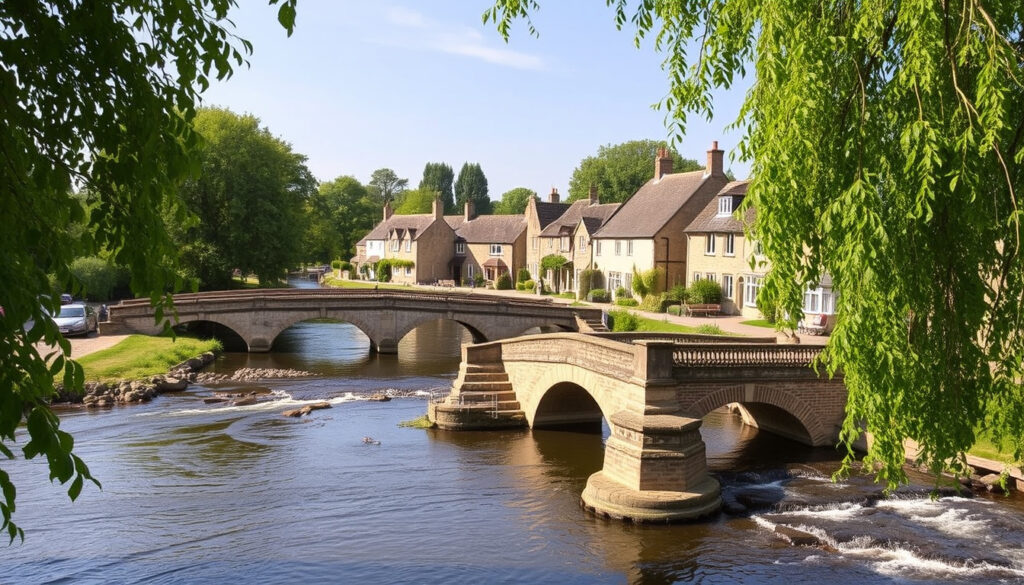
- Five low stone bridges cross the river (Cotswolds Tourism) (Wikipedia (encyclopedia))
- The Cotswold Motoring Museum is located in an old water mill (Cotswolds Tourism) (Wikipedia (encyclopedia))
- Exact annual visitor count (estimates range from 2–3 million; no official figure) (Bon Traveler (travel blog))
- Precise location of Hugh Grant’s residence (undisclosed) (Tucked Away (lifestyle blog))
- Which celebrities currently live in the village (privacy) (Tucked Away) (Bon Traveler (travel blog))
- Exact population figure (3,200 is approximate) (Tucked Away) (Bon Traveler (travel blog))
- Exact opening date of the Model Village (1937 from Wikipedia, but no primary source) (Wikipedia) (Bon Traveler (travel blog))
- 1086 – Bourton recorded in the Domesday Book (Wikipedia (encyclopedia))
- 1937 – Model Village opened (Wikipedia (encyclopedia))
- 1950s – Tourism boom begins (Wikipedia (encyclopedia))
- 1998 – The Parent Trap filmed here (Wikipedia (encyclopedia))
- (Sources: Wikipedia (encyclopedia), Cotswolds Tourism (official tourism body))
- Visitors are advised to come during weekdays and off-peak seasons to avoid crowds (Goats on the Road (travel blog))
- Staying until golden hour gives better photos and a quieter atmosphere (Tucked Away) (Goats on the Road (travel blog))
Seven key facts that define this Cotswold village at a glance.
| Attribute | Value |
|---|---|
| County | Gloucestershire |
| Population | 3,200 (approx) |
| River | River Windrush |
| Stone bridges | 5 |
| Famous for | Model Village, low bridges |
| Distance from London | 80 miles (130 km) |
| Postcode | GL54 2 |
Is Bourton on the Water worth visiting?
Pros of visiting Bourton-on-the-Water
- Compact, walkable layout — all major sights are within a 10-minute stroll (Cotswolds Tourism)
- Unique attractions like the Model Village and Cotswold Motoring Museum (Cotswolds Tourism)
- Family-friendly: Birdland Park & Gardens, Dragonfly Maze, and river walks (Tucked Away)
- Free riverside walking and picnic spots (Goats on the Road)
Cons of visiting Bourton-on-the-Water
- Overcrowding on weekends and bank holidays (Bon Traveler)
- Parking can be difficult and expensive at peak times (Tucked Away)
- Some visitors find the village feels more like a tourist attraction than a real community (Tripadvisor UK (review platform))
- Limited nightlife and dining options for evening stays (Goats on the Road)
Alternatives to Bourton-on-the-Water
If you’re after a quieter Cotswold experience, consider Stow-on-the-Wold (a market town with historic inns), Upper Slaughter (a tiny, peaceful hamlet), or Chipping Campden (wide high street and beautiful almshouses). For a direct comparison, see the table below.
Bourton offers the most concentrated dose of Cotswold charm in a single afternoon — but that concentration also means you’ll share it with hundreds of others. For families with young children, the convenience outweighs the crowds. For solo travellers seeking quiet, a weekday visit or an alternative village works better.
The implication: Bourton-on-the-Water is worth visiting if you go in with clear eyes about the crowds. The real value is in its density — you can see the Model Village, stroll the river, visit the motoring museum, and grab lunch all within a few hours.
What is Bourton-on-the-Water famous for?
The Model Village
Opened in 1937, the Model Village is a 1:9 scale replica of Bourton itself, built from the same honey-coloured Cotswold stone. It’s one of the most photographed attractions in the region (The Old New Inn (local accommodation provider)).
The River Windrush and its stone bridges
The River Windrush runs through the village centre, crossed by five low-arched stone bridges that earned Bourton the nickname “Venice of the Cotswolds” (Cotswolds Tourism).
The Cotswold Motoring Museum
Housed in a former water mill, the museum holds a collection of vintage cars, motorcycles, and automotive memorabilia. It’s a key stop for families and car enthusiasts (Cotswolds Tourism).
Bourton-on-the-Water’s architecture
Rows of honey-coloured stone cottages built in the traditional Cotswold style line the main street. Many date from the 17th and 18th centuries, giving the village a consistent, picture-perfect look (Wikipedia).
The village’s fame rests on three things: a river that runs through the middle, a scaled-down version of itself, and a palette of local stone that no paint can replicate. That combination is rare, and it’s why Bourton appears on so many “most beautiful villages” lists — but it’s also why it’s always busy.
The pattern: Bourton’s appeal is not a single headline attraction but a walkable collection of experiences — the river, the model village, the motoring museum, and the stone architecture — all within a few hundred metres.
How much time do you need in Bourton-on-the-Water?
One-day itinerary
A common full-day plan: start with a riverside walk, visit the Model Village (allow 45 minutes), explore the Cotswold Motoring Museum (1 hour), have lunch at a riverside café, then spend the afternoon at Birdland Park & Gardens or the Dragonfly Maze (Goats on the Road).
Half-day visit
If you’re short on time, you can cover the river walk, the Model Village, and a quick stop at the bakery within 2–3 hours. Many visitors combine Bourton with a morning at Stow-on-the-Wold and an afternoon at The Slaughters (Tucked Away).
Extended stay options
Overnight stays let you experience the village after the day-trippers leave. Golden hour lighting is ideal for photography, and evening walks along the river are much quieter. Several hotels and B&Bs are within walking distance of the centre (Tucked Away).
Most visitors spend 2–4 hours and feel they’ve seen the highlights. But if you’re hoping for a relaxed pace — a proper lunch, a visit to both museums, and a walk to Greystones Farm — you’ll need a full day. The village is compact, but the queues at the Model Village and parking stress can eat into your time.
What this means: plan for at least half a day, but a full day gives you the breathing room to enjoy Bourton without rushing. If you’re using it as a base for other Cotswold villages, two nights is comfortable.
What films were filmed in Bourton-on-the-Water?
Notable film productions
- The Parent Trap (1998) — The 1998 Disney remake used Bourton-on-the-Water as a location for scenes set in the English countryside. The village’s green and river are recognisable in the film (Cotswolds Tourism).
- Various TV series — The BBC series The Vicar of Dibley filmed some scenes in the village, and Bourton has appeared in travel documentaries and period dramas (Wikipedia).
TV series and documentaries
Bourton’s photogenic stone bridges and cottages make it a regular backdrop for travel shows and magazine features. It has been featured on BBC’s Countryfile and in several ITV travel segments (Cotswolds Tourism).
Film buffs will enjoy spotting the village in The Parent Trap, but for most visitors the film connection is a trivia note rather than a major draw. The real star is the village itself, not the screen credits.
The trade-off: the film locations add a layer of pop-culture interest, but they don’t change the practical reality — Bourton is crowded because it’s beautiful, not because it’s famous.
Where is the best village to stay in the Cotswolds?
Bourton-on-the-Water as a base
Bourton offers the widest range of accommodation of any Cotswold village: hotels like the Chester House Hotel and The Dial House Hotel, plus dozens of B&Bs and self-catering cottages. Its central location makes it convenient for day trips to Stow-on-the-Wold, Moreton-in-Marsh, and The Slaughters (Cotswolds Tourism).
Other recommended villages for accommodation
- Stow-on-the-Wold — Historic market square, good pubs, and less crowded than Bourton (Tucked Away)
- Chipping Campden — Wide high street, beautiful architecture, and a quieter feel (Goats on the Road)
- Broadway — Larger village with a mix of shops and galleries, fewer families (Goats on the Road)
Factors to consider when choosing
- Proximity to dining and attractions (Bourton wins on density)
- Noise and crowds (Stow and Chipping Campden are quieter)
- Parking availability (Bourton’s parking fills fast; many villages have free street parking)
- Budget (Bourton’s hotels are generally pricier than nearby villages)
Five popular Cotswold villages, compared on the factors that matter most for a stay.
| Village | Crowd level | Accommodation options | Parking ease | Dining variety |
|---|---|---|---|---|
| Bourton-on-the-Water | High | Wide (hotels, B&Bs, cottages) | Limited and paid | Good (cafés, pubs, restaurants) |
| Stow-on-the-Wold | Moderate | Moderate (inns, B&Bs) | Good (free street parking) | Good (pubs and gastropubs) |
| Chipping Campden | Low | Moderate (B&Bs, cottages) | Good (free and paid lots) | Moderate (fewer restaurants) |
| Broadway | Moderate | Wide (hotels, B&Bs) | Good (paid lots) | Good (mix of options) |
| Upper Slaughter | Very low | Limited (1 hotel, few cottages) | Good (free roadside) | Very limited (1 hotel restaurant) |
Bourton-on-the-Water is the best base for first-time visitors who want everything within walking distance — but it’s also the most crowded. If peace and quiet are your priority, choose a smaller village like Upper Slaughter or Chipping Campden and visit Bourton on a day trip.
The pattern: the “best” village to stay depends on your tolerance for crowds. Bourton is the most convenient; Stow and Chipping Campden offer a better balance of charm and calm.
Bourton-on-the-Water vs other Cotswold villages: a comparison
Six key differences between Bourton and its neighbours, drawn from visitor feedback and official guides.
| Feature | Bourton-on-the-Water | Stow-on-the-Wold | Chipping Campden |
|---|---|---|---|
| River through centre | Yes (River Windrush) | No | No |
| Model Village | Yes | No | No |
| Family attractions | Multiple (Birdland, Motoring Museum, Dragonfly Maze) | Few (historic market square) | Few (gardens, walks) |
| Crowds on weekends | Very high | Moderate | Low |
| Parking cost | High (pay-and-display) | Free to low | Low |
| Free walking routes | River walk, Greystones Farm | Historic streets, nearby hills | Cotswold Way access |
What this means: Bourton delivers the richest set of attractions in a single walkable area, but you pay for that convenience with crowds and parking stress. If you’re after a quieter day out, Stow or Chipping Campden are strong alternatives.
Pros and cons of visiting Bourton-on-the-Water
Upsides
- Beautiful, photogenic setting with river and stone bridges
- Concentrated attractions: Model Village, Motoring Museum, Birdland, Dragonfly Maze
- Free riverside walks and picnic areas
- Good range of cafés, pubs, and restaurants
- Central location for Cotswold day trips
Downsides
- Extreme overcrowding on weekends and bank holidays
- Expensive and limited parking
- Can feel like a tourist trap rather than a real village
- Limited evening activities
- Accommodation prices are higher than in nearby villages
For the average visitor, the trade-off is clear: you get a dense, family-friendly experience in a postcard-perfect setting, but you must plan around crowds and pay a premium for the privilege.
Clarity check: what we know and what we don’t
Confirmed facts
- Bourton-on-the-Water is located in Gloucestershire, England (Wikipedia)
- The River Windrush flows through the village (Cotswolds Tourism)
- Five low stone bridges cross the river (Cotswolds Tourism)
- The Cotswold Motoring Museum is located in an old water mill (Cotswolds Tourism)
What’s unclear
- Exact number of annual visitors (estimates vary) (Bon Traveler)
- Precise location of Hugh Grant’s residence (undisclosed) (Tucked Away)
- Which celebrities currently live in the village (privacy) (Tucked Away)
- Exact population figure (3,200 is approximate) (Tucked Away)
- Exact opening date of the Model Village (1937 from Wikipedia, but no primary source) (Wikipedia)
The pattern: the confirmed facts are well-documented, but the unknowns reflect the village’s private nature and the limitations of casual reporting.
What visitors say
Bourton-on-the-Water is a village and civil parish in Gloucestershire, England, that lies on a wide flat vale within the Cotswolds Area of Outstanding Natural Beauty.
Wikipedia (encyclopedia)
Bourton-on-the-Water is one of the Cotswolds’ most popular villages, with the gently flowing River Windrush running through its centre, crossed by charming low bridges.
Bourton on water is overrated, overcrowded, noisy, more a village for dogs to be spoilt and pampered…
The three perspectives — encyclopedic, promotional, and critical — capture the full range of visitor sentiment. The reality lies somewhere in the middle.
Summary
Bourton-on-the-Water delivers exactly what it promises: a compact, picturesque Cotswold village with a set of genuinely unique attractions. The Model Village, the river walk, and the honey-coloured stone architecture are not marketing hype — they’re the real thing. But the crowds are also real, and they can overwhelm the experience. For the first-time visitor to the Cotswolds, Bourton is worth the trip — on a weekday, in the off-season, with a clear plan for parking and timing. For the repeat visitor or those seeking solitude, the smaller villages nearby offer a better return on time. The choice is simple: see Bourton, but see it on your own terms, or skip it and find the quiet version of the same charm elsewhere.
For the traveller deciding between convenience and quiet, the implication is clear: book a weekday visit, arrive before 10 a.m., and leave by 4 p.m., or stay overnight and reclaim the village after the day-trippers depart.
Related reading: Hotels in Donegal Town: Best Places to Stay · Beyond the Pale Festival 2026: Guide & Near-Cancellation
tripadvisor.com, explorethecotswolds.com, ourescapeclause.com, talesofabackpacker.com, youtube.com, mindfulwonderer.com
For more details on attractions and history, the Bourton-on-the-Water guide provides a thorough overview.
Frequently asked questions
Is Bourton-on-the-Water dog-friendly?
Yes, many pubs, cafés, and the river walk welcome dogs. The Model Village and Motoring Museum have restrictions, but outdoor areas are generally dog-friendly. Always check individual venue policies.
Can you swim in the River Windrush?
Swimming is not recommended due to shallow depth, variable water quality, and safety concerns. The river is mostly used for walking and paddling by children.
Are there parking facilities in Bourton-on-the-Water?
Yes, there are several pay-and-display car parks, including the main Station Road car park. They fill quickly on weekends. Arrive early or use the park-and-ride service during peak season.
What is the best time of year to visit Bourton-on-the-Water?
Spring (April–June) and autumn (September–October) offer mild weather and fewer crowds. Christmas lights season (December) is also popular but very busy.
Is Bourton-on-the-Water accessible by public transport?
Yes: take a train to Moreton-in-Marsh (from London Paddington, about 90 minutes) then the 801 bus to Bourton. National Express coaches also run from London Victoria.
Are there any free attractions in Bourton-on-the-Water?
Yes: the riverside walk, the five stone bridges, Greystones Farm Nature Reserve, and the village green are all free to enjoy.
More related posts
 Premier Inn Near Temple Bar Dublin: Location, Prices & Guide 2025
 261 Bus Timetable Cork – Schedules, Stops and Frequencies
 How to Fix Pixelated Video: Causes, Tools, and Step-by-Step Guide
 Where to Find Your Child’s PPS Number Online
 Seasons of the Year: Months, Ireland & Weather
 Dublin to Mumbai Flights: No Direct, Duration, Airlines & Cost
 Salthill vs Galway United – 4-0 Result, Stats and Lineups
 How to Make Scones: Simple Step-by-Step Recipe