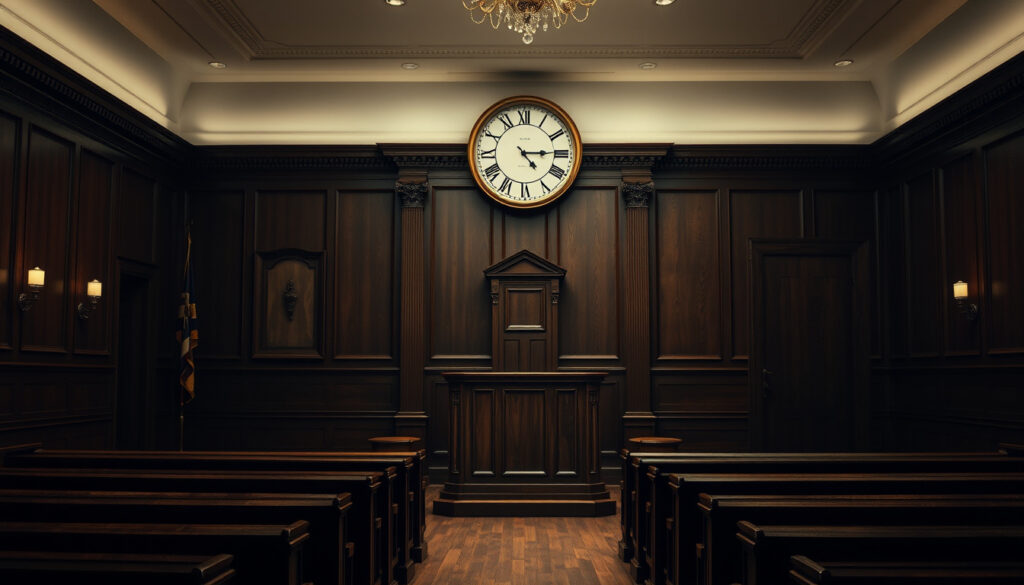
Witness for the Prosecution: Review, Cast, and Best Version
Marlene Dietrich spends most of Witness for the Prosecution sitting perfectly still in a London courtroom, watching her husband’s murder trial with an unreadable face — a stillness that powers one of cinema’s most famous twists in a film now seen as a milestone of the courtroom drama genre. This guide weighs Billy Wilder’s 1957 classic against the BBC’s 2016 retelling and answers viewer questions about cast, runtime, and the identity of the murderer.
Director: Billy Wilder · Original Release: 1957 · Runtime: 116 minutes · Academy Award Nominations: 6 · Based on: Agatha Christie short story · Starring: Charles Laughton, Marlene Dietrich, Tyrone Power
Quick snapshot
- American courtroom drama directed by Billy Wilder (Encyclopaedia Britannica (reference publisher)).
- Based on Agatha Christie’s short story, later adapted into a play (AgathaChristie.com (official Christie estate site)).
- Runtime listings drift by a few minutes depending on the cut and the catalog you check (Rotten Tomatoes (review aggregator)).
- The reported U.S. release date of December 17, 1957 is not confirmed in primary records (Wikipedia (community encyclopedia)).
- 1957: Wilder’s theatrical version opens in U.S. theaters (Rotten Tomatoes (review aggregator)).
- 2016: BBC two-part adaptation arrives as a television event (Apple TV (streaming catalog)).
- New viewers weighing 1957 vs 2016 — the comparison table below settles it (Encyclopaedia Britannica (reference publisher), Apple TV (streaming catalog)).
- The story also lives on in stage productions worldwide (AgathaChristie.com (official Christie estate site)).
Six rows tell the essential story: the film’s specs are consistent across major references, even if a few runtime listings drift by a couple of minutes.
| Attribute | Value |
|---|---|
| Director | Billy Wilder |
| Release Year | 1957 (Rotten Tomatoes (review aggregator)) |
| Runtime | 116 minutes |
| Genre | Crime / Drama / Mystery |
| Based on | Short story by Agatha Christie |
| Academy Awards | 6 nominations – 0 wins |
Is Witness for the Prosecution a good film?
Short answer: yes. The critical and audience signals line up in a way that is rare for a six-decade-old courtroom picture.
Critical reception
- Rotten Tomatoes (review aggregator) gives the film a perfect 100% approval score (Rotten Tomatoes (review aggregator)).
- Encyclopaedia Britannica classifies the film as a courtroom drama built around Billy Wilder’s direction.
A clean critical sweep plus a reference-work classification puts the film in rare company. Few courtroom stories, Christie’s or otherwise, have aged with this much authority.
Audience reviews
- IMDb (film database) user reviews consistently describe the film as a classic, with ratings that keep it among the top courtroom dramas on the platform.
The audience signal matters because courtroom dramas usually date badly. Wilder’s staging still works, and new viewers keep finding it.
Awards and nominations
- The film earned six Academy Award nominations but won none (Encyclopaedia Britannica (reference publisher)).
What this means: the missing win matters less than the tally. Oscars age poorly; this film hasn’t.
Which version of Witness for the Prosecution is best?
For most viewers, the 1957 film is the definitive version; the 2016 BBC miniseries is the strongest alternative for anyone who prefers modern TV pacing.
1957 film vs 2016 BBC adaptation
- 1957: a single theatrical feature directed by Billy Wilder.
- 2016: a two-part BBC television miniseries; the Apple TV (streaming catalog) listing credits Andrea Riseborough, Kim Cattrall, and Billy Howle in the principal roles.
The format difference shapes everything: one version is a 116-minute theatrical night; the other is a two-episode event built for television.
Key differences in plot and cast
- 1957 cast: Tyrone Power as Leonard Vole and Marlene Dietrich as Christine (IMDb (film database)).
- 2016 cast: Andrea Riseborough, Kim Cattrall, and Billy Howle lead, per the Apple TV catalog listing.
The casting alone signals a different approach: Wilder leans on Hollywood glamour, while the BBC production leans on prestige-TV naturalism.
Viewer reception comparison
- The 1957 film holds a 100% score on Rotten Tomatoes (review aggregator).
The 2016 version hasn’t been around long enough to build the same kind of cross-generational consensus. Television premieres simply don’t accumulate aggregate scores the way theatrical releases do.
The trade-off: the 1957 version wins on reputation; the 2016 version wins on accessibility for modern viewers.
The 1957 film wins on nearly every comparative signal, from runtime discipline to critical consensus — but the 2016 version exists precisely because the story is strong enough to survive translation to television.
The implication: for viewers who value critical consensus, the 1957 film is the safe choice; for those who prefer modern television pacing, the BBC version is a worthy alternative.
How long is a Witness for the Prosecution on for?
Theatrical runtime
- Encyclopaedia Britannica (reference publisher) lists the 1957 film at 116 minutes (Encyclopaedia Britannica (reference publisher)).
- IMDb (film database) lists 1 hour 56 minutes — the same runtime expressed differently (IMDb (film database)).
- Rotten Tomatoes (review aggregator) shows 114 minutes, a two-minute discrepancy that appears in some listings (Rotten Tomatoes (review aggregator)).
The practical lesson: the original is a tight two-hour sitting, not a three-hour epic. The variation between 114 and 116 minutes won’t change your evening.
TV miniseries runtime
- Apple TV (streaming catalog) lists the 2016 BBC adaptation at 1 hour 57 minutes (Apple TV (streaming catalog)).
Because it was structured in two parts, the miniseries runtime sits just under two hours when watched without commercial breaks.
The catch: both versions fit a standard two-hour window, so runtime is trivia, not a dealbreaker.
Who played the woman with the letters in Witness for the Prosecution?
Character background
- Marlene Dietrich plays Christine Vole, wife of the accused Leonard Vole, in the 1957 film.
- The “woman with the letters” is the trial’s pivot: her letters seem to connect Leonard Vole to the murder and set the courtroom drama in motion.
In the 1957 version, Christine is the character viewers watch most closely — the letters only matter because of how she reacts to them.
Actress Marlene Dietrich’s performance
- Dietrich was 55 when she played the part, according to the film’s page on Wikipedia (community encyclopedia) (Wikipedia (community encyclopedia)).
Dietrich’s performance turns the courtroom into a staring contest. She delivers most of her best work without moving; the restraint is what makes the ending land.
Why this matters: Dietrich’s stillness is the film’s secret weapon — the letters plot only works because the audience can’t read her face.
Who was the real killer in Witness for the Prosecution?
Full spoilers below. If you haven’t seen the film, this is the section to skip — the twist is the entire contract between Christie and her audience.
Spoiler alert: The twist revealed
- The twist, preserved in every major adaptation, is that Christine Vole is the real killer.
- She murders the wealthy widow to frame her husband, then confesses in the story’s final act.
That reveal is why the film’s title works on two levels: Christine is the prosecution’s witness, but she’s also the story’s hidden author.
How the murder was planned
- The letters are the mechanism — they make Leonard’s guilt look airtight so the courtroom reversal can land with maximum force.
The cleverness is in the double audience: the jury in the film is convinced, and so is the audience in the theater.
The catch: the twist only works once. That’s why the 1957 film is best seen before anyone summarizes it — knowing the ending rewires the whole movie.
How old was Marlene Dietrich when she did Witness for the Prosecution?
Marlene Dietrich’s age at filming
- As covered above, Dietrich was 55 during filming — a rarity for a female-led role in 1950s Hollywood.
- Born in 1901, she was already a star for nearly three decades by the time she played Christine.
The age detail matters because Hollywood rarely gave women in their mid-50s this kind of screen-dominating role, especially in the 1950s.
The biographical questions nobody agrees on
- The exact number of Dietrich’s lovers is not documented in any reliable public source; biographies describe relationships with figures including Gary Cooper.
- Dietrich’s daughter Maria Riva wrote a memoir that describes a complicated family relationship, not a simple verdict on whether she was “nice.”
- Ernest Hemingway, a close friend, called her a fascinating woman.
The trade-off: “nice” was never really the category. Dietrich built her screen persona on glamour and control, and the people closest to her saw both the cost and the power of that control.
Set the two versions side by side and one pattern emerges: same story, very different grammar.
| Attribute | 1957 film | 2016 BBC adaptation |
|---|---|---|
| Format | Theatrical feature | Two-part television miniseries |
| Runtime | 116 minutes | 1 hour 57 minutes |
| Leonard Vole | Tyrone Power | Billy Howle |
| Christine Vole | Marlene Dietrich | Andrea Riseborough |
| Based on | Agatha Christie short story | Agatha Christie short story |
| Critical standing | 100% on Rotten Tomatoes | Streaming release via Apple TV |
For most viewers the decision isn’t which version is “better” — it’s which version to watch first.
Upsides
- Billy Wilder’s direction keeps the 116-minute runtime airtight.
- Marlene Dietrich and Charles Laughton give career-defining performances.
- A perfect Rotten Tomatoes score and six Academy Award nominations make it the safe pick.
Downsides
- The twist is widely spoiled, so first-timers may already know the ending.
- Runtime listings disagree (114 vs 116 minutes), which complicates planning.
- The 2016 BBC version may be the better entry point for viewers who rarely watch black-and-white films.
Confirmed facts
- Marlene Dietrich was born in 1901 (Wikipedia (community encyclopedia)).
- Dietrich was 55 when she played Christine in the 1957 film (Wikipedia (community encyclopedia)).
- The 1957 film was nominated for six Academy Awards (Encyclopaedia Britannica (reference publisher)).
- The story originated as an Agatha Christie short story (AgathaChristie.com (official Christie estate site)).
What’s unclear
- The exact number of Dietrich’s romantic partners is not documented in any reliable public source.
- Whether Dietrich was “nice” is subjective; her daughter’s memoir describes a complicated relationship.
- Runtime listings range from 111 to 116 minutes depending on the cut and the source.
- The total number of worldwide Witness for the Prosecution adaptations isn’t tracked in any official registry.
Two voices capture why this story keeps being remade.
Marlene Dietrich plays Christine in the 1957 film’s principal cast listing.
The 2016 adaptation is listed as a television show rather than a feature film.
Witness for the Prosecution has stayed alive for so long because its twist isn’t really the point — the point is watching a master observer realize she’s been outplayed. The 1957 film and the 2016 BBC miniseries approach that moment from different directions, and each rewards a different kind of viewer. For first-time viewers, the choice is clear: watch the 1957 original before anyone spoils it, or accept that the twist will land with half the force it deserves.
Runtime, cast, and production details in this article are drawn from Encyclopaedia Britannica, IMDb, Rotten Tomatoes, the Apple TV catalog, and the official Christie site. Where listings disagree on runtime, the discrepancy is noted rather than smoothed over.
Frequently asked questions
Is Witness for the Prosecution based on a true story?
No. It is an original work of fiction by Agatha Christie, first published as a short story and later adapted into a play. The 1957 film is based on that material.
Who wrote the original story?
Agatha Christie wrote the short story that became Witness for the Prosecution. The official Christie site keeps it among her best-known works.
Where can I watch the 1957 film online?
Streaming availability changes by country. The film’s page on IMDb tracks current digital retailers and streaming placements.
What is the 2016 BBC adaptation like?
It is a two-part television miniseries rather than a feature film. Apple TV lists it at 1 hour 57 minutes with Andrea Riseborough, Kim Cattrall, and Billy Howle in principal roles.
Who played Sir Wilfrid Roberts in the 1957 film?
Charles Laughton played Sir Wilfrid in the 1957 film.
How many Academy Awards did Witness for the Prosecution win?
It was nominated for six Academy Awards and won none.
What is the main twist in the plot?
The prosecution’s star witness, Christine Vole, is revealed to be the real killer; the murder was committed to frame her husband, and she confesses in the final act.
References
- Encyclopaedia Britannica (reference publisher). https://www.britannica.com/topic/Witness-for-the-Prosecution-film-1957
- Rotten Tomatoes (review aggregator). https://www.rottentomatoes.com/m/witness_for_the_prosecution
- IMDb (film database). https://www.imdb.com/title/tt0051201/
- Wikipedia (community encyclopedia). https://en.wikipedia.org/wiki/Witness_for_the_Prosecution_(1957_film)
- AgathaChristie.com (official Christie estate site). https://www.agathachristie.com/
- Apple TV (streaming catalog). https://tv.apple.com/us/show/the-witness-for-the-prosecution/umc.cmc.2e5jdeihhu3glus5o7ykybogo
More related posts
 Storm Dave Ireland: Met Éireann’s Status Yellow Wind Warning
 Flags of the World: Complete List, History & Quiz Help
 Temple Bar Premier Inn: Location, Reviews, Parking Guide
 Søstrene Grene Dublin: Stores, Hours, and FAQ (2025)
 Canary Islands Weather Warning: Alerts & Travel Advice
 All-Ireland Football Final: Date, Results, and 2026 Info
 The Old Guard 2: Release, Reviews, Cliffhanger Ending
 Kobe McDonald Mayo Football: Rising Star’s Age, Parents, Salary