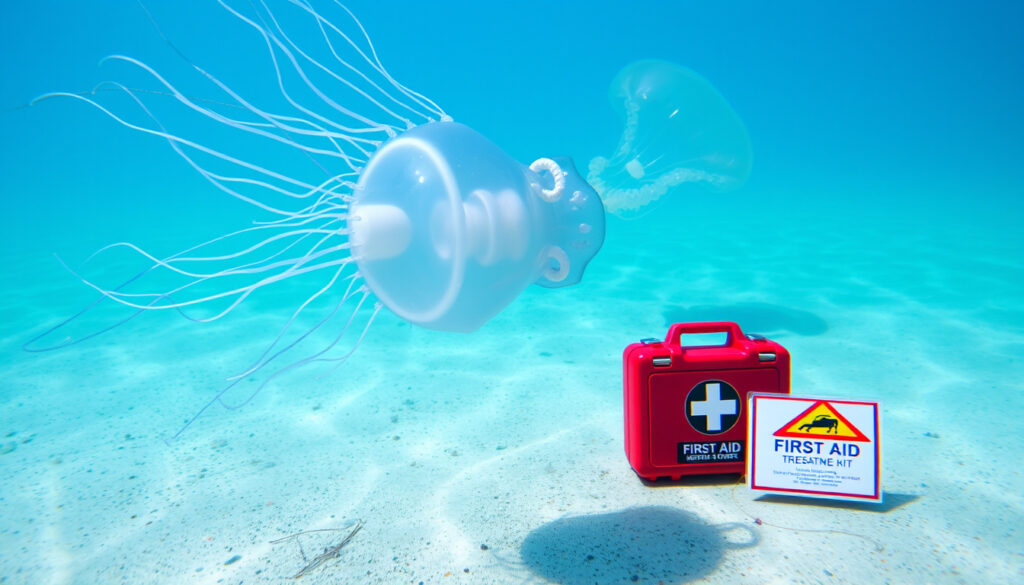
Portuguese Man o’ War: Facts, Sting Treatment, Box Jellyfish
It looks like a jellyfish, but the Portuguese man o’ war is a colonial siphonophore whose sting can cause intense pain. Strandings in Ireland after Atlantic storms raise questions about its danger, and this article explains the science, treatment, and comparison with the world’s most venomous jellyfish.
Scientific name: Physalia physalis ·
Classification: Siphonophore (not a jellyfish) ·
Float size: up to 30 cm long ·
Tentacle length: up to 30 meters ·
Sting severity: painful but rarely fatal to humans ·
Ocean distribution: Atlantic, Indian, Pacific
Quick snapshot
- Portuguese man o’ war is a siphonophore, not a jellyfish (HPSC Ireland)
- Sting causes intense pain (Mayo Clinic)
- Box jellyfish is more deadly to humans (MSD Manuals)
- Exact number of human fatalities (MSD Manuals)
- Whether vinegar is effective (some sources advise against it) (MSD Manuals)
- Long-term population trends in the Atlantic (BBC News)
- Whether Portuguese man o’ war strandings in Ireland are increasing due to climate change (BBC News)
- Strandings in Ireland reported after storms (BBC News)
- Recorded by National Biodiversity Data Centre (National Biodiversity Data Centre Ireland)
- Report sightings to CEDaR (NI) or National Biodiversity Data Centre (BBC News)
- Warm-water immersion first aid is recommended (BBC News)
- Avoid vinegar for Portuguese man o’ war stings (BBC News)
Five key facts, one pattern: the Portuguese man o’ war looks like a jellyfish and stings like one, but its biology and treatment differ significantly from true jellyfish.
| Label | Value |
|---|---|
| Scientific name | Physalia physalis |
| Type | Colonial siphonophore |
| Float size | Up to 30 cm long, 15 cm wide |
| Tentacle length | Up to 30 m |
| Distribution | Atlantic, Indian, Pacific Oceans |
| Sting severity | Severe pain, rarely fatal |
| Fatalities | Extremely rare (no recent confirmed in humans) |
Why is it called Man-o-War?
What is a Portuguese man o’ war?
- It is a colonial siphonophore — a collection of specialized polyps working together (DIVE Magazine).
- Its gas-filled float resembles the sails of an 18th-century Portuguese warship, giving it the common name (HPSC Ireland).
- The scientific name is Physalia physalis (National Biodiversity Data Centre Ireland).
The name reflects its appearance, but the creature’s biology is far from a simple warship.
Are there Portuguese men of war in Ireland?
What is the biggest jellyfish found in Ireland?
- Portuguese man o’ war strandings occur in Ireland after storms, carried by Atlantic currents (BBC News).
- The National Biodiversity Data Centre records Physalia physalis in Ireland (National Biodiversity Data Centre Ireland).
- The biggest jellyfish in Ireland is the lion’s mane jellyfish (Cyanea capillata), not the man o’ war.
Beachgoers in Donegal and other western counties should watch for blue floats after Atlantic storms. The man o’ war is not a permanent resident, but seasonal arrivals are real.
The implication: Tourists and locals alike should learn to identify the Portuguese man o’ war and report sightings to the National Biodiversity Data Centre, as each record helps track ocean changes.
What happens when you get stung by a man-o-war?
- Sting causes intense pain, red welts, nausea, muscle cramps (Mayo Clinic).
- First aid: rinse with seawater, remove tentacles with tweezers, apply heat (HPSC Ireland).
- Seek medical attention for severe reactions or allergic response (Mayo Clinic).
Do not use vinegar on Portuguese man o’ war stings — it can trigger additional venom release from unfired nematocysts (MSD Manuals).
What this means: The same first-aid kit that works for box jellyfish (vinegar) is wrong for the man o’ war. Always confirm the species before treating.
Are Portuguese men of war fatal to humans?
Has a Portuguese man o war killed anyone?
- Fatalities are extremely rare, only a few documented cases (MSD Manuals).
- Most stings are not life-threatening (HPSC Ireland).
- Anaphylaxis can occur in sensitive individuals (Mayo Clinic).
The trade-off: The Portuguese man o’ war is painful but rarely deadly, while the box jellyfish is responsible for many deaths annually in the Indo-Pacific.
Which is deadlier, box jellyfish or Portuguese man-of-war?
What is the deadliest jellyfish sting?
- Box jellyfish (Chironex fleckeri) is considered the deadliest jellyfish, responsible for many deaths (MSD Manuals).
- Portuguese man o’ war venom is potent but rarely fatal to humans (Mayo Clinic).
Has anybody survived a box jellyfish sting?
- Yes – survival depends on rapid antivenom and CPR (MSD Manuals).
- Box jellyfish antivenom exists; no antivenom is made for Portuguese man o’ war stings.
Four differences, one pattern: the box jellyfish is far more dangerous and requires different first aid. Let’s compare directly.
| Attribute | Box jellyfish (Chironex fleckeri) | Portuguese man o’ war (Physalia physalis) |
|---|---|---|
| Tentacle length | Up to 3 m | Up to 30 m |
| Venom potency | Cardiotoxic, can kill in minutes | Neurotoxic, rarely lethal |
| Proven fatality rate | ~60–80 deaths/year in Indo-Pacific | Extremely rare (no recent confirmed) |
| Recommended first aid | Apply vinegar, then seawater | Seawater rinse, hot water, no vinegar |
| Antivenom | Available | Not available |
If you are stung in Irish waters, it is almost certainly a Portuguese man o’ war (or a lion’s mane jellyfish), not a box jellyfish — but if you’re stung in tropical Australian waters, assume box jellyfish and use vinegar first.
The difference in first aid is a matter of life and death depending on location.
Confirmed facts vs. what remains unclear
Confirmed facts
- Portuguese man o’ war is a siphonophore, not a jellyfish (HPSC Ireland)
- Sting causes intense pain (Mayo Clinic)
- They have been found in Irish waters (National Biodiversity Data Centre Ireland)
- Box jellyfish is more deadly to humans (MSD Manuals)
What’s unclear
- Exact number of human fatalities caused by Portuguese man o’ war (MSD Manuals)
- Whether vinegar is effective (some sources advise against it) (MSD Manuals)
- Long-term population trends in the Atlantic (BBC News)
- Whether Portuguese man o’ war strandings in Ireland are increasing due to climate change (BBC News)
These gaps highlight the need for more research on this species.
Expert perspectives
The Portuguese man o’ war is not a true jellyfish but a siphonophore, a colony of specialized animals functioning as one.
If you see a Portuguese man o’ war on the beach, do not touch it. Its tentacles can remain venomous for hours after the animal is beached.
In Ireland, strandings of Portuguese man o’ war are increasingly reported after storms, likely due to warming seas and stronger Atlantic currents.
– BBC News (citing Irish environmental groups)
For beachgoers in Ireland, the lesson is clear: know what to look for, know how to treat a sting, and report sightings to help track this fascinating but dangerous creature.
webmd.com, healthline.com, australianprescriber.tg.org.au, webmd.com, litfl.com, fingal.ie
For a detailed breakdown of first aid and biological differences, see this comprehensive guide on sting treatment.
Frequently Asked Questions
How is a Portuguese man o’ war different from a true jellyfish?
A true jellyfish is a single medusa animal, while the Portuguese man o’ war is a colonial siphonophore made of many specialized polyps working together (HPSC Ireland).
What should I do if I see a Portuguese man o’ war on the beach?
Do not touch it. The tentacles can still sting even when the animal is beached. Report the sighting to the National Biodiversity Data Centre or CEDaR (BBC News).
Can a Portuguese man o’ war sting be deadly for pets?
Pets, especially dogs, can be seriously affected if they mouth or step on the tentacles. Veterinary care should be sought immediately (Mayo Clinic).
How long do the tentacles remain venomous after the animal is beached?
The nematocysts can remain active for several hours after the animal washes ashore. Do not assume a dead man o’ war is harmless (MSD Manuals).
Do Portuguese man o’ war travel in groups?
They are often found alone but can be carried together by wind and currents, leading to multiple strandings in the same area (DIVE Magazine).
What is the first aid for a Portuguese man o’ war sting?
Rinse with seawater, remove tentacles with tweezers, soak in hot water (43–45°C) for 20–30 minutes, and seek medical help if severe reaction occurs (HPSC Ireland; Mayo Clinic).
More related posts
 How to Improve Work: 1-3-5 Rule, 4 Pillars, and Tips
 5STAR TV Guide: Catch Up & Channel Numbers
 St. Mary’s Church Lucan: Mass Times & Visitor Guide
 Land for Sale Wexford: Complete Guide to Buying County Land
 Charlie Kirk Shot Video: What the Footage Shows and How It Spread
 Dublin to Galway Train Timetable | Irish Rail Schedules & Times
 Ca t of Trace (TV Serie ): Full Li t of Actor and Character
 Arthur Onslow Edward Guinness, Viscount Elveden – Biography, Family and WWII Legacy