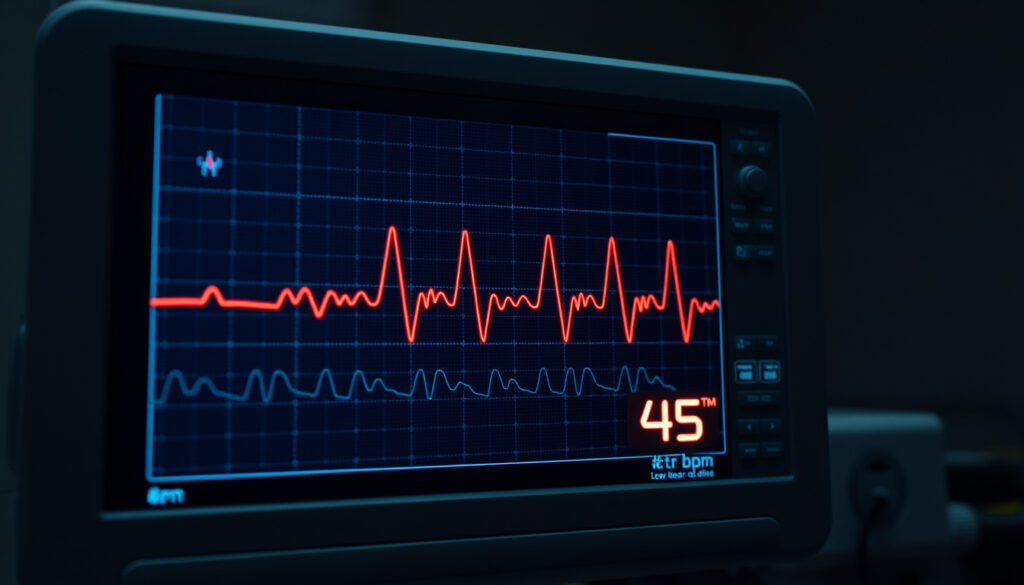
When to Worry About Low Heart Rate: Thresholds & Signs
Checking your pulse and seeing a number below 60 can feel unsettling, even if you feel completely fine. A low reading doesn’t automatically signal danger — but it does deserve attention.
Normal resting heart rate: 60-100 bpm ·
Bradycardia threshold: below 60 bpm ·
Severe bradycardia: below 40 bpm ·
Key concern: presence of symptoms
Quick snapshot
- Bradycardia is a resting heart rate below 60 bpm (GoodRx health resource)
- Below 40 bpm is considered dangerously low (GoodRx health resource)
- Exact worry point varies by age, fitness level, and symptoms
- Whether 50-60 bpm in a non-athlete always needs investigation
- 2025 AHA algorithm updated for HR <50/min with symptoms (American Heart Association)
- 2018 ACC/AHA/HRS guideline established current bradycardia definitions (AHA Journals)
- Symptomatic cases may require ECG monitoring or medication
- Severe cases can need pacemaker implantation
These four data points capture where medical consensus is solid and where judgment calls still apply.
| Label | Value |
|---|---|
| Bradycardia definition | Resting heart rate below 60 bpm |
| Severe level | Below 40 bpm |
| Asymptomatic range | 40-60 bpm often normal in fit people |
| Key trigger for worry | Symptoms despite low rate |
| Normal adult resting HR | 60-100 bpm |
| Critical ACLS threshold | Below 50/min with symptoms |
| Athlete low end | 40 bpm (benign if asymptomatic) |
| Emergency signs | Dizziness, fainting, chest pain, shortness of breath |
What’s considered a dangerously low heart rate?
Medical authorities generally agree on the numbers: bradycardia starts at a resting heart rate below 60 beats per minute. The GoodRx health resource cites this threshold from multiple clinic guidelines, while the Heart Rhythm Society clinical guidance defines it as below 50 bpm in their guidance.
Normal sinus rhythm in healthy adults ranges from 50 to 90 bpm, according to research published in PubMed peer-reviewed study and consistent with Framingham data. This means the textbook definition of 60-100 bpm for normal resting rate leaves significant overlap with bradycardia territory — which is why context matters so much.
Thresholds for adults
Three levels help categorize low heart rates:
- 60-100 bpm: Normal range for most adults
- 40-60 bpm: Borderline — often benign in athletes or during sleep, but warrants attention if you experience symptoms
- Below 40 bpm: Generally considered severe bradycardia, per Mass General Brigham medical center
Severe vs mild bradycardia
The Mayo Clinic medical experts note that bradycardia becomes serious when the heart beats so slowly that it cannot pump enough oxygen-rich blood to the body. The American Heart Association’s ACLS protocol flags heart rates typically below 50 per minute with hypotension, shock, or heart failure as critical.
The distinction hinges on whether symptoms accompany the low rate. A heart rate of 45 bpm in a sleeping athlete rarely raises concern; the same number in an active 60-year-old during daytime warrants evaluation.
Numbers alone don’t tell the full story. The Harvard Health publication notes that HR below 60 bpm during waking hours is technically bradycardia, but athletes and fit individuals routinely clock 50-60 bpm without issues. Context — fitness level, age, medications, symptoms — determines whether a low reading is healthy or needs attention.
Should I go to the ER if my heart rate is 55?
For most people, a resting heart rate of 55 bpm without symptoms doesn’t require emergency care. The British Heart Foundation medical experts state that if you’re usually fit and healthy with no symptoms, there’s typically no cause for concern with rates in the 50s.
However, context determines the answer. The Kelsey-Seybold Clinic healthcare providers clarify that heart rate below 50 bpm in non-athletes or below 40 bpm during sleep may indicate an underlying issue requiring evaluation.
Signs needing immediate care
Emergency attention becomes necessary when a low heart rate pairs with symptoms that suggest inadequate blood flow to vital organs:
- Syncope (fainting): Any episode of losing consciousness with a low pulse demands urgent evaluation
- Chest pain: Could signal the heart isn’t receiving enough oxygen
- Severe dizziness or confusion: Brain perfusion may be compromised
- Shortness of breath at rest: The heart’s output may be insufficient
According to CommonSpirit Health clinical team, fainting or severe symptoms demand emergency help immediately. The AHA 2025 algorithm specifically targets HR below 50/min accompanied by symptoms like ischemia or heart failure.
Specific rates like 55 or 56 bpm
At 55 or 56 bpm, the question isn’t really about the number — it’s about how you feel. GoodRx medical resource explains that in healthy active people, resting heart rate in the 50s may indicate good heart health without symptoms. The EMCrit critical care reference adds that sinus bradycardia below 50 bpm is usually not significant unless symptomatic.
If you’re not an athlete and suddenly notice your resting rate is 56 bpm when it was previously 72 bpm, that change deserves a conversation with your doctor even if you feel fine. A sudden drop is different from a stable, lifelong pattern.
Track your heart rate over time rather than fixating on a single reading. A gradual decline from your personal baseline, especially if accompanied by new fatigue or reduced exercise tolerance, matters more than the absolute number.
Bradycardia — symptoms, causes and when to see your doctor
Bradycardia itself isn’t a disease — it’s a finding that can result from various underlying conditions or even represent normal physiology in the right person. Understanding why your heart is beating slowly helps determine whether treatment is needed.
Common symptoms
The Mayo Clinic medical team identifies several warning signs that accompany bradycardia when it becomes problematic:
- Dizziness or lightheadedness
- Fatigue and low energy, especially during activity
- Fainting or near-fainting episodes
- Shortness of breath
- Chest pain or discomfort
- Difficulty concentrating
The CommonSpirit Health clinical staff resource emphasizes seeking a checkup if any of these symptoms are new — they note that difficulty concentrating, while less dramatic than fainting, can also indicate inadequate cerebral perfusion.
Physical signs of low heart rate
Beyond how you feel, certain physical findings suggest your heart’s rhythm is too slow:
- Pulse consistently below 60 bpm at rest during waking hours
- Blood pressure readings that seem elevated or difficult to obtain
- ECG findings showing sinus bradycardia, heart block, or other conduction abnormalities
The Capitol Cardiology practice specialists note that symptoms like dizziness, fainting, and fatigue with low heart rate warrant medical evaluation. They specify that HR under 40 bpm is generally problematic if symptomatic.
“Bradycardia is serious when it is very slow and prevents your heart from pumping enough blood to meet your body’s needs.” — Mayo Clinic medical professionals
What causes low heart rate?
Low heart rate develops through several pathways, each with different implications for treatment and urgency.
In fit people
Athletes develop what’s called athletic heart syndrome — the heart muscle enlarges and becomes more efficient, pumping more blood per beat and thus requiring fewer beats per minute at rest. Kelsey-Seybold Clinic healthcare experts confirm that athletes can tolerate down to 40 bpm without concern, compared to 50 bpm as the danger threshold for non-athletes.
The Mayo Clinic clinical guidance notes that resting HR of 40-60 bpm is common in athletes and during sleep — not always concerning. This physiological bradycardia reflects a well-conditioned heart, not disease.
Medical causes
Several conditions can slow the heart rate independent of fitness:
- Heart tissue damage from aging: Scar tissue can interfere with electrical conduction
- Coronary artery disease: Reduced blood flow to the heart’s conduction system
- Medications: Beta blockers, calcium channel blockers, digoxin, and some sedatives
- Electrolyte abnormalities: Particularly high potassium or low thyroid function
- Sleep apnea: Repeated oxygen drops during sleep can slow the heart
- Inflammatory conditions: Lupus or rheumatic fever affecting heart tissue
The American Heart Association emergency protocol specifically lists drugs (especially beta blockers), hypoxia, and electrolyte disturbances as reversible causes to address in any bradycardia evaluation.
The Heart Rhythm Society experts categorize bradycardia into three main types: sinus node dysfunction, atrioventricular (AV) block, and other conduction disorders. Each has different implications for monitoring and treatment.
If you’re on a heart rate-lowering medication and develop bradycardia symptoms, don’t stop the drug yourself. Contact your prescribing physician — they may need to adjust the dose or switch medications. Sudden discontinuation of beta blockers can cause dangerous rebound effects.
What do doctors do if your heart rate is too low?
When evaluation confirms problematic bradycardia, treatment depends on the underlying cause, symptom severity, and how low the heart rate drops.
Treatment options
Initial workup typically includes an electrocardiogram (ECG) to identify the type of bradycardia and blood tests to check electrolytes, thyroid function, and cardiac enzymes. According to GoodRx health resource, these tests help determine whether the slow rate stems from medication effects, metabolic issues, or structural heart disease.
If a reversible cause is identified — such as low thyroid, electrolyte problems, or medication effects — addressing that factor often resolves the bradycardia. When no reversible cause exists or symptoms are significant, additional interventions become necessary.
Pacemaker when needed
For persistent, symptomatic bradycardia that doesn’t respond to medication adjustments, pacemaker implantation may be recommended. The Heart Rhythm Society clinical guidelines provide criteria for when pacing becomes appropriate.
In emergency settings, the AHA ACLS protocol specifies atropine as first-line medication at 1 mg IV initially, repeatable to a maximum of 3 mg for persistent bradyarrhythmia. If atropine fails, transcutaneous pacing or epinephrine infusion follows.
The EMCrit Project critical care team provides sobering context: progressive bradycardia often precedes cardiac arrest, and ventricular escape rhythms at 30-40 bpm carry significant risk for asystole. This underscores why symptomatic bradycardia demands prompt evaluation.
The pattern here is straightforward: fitness-related bradycardia is generally benign, while symptomatic bradycardia in non-athletes or rates below 40 bpm require medical attention regardless of how you feel.
Upsides
- Low heart rate in athletes reflects excellent cardiovascular conditioning
- Many causes are reversible (medications, electrolyte imbalances, thyroid disorders)
- Modern pacemakers are highly reliable and allow normal activity
- Guidelines are clear about emergency thresholds (AHA: HR <50/min with symptoms)
Downsides
- Asymptomatic bradycardia may mask serious conduction disease
- Some medications necessary for other conditions (hypertension, anxiety) lower heart rate
- Pacemaker implantation carries small but real surgical risks
- Elderly patients face higher risk from any bradycardia due to reduced physiological reserve
Related reading: Symptoms of Crohn’s Disease: Early Signs and Triggers
While bradycardia often starts below 60 bpm, knowing average resting heart rate ranges by age and gender clarifies when low rates truly demand attention.
Frequently asked questions
Can you live with a heart rate of 45?
Yes, many people live normally with a resting heart rate of 45 bpm — particularly athletes whose hearts have adapted to pump more blood per beat. However, if you’re not an athlete and your resting rate is consistently 45 bpm, schedule an evaluation to rule out sinus node dysfunction or conduction block. EMCrit critical care reference notes that sinus bradycardia below 50 bpm is usually not significant unless symptomatic, but persistent rates at 45 bpm warrant monitoring.
Is 56 a low heart rate?
Technically, 56 bpm falls into the bradycardia range (below 60 bpm), but it’s not concerning if you’re healthy and asymptomatic. The British Heart Foundation medical experts state that if you’re usually fit and healthy with no symptoms, there’s no cause for concern. A rate of 56 bpm is common during sleep or in well-conditioned individuals.
Is resting heart rate 50 bpm low if not an athlete?
A resting heart rate of 50 bpm in a non-athlete sits in a gray zone. Kelsey-Seybold Clinic healthcare providers note that HR below 50 bpm in non-athletes may indicate an underlying issue. If you’ve always been active but not specifically endurance-trained, a 50 bpm resting rate warrants discussion with your doctor, especially if you experience any symptoms.
When to worry about low heart rate while sleeping?
Heart rates during sleep commonly drop to 40-60 bpm as part of normal physiology, and this doesn’t require concern. Mayo Clinic medical team confirms that resting HR of 40-60 bpm is common in sleep. However, rates below 40 bpm during sleep that persist or are accompanied by daytime symptoms or oxygen desaturation events (common in sleep apnea) should prompt medical evaluation.
Is low pulse rate 48 dangerous in elderly?
A heart rate of 48 bpm in an elderly patient requires closer attention than in younger populations. GoodRx health resource identifies heart rate below 40 bpm as dangerously low, but elderly individuals have less physiological reserve to compensate for reduced cardiac output. Any persistent rate in the high 30s or low 40s in older adults, particularly with symptoms like dizziness or confusion, warrants prompt evaluation.
What are the four signs your heart is quietly failing?
Heart failure doesn’t always announce itself dramatically, especially when bradycardia limits cardiac output. Watch for progressive shortness of breath with minimal exertion, unexplained fatigue that limits daily activities, swelling in the legs or ankles from fluid backup, and reduced exercise capacity — not just low heart rate. If these symptoms accompany bradycardia, Mayo Clinic clinical guidance emphasizes that the slow heart rate may be preventing adequate perfusion, requiring evaluation.
What is treatment for low heart rate?
Treatment depends entirely on the cause and severity. For medication-induced bradycardia, dose adjustment or drug substitution may help. Underlying conditions like hypothyroidism or electrolyte imbalances are corrected. Symptomatic bradycardia may require a pacemaker, particularly for conduction disorders. The Heart Rhythm Society clinical guidelines outline specific criteria for pacemaker implantation based on symptoms, rate thresholds, and type of conduction abnormality.
For athletes and active individuals with asymptomatic bradycardia, the takeaway is reassuring: your efficient heart is a feature, not a bug. For sedentary adults or those experiencing symptoms with a low heart rate, the path forward is clear — see a cardiologist, get an ECG, and let the findings guide next steps.
More related posts
 Grangegorman Primary Care Centre: Contact & Mental Health Guide
 Whale Watching West Iceland: Best Tours & Season
 3/4 Inch in mm – Exact Conversion 19.05 mm
 International Rugby Results Today: Six Nations Standings
 Canary Islands Weather Warning: Alerts & Travel Advice
 Cork GAA Season Ticket: Cost, Benefits, and How to Buy
 Best Pay As You Go SIM 2025: UK and Ireland Options Compared