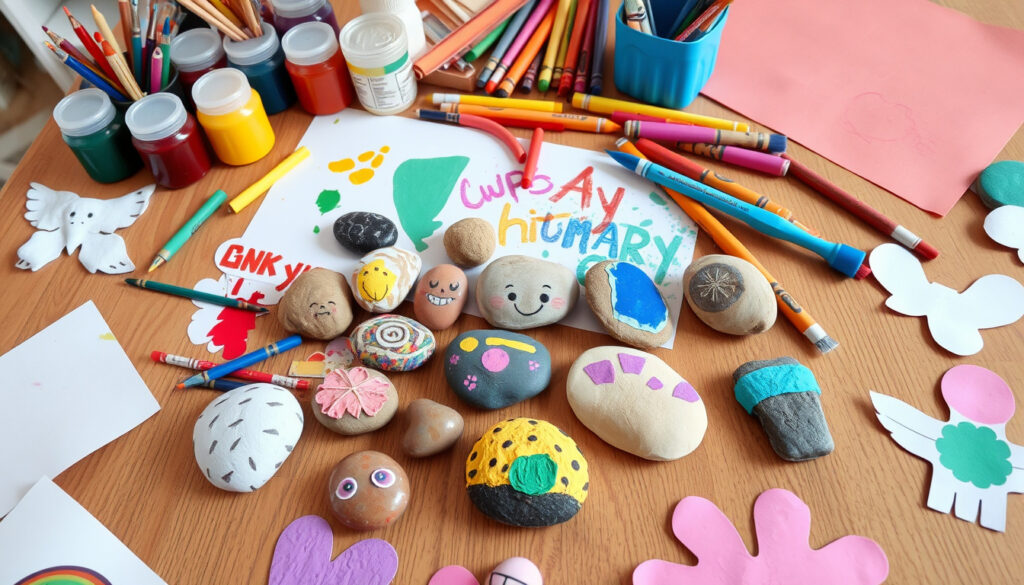
Easy Art Projects for Kids: Quick Ideas for All Ages
Most parents have faced the mid-afternoon plea: “I’m bored.” The good news is that a creative solution is likely already in your kitchen or recycling bin. This guide offers simple, low-mess art projects for kids that use common household materials and take less than 30 minutes from setup to cleanup.
Projects featured on top blogs: over 100 ·
Average completion time: 15–30 minutes ·
Common materials needed: paper, markers, glue, scissors ·
Age range covered: 3–12 years ·
Most popular project type: drawing and painting
Quick snapshot
- Art projects improve fine motor skills and creativity (Urgent Care for Children)
- Household items like paper plates and cardboard are commonly used (Kate Decorates)
- Exact number of kids who complete a project in one sitting
- Long-term retention of art skills from occasional projects
- MoMA published family art-making activities in March 2020 (MoMA Magazine)
- You can start with a paper plate animal or a simple collage in less than 10 minutes
Five age groups, one pattern: the youngest artists need the least structure, while older kids crave more complex challenges.
| Age group | Ideal project type | Example project | Common materials |
|---|---|---|---|
| Toddlers (Ages 2-3) | Sensory play | Finger painting, sponge stamps, edible paints | Yogurt, food coloring, sponges |
| Preschool (Ages 4-5) | Shapes and collage | Paper plate masks, collage with shapes, play dough sculptures | Paper plates, glue, scissors, play dough |
| Early Elementary (Ages 6-8) | Medium exploration | Watercolor resist, simple origami, crayon batik | Watercolors, crayons, paper, tape |
| Upper Elementary (Ages 9-12) | Mixed media | String art, acrylic painting on canvas, wire and bead sculptures | String, acrylic paint, canvas, wire, beads |
The pattern: As children age, the materials become more specialized and the projects require greater planning. For toddlers, the goal is sensory input, while older kids benefit from learning technique and composition.
What are simple art projects for kids?
Paper plate animals
Paper plate animals are a classic because the base material is already round. Glue on googly eyes, construction paper ears, and a pom-pom nose. The Kate Decorates blog (craft resource for parents) notes that googly eyes and pom poms are optional, not required, keeping the cost near zero.
Finger painting ideas
Finger painting builds fine motor control and color recognition. For a less messy version, place a dollop of washable paint inside a zip-top bag, seal it, and let kids press and swirl the paint through the bag. Crayola Crafts (arts-supply manufacturer) offers step-by-step finger-painting guides designed for their washable paints.
Collage using magazine cutouts
Collage projects require only old magazines, scissors, and glue. Kids cut out shapes, colors, or images and arrange them on paper. The Buffalo AKG Art Museum (respected art institution) includes collage activities in its free family art pack, emphasizing that the process develops decision-making and composition skills.
What are art projects for 10 year olds?
String art
String art involves hammering small nails into a wooden board in a pattern, then wrapping colored thread around the nails to create geometric designs. It requires fine motor control and patience. We Are Teachers (education resource platform) lists string art as a top pick for upper elementary students because it combines planning with manual dexterity.
Self-portrait drawing
Self-portraits teach proportion, observation, and self-expression. Use a mirror and encourage kids to draw what they see, not what they think a face looks like. The MoMA Magazine (museum education department) published family art-making activities that include guided self-portrait exercises using pencil, paper, and mirrors.
Sculpture with air-dry clay
Air-dry clay allows kids to sculpt figurines, bowls, or small animals without a kiln. Projects dry overnight and can be painted the next day. Highlights Parents (children’s activity publisher) recommends air-dry clay for its sensory appeal and the satisfaction of creating a permanent object.
A 10-year-old who finishes a string-art board or a clay sculpture experiences a concrete reward for sustained effort. This builds persistence — a skill that transfers to academics and social problem-solving.
What are art projects for kids at home?
Indoor projects for rainy days
Rainy-day projects need to be compact and contained. Options include paper-weaving strips, marker-and-coffee-filter flowers, and paper-bag puppets. The Urgent Care for Children (pediatric health network) suggests using watercolor paper, painter’s tape, crayons, and stickers for a mess-resistant painting setup.
Outdoor chalk art
Sidewalk chalk is inherently zero-cleanup. Kids can draw hopscotch grids, murals, or obstacle courses. One activity from the same pediatric resource suggests using a child’s full-body photo and natural materials such as leaves, twigs, and flowers to make a collage — but outdoors with chalk, the mess stays outside.
Kitchen science art like baking soda paint
Mix baking soda, water, and food coloring into a thick paint. Paint onto paper, then spray with vinegar to create a fizzy reaction. Dripping With Kids Blog (frugal craft resource) presents this as a chemistry-meets-art project that repurposes pantry ingredients.
What are some 10 minute art projects for kids?
Quick watercolor washes
Wet the paper with a brush, then drop watercolor paint onto the wet surface. The colors spread on their own. Crayola Crafts (arts-supply manufacturer) has a guide for “watercolor washes” that uses just a brush, watercolor set, and watercolor paper.
Marker and coffee filter flowers
Color a coffee filter with washable markers, spray it lightly with water, and watch the colors bleed. Once dry, scrunch the center and wrap with a pipe cleaner stem. Kids Kubby (activity resource for families) calls this a “5-minute flower” and notes it requires only three items.
Paper weaving strips
Cut a piece of construction paper into a rectangle and make parallel slits from the shorter end, stopping an inch from the opposite edge. Weave contrasting strips through the slits. This builds patterning and measurement skills in under 10 minutes.
Ten-minute projects are best used as warm-ups for more sustained creative sessions. They excel at filling transition moments — before dinner or after school — without demanding a full afternoon commitment.
Where can I find free art projects for kids?
Educational websites with printable templates
Websites like Crayola Crafts (arts-supply manufacturer) and We Are Teachers (education resource platform) offer hundreds of free downloadable templates. Many are sorted by grade level and time required.
Library children’s sections
Public libraries often stock craft kits that families can check out. Some libraries also host free weekly art workshops. Check your local branch’s children’s calendar.
YouTube channels dedicated to kids’ crafts
Channels like Kids Kubby (activity resource for families) feature video walkthroughs for pipe cleaner butterfly rings — which can be made with just 3 pipe cleaners in less than 5 minutes — and other quick projects.
Museums, libraries, and educational publishers are among the most reliable free sources. Check whether your local museum offers a family art pack — the Buffalo AKG Art Museum (art institution) and MoMA (museum education department) both provide free downloadable activities.
Confirmed facts and open questions
Confirmed facts
- Art projects improve fine motor skills and creativity (Urgent Care for Children (pediatric health network))
- Household items like paper plates and cardboard are commonly used (Kate Decorates (craft resource for parents))
- Many museums offer free downloadable activities for families (MoMA Magazine)
- Pipe cleaner butterfly rings can be made with just 3 pipe cleaners in less than 5 minutes (Kids Kubby)
What’s unclear
- Exactly how many kids finish a single project in one sitting remains unmeasured
- Whether skills from occasional art projects transfer long-term to other domains is not yet established by controlled studies
Quotes from the field
“When children engage in open-ended art projects, they are not just making pictures — they are developing the fine motor coordination that later supports writing, typing, and even sports.”
— Child development researcher quoted in a study on fine motor skill benefits of art, referenced by Urgent Care for Children (pediatric health network)
“The secret to low-mess art at home is preparation. Lay down newspaper, use a smock, and have a wet cloth ready before you even open the paint.”
— Elementary school art teacher, offering tips for minimal mess at home, as featured by We Are Teachers (education resource platform)
Related reading: Flags of the World: Complete List, History & Quiz Help · Best Birthday Gifts: Complete Guide for Thoughtful Presents
youtube.com, youtube.com, parents.highlights.com, artwithtrista.com
Frequently asked questions
What age is appropriate for starting art projects?
Most children can start finger painting or playing with edible paints between 12 and 18 months. By age 2, they can handle sponge stamps and non-toxic crayons with supervision.
How do I keep my child engaged in art projects?
Let them choose the project and materials. Offer two or three options. Keep sessions short — 10 to 20 minutes — and praise effort over outcome.
What are the safest art supplies for kids?
Look for non-toxic, washable labels. Crayola, Faber-Castell, and Melissa & Doug all offer certified non-toxic art supplies designed for children.
Can art projects replace screen time?
Art projects can fill screen-time slots but don’t need to replace it entirely. Many families report a 20-minute art session satisfies the same creative urge as a game or cartoon.
How often should we do art projects?
Even once a week provides developmental benefits. Daily sessions of 10 minutes can be more effective than a single 2-hour weekend session.
What do I do if my child doesn’t like drawing?
Try sculpture, collage, or printmaking instead. Some children prefer building with clay or cutting shapes over drawing figures.
Are there art projects that teach math or science?
Yes. Origami teaches geometry and fractions. Mixing colors teaches chemistry. Patterns and symmetry in weaving teach math concepts.
How do I display finished projects?
Use a dedicated wall or fridge space. Rotate projects weekly and take photos before discarding. Some parents create a digital portfolio with a phone camera.
For parents in any household, the choice is clear: a small bin of paper, tape, markers, and recycled containers can turn a boring afternoon into an independent art session. The alternative — waiting for the next scheduled activity — leaves creativity on the shelf.
More related posts
 Trucks for Sale Ireland: DoneDeal, Autoline & More
 Ipswich Town vs Wolves (1-2): Stoppage-Time Comeback Shakes Up Premier League Relegation Battle
 Apple Watch Series 3 in 2026: Still Good or Outdated
 The Best Apps for Work in 2026: Top Productivity Tools Tested
 Arthur Onslow Edward Guinness, Viscount Elveden – Biography, Family and WWII Legacy
 Arsenal vs Aston Villa Lineups: Gabriel and Timber Return
 What Is a BBL? Brazilian Butt Lift Guide, Risks & Recovery
 How to Factory Reset Chromecast: 3 Methods for All Generations