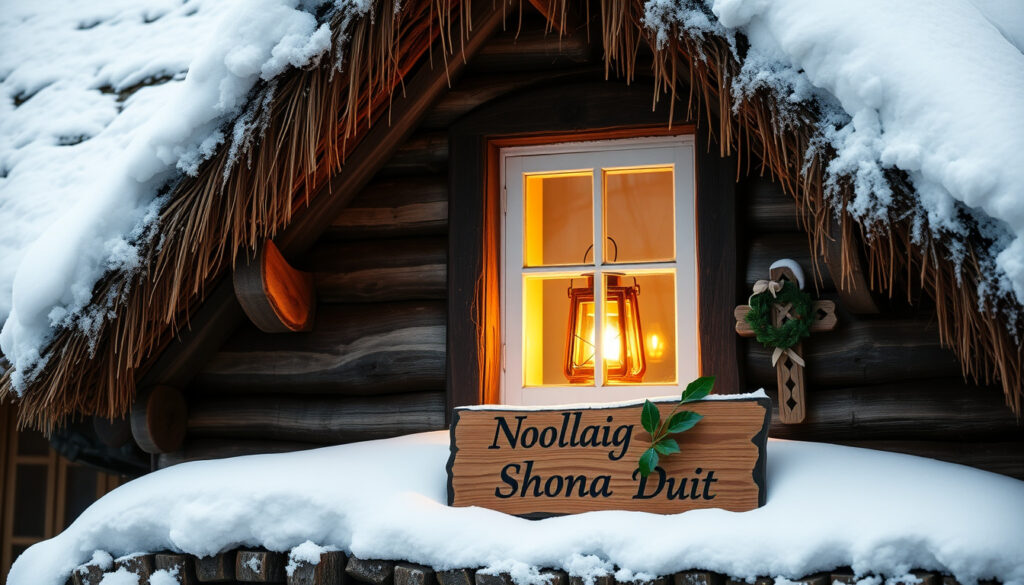
How to Say Happy Christmas in Irish: Pronunciation & Meaning
If you’ve ever wondered why so many Irish people wish you a “Happy Christmas” instead of “Merry Christmas,” the answer lies in the Irish language itself. The phrase is a direct translation from Gaeilge, where Nollaig Shona duit literally means “a happy Christmas to you.”
Irish speakers worldwide: approx. 1.7 million · Primary phrase for one person: Nollaig Shona duit · Primary phrase for multiple people: Nollaig Shona daoibh · Women’s Christmas date: January 6 (Nollaig na mBan) · Common English greeting in Ireland: Happy Christmas
Quick snapshot
- “Nollaig Shona duit” is the standard greeting for one person (Dictionary.com, a reference resource)
- “Nollaig Shona daoibh” is used for multiple people (Preply, a language learning platform)
- Nollaig na mBan is celebrated on January 6 (IrishCentral, an Irish culture publication)
- Irish speakers commonly use ‘Happy Christmas’ in English (Dictionary.com, a reference resource)
- Exact regional preference for “duit” vs. “dhuit” (lenition) varies by dialect
- No authoritative survey on how frequently “Happy Christmas” is used over “Merry Christmas” in daily speech
- Irish language official since 1922; full EU language status in 2022 (Wikipedia, historical overview)
- Growing interest in Irish language greetings online; more phrase guides now include singular/plural distinction
Six key facts at a glance: the Irish language belongs to the Goidelic branch of Celtic languages and is spoken daily by roughly 73,000 people according to the 2016 census. The two Christmas greeting forms hinge on number—singular for one, plural for two or more.
| Item | Value |
|---|---|
| Irish language family | Goidelic (Celtic) |
| Official status | National and first official language of Ireland |
| Number of daily speakers | Approximately 73,000 (2016 census) |
| Christmas greeting for one person | Nollaig Shona duit |
| Christmas greeting for multiple people | Nollaig Shona daoibh |
| Women’s Christmas date | January 6 |
The pattern is clear: the core phrase Nollaig Shona stays the same; only the pronoun changes depending on who you’re addressing.
How do you say happy Christmas in Ireland?
The standard Irish phrase for one person
- Nollaig Shona duit — pronounced “Null-ig Hun-a ditch” (IrishCentral, an Irish culture publication)
- Use when greeting a single individual.
If you’re writing one Christmas card in Irish, Nollaig Shona duit is the form you need. Using the plural form for one person would sound odd to a native speaker.
The standard Irish phrase for multiple people
- Nollaig Shona daoibh — pronounced “Null-ig Hun-a gheev” (Irish American Mom, a cultural heritage site)
- Use when addressing two or more people.
Both forms share the same root words: Nollaig (Christmas) and shona (happy). The difference lies in the pronoun: duit (to you, singular) vs. daoibh (to you, plural). Getting the number right shows respect for Irish grammar.
What this means: Learners must know whether they are addressing one person or a group before choosing a greeting. Mistaking the two can mark you as unfamiliar with Irish grammar.
What does nollaig shona duit mean?
Literal translation of each word
- Nollaig = Christmas (IrishCentral, an Irish culture publication)
- Shona = happy/fortunate
- Duit = to you (singular)
The whole phrase literally means “a happy Christmas to you.” Irish doesn’t have a separate word for “Merry” – shona covers the same ground. This is why “Happy Christmas” became the natural English equivalent in Ireland.
Cultural context of the greeting
Irish speakers commonly say “Happy Christmas” in English because they are translating directly from the Irish structure. A Reddit user on r/ireland, a community forum noted that the phrase feels more natural to Irish ears than “Merry Christmas,” which is understood but less traditional. The greeting is also used in written cards and formal correspondence.
Choosing “Happy Christmas” over “Merry Christmas” signals an understanding of Irish linguistic heritage. Foreign visitors who use the direct translation are often perceived as culturally attuned.
What is an Irish Christmas greeting?
Common spoken greetings
- Nollaig Shona duit/daoibh – the default.
- Nollaig Shona agus Athbhliain faoi Mhaise duit – “Happy Christmas and a prosperous New Year” (My Irish Jeweler, an Irish-themed retailer)
In everyday conversation, you’re more likely to hear people say “Happy Christmas” in English. But among Irish-language speakers and in formal settings, the full Irish greeting is used.
Written greetings for cards
- Singular card: Nollaig Shona duit
- Plural card (family): Nollaig Shona daoibh
- Extended version: Nollaig Shona agus Athbhliain faoi Mhaise daoibh – “Happy Christmas and a prosperous New Year to you all” (Preply, a language learning platform)
What this means: one greeting isn’t enough – you need to know your audience size before you write that card.
Regional variations
Some dialects prefer Nollaig shona dhuit with lenition (the “d” becomes “dh” pronounced as a soft “y” sound). Bitesize Irish, an Irish language learning site labels its pronunciation as approximate, so learners should not fret about perfect regional accuracy. The trade-off: it’s better to use the standard form consistently than to mix dialects.
The pattern: While regional variants like “dhuit” exist, the standard forms “duit” and “daoibh” are universally understood and preferred for learners.
What is the meaning of Happy Nollaig Na mBan?
Women’s Christmas tradition
- Nollaig na mBan means “Women’s Christmas” (IrishCentral, an Irish culture publication)
- Celebrated on January 6 – the Feast of the Epiphany.
- Traditionally a day when women rest and men take over household duties.
For anyone spending the holiday season in Ireland, greeting a woman on January 6 with Nollaig na mBan Shona daoibh shows cultural awareness that goes beyond the standard Christmas card.
How to say the greeting
- Nollaig na mBan Shona daoibh – pronounced “Null-ig na mawn Hun-a gheev” (Irish American Mom, a cultural heritage site)
- Use the plural form because the tradition honours all women collectively.
Many people outside Ireland are unaware of this custom, so mentioning it in conversation or on social media can be a pleasant surprise.
The implication: Using Nollaig na mBan greetings correctly on January 6 is a simple way to demonstrate deeper knowledge of Irish cultural traditions beyond standard Christmas phrases.
Do Irish people say happy Christmas?
Why ‘Happy’ instead of ‘Merry’
Yes, “Happy Christmas” is common in Ireland. The direct translation from Irish Nollaig Shona gives “Happy Christmas” – shona means happy, not merry. According to Dictionary.com, a reference resource, the greeting “Happy Christmas” is widely used in Ireland and Britain, but it has a stronger traditional hold in Ireland due to the Irish language influence.
English usage in Ireland
- Most Irish people understand and sometimes use “Merry Christmas,” especially under the influence of American media.
- “Happy Christmas” remains the default in Irish homes, on greeting cards, and in official holiday messages.
For learners facing the choice between “Merry” and “Happy,” adopt “Happy Christmas” in Irish contexts to align with the language’s direct translation tradition. Using the plural form correctly when addressing a group shows you’ve grasped the core grammatical rule of Irish greetings.
The consequence: Visitors and language learners who say “Happy Christmas” rather than “Merry Christmas” in Ireland will be perceived as more culturally aware, reinforcing their connection to Irish linguistic heritage.
Confirmed facts
- Nollaig Shona duit is the standard greeting for one person (Dictionary.com, a reference resource)
- Nollaig Shona daoibh is the standard greeting for multiple people (Preply, a language learning platform)
- Nollaig na mBan is celebrated on January 6 (IrishCentral, an Irish culture publication)
- Irish speakers commonly use ‘Happy Christmas’ in English (Dictionary.com, a reference resource)
What’s unclear
- Exact regional variations in pronunciation of ‘duit’ vs ‘dhuit’
- Whether ‘Nollaig Shona dhuit’ with lenition is preferred in certain dialects
“Nollaig shona dhuit! Bliain nua faoi mhaise dhuit!” — a common extended greeting posted on the Daltaí Boards forum (2003)
— Daltaí Boards user, an Irish language discussion forum
“Happy Christmas is a direct translation from the Irish Nollaig Shona. It feels more natural to us.”
— Reddit user on r/ireland, a community discussion
“For a group or family, you would say ‘Nollaig Shona daoibh’ – a small but important difference.”
— Prints of Ireland blog, an Irish culture article
Related reading: Scoil an Athar Tadhg Guide · Amsterdam Christmas Market 2025 Guide
youtube.com, youtube.com, howtopronounce.com, irishamericanmom.com, tiktok.com, facebook.com
Frequently asked questions
What is the difference between Nollaig Shona duit and Nollaig Shona daoibh?
Duit is singular (to one person); daoibh is plural (to two or more). The greeting otherwise stays the same.
How do you pronounce Nollaig Shona duit?
Phonetically: “Null-ig Hun-a ditch.” Some dialects say “dhuit” with a softer “y” sound instead of “d.”
What does Nollaig na mBan mean?
It means “Women’s Christmas,” celebrated on January 6, when women traditionally rest and men take over domestic duties.
Is it correct to say ‘Merry Christmas’ in Ireland?
Yes, it is understood, but “Happy Christmas” is more traditional and directly aligns with the Irish-language greeting.
How do you write ‘Happy Christmas’ in an Irish card?
For one person: Nollaig Shona duit. For a family: Nollaig Shona daoibh. You can add a New Year wish: agus Athbhliain faoi Mhaise duit/daoibh.
What is the Irish greeting for a prosperous New Year?
Athbhliain faoi Mhaise duit/daoibh – pronounced “Ah-vlee-in fwee washa ditch/gheev.”
Do Irish people use ‘Happy Christmas’ more than ‘Merry Christmas’?
Yes. “Happy Christmas” is the default in Ireland, largely because it is a direct translation from the Irish language.
More related posts
 Arsenal vs Aston Villa Lineups: Gabriel and Timber Return
 Brazilian Embassy in Dublin: Address, Appointments, Contacts
 Apple Student Discount Ireland: Up to 10% Off AppleCare+
 Hotels in Donegal Town: Best Places to Stay
 Cast of Ginny and Georgia: Actors and Characters Guide
 Is Weapons a True Story? Director’s Inspirations Revealed
 When Is iOS 26 Coming Out? Release Date, Updates & Guide