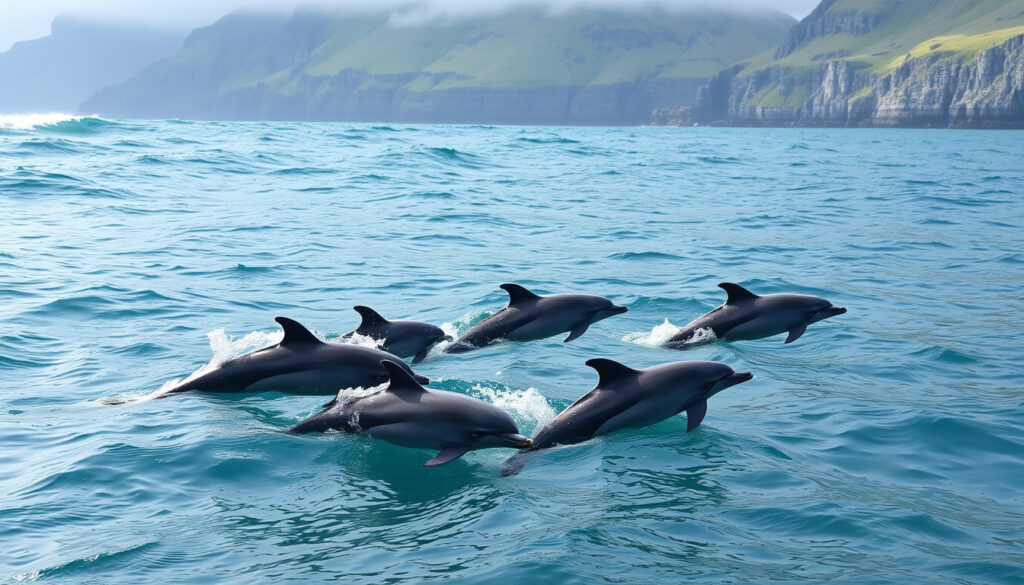
Irish Whale and Dolphin Group: Cetacean Conservation Guide
The Irish coastline holds a quiet magic—a fin slicing the surface can launch a national data mission. For more than three decades, the Irish Whale and Dolphin Group (IWDG) has turned that coastal curiosity into a national data-gathering mission. Every sighting — from a harbour porpoise off Donegal to a humpback breaching near Cork — feeds a growing database that shapes conservation policy. Today, the IWDG is the official Irish cetacean recording scheme (Wikipedia – Irish Whale and Dolphin Group).
Founded: 1990 ·
Species recorded in Irish waters: 25+ cetacean species ·
Sightings submitted annually: Over 5,000 ·
Volunteers: Hundreds active
Quick snapshot
- IWDG is the official Irish cetacean recording scheme (Wikipedia – Irish Whale and Dolphin Group)
- Founded December 1990 (Wikipedia) (Wikipedia – Irish Whale and Dolphin Group)
- Irish Whale Sanctuary declared June 1991 (Wikipedia) (Wikipedia – Irish Whale and Dolphin Group)
- Charitable status granted December 1999 (Wikipedia) (Wikipedia – Irish Whale and Dolphin Group)
- Precise population counts for rare cetacean species in Irish waters
- Long-term residency patterns for some dolphin populations
- 1991: IWDG launches sighting and stranding scheme (IWDG (official charity))
- 2022: 26 common dolphins stranded in Mayo; 24 saved by volunteers (Mayo PPN (community organisation))
- Continued citizen science reporting
- IWDG reviews planning applications for marine impact
- Annual Whale Watch Day events
Five key facts about the IWDG’s reach and operations:
| Fact | Detail |
|---|---|
| Official name | Irish Whale and Dolphin Group (IWDG) |
| Headquarters | Kilrush, County Clare |
| Year formed | 1990 |
| Number of species monitored | 25+ |
| Annual sighting reports | 5,000+ |
Where is the whale and dolphin group in Ireland?
The IWDG’s physical base is in Kilrush, County Clare, on the Shannon Estuary — a prime area for dolphin watching.
Physical address and visitor info
- The IWDG centre in Kilrush is open to the public by appointment. General enquiries can be sent to enquiries@iwdg.ie.
How to reach the IWDG centre
- Kilrush is accessible by road from Ennis (approx 45 minutes) and from Dublin (approx 3 hours). The centre coordinates sightings across the country remotely.
For the latest local tide times before planning a coastal trip, check When Is High Tide Today? Dublin, Cork & Ireland Times.
The implication: while the IWDG operates from one physical office, its nationwide network of volunteers makes it a truly national organisation.
What group are whales and dolphins in?
Scientific classification of cetaceans
- Whales, dolphins and porpoises belong to the order Cetacea. They are marine mammals, breathing air and nursing their young. The IWDG records all cetacean species found in Irish waters (IWDG (official charity)).
Difference between whales, dolphins, porpoises
- Dolphins generally have longer snouts and curved dorsal fins; porpoises have spade-shaped teeth and smaller, triangular fins. Whales are divided into baleen and toothed groups. All fall under Cetacea.
The trade-off: even if you can’t distinguish a dolphin from a porpoise, reporting a sighting to the IWDG still provides valuable data.
Are there whales or dolphins in the Irish Sea?
Common species in the Irish Sea
- Yes — multiple species occur year-round. Bottlenose dolphins and harbour porpoises are resident. Minke whales are seen in summer months. The IWDG tracks these through its sightings database (IWDG (official charity)).
Seasonal patterns
- Spring and summer bring more sightings as migratory species like fin whales and humpbacks arrive. In winter, resident dolphins and porpoises remain. The IWDG’s records show over 5,000 reports annually.
Weather conditions affect sightings — check the Weather for Next Week in Ireland: Met Éireann Forecast before heading out.
The pattern: the Irish Sea is not a cetacean desert — it hosts a dynamic mix of residents and seasonal visitors.
What is the collective name for whales and dolphins?
Pod, school, herd
- Collective nouns vary: “pod” is most common for dolphins and whales, but “school” is used for smaller dolphins, and “herd” sometimes for larger whales.
Cetaceans as a group
- The accurate scientific collective term is “Cetacea” — the taxonomic order that includes all whales, dolphins, and porpoises. The IWDG uses this classification in its records.
Why this matters: referring to a “pod of dolphins” is correct, but understanding the broader order helps appreciate the diversity IWDG monitors.
Do dolphins live in Ireland?
Resident vs visiting dolphins
- Yes, bottlenose dolphins are resident year-round, particularly in the Shannon Estuary. The IWDG’s Shannon Dolphin project tracks a population of over 100 individuals. Mags Daly manages volunteering enquiries for this project (IWDG (official charity)).
Best places to see dolphins
- West Cork (Castletownbere, Baltimore), Kerry (Dingle, Tralee Bay), and the Cliffs of Moher offer excellent land-based dolphin watching. The IWDG provides identification materials.
The catch: while dolphins are visible in many coastal areas, long-term residency patterns for certain populations remain uncertain — citizen science helps fill those gaps.
How to Report a Whale or Dolphin Sighting in Ireland
-
Step 1: Note the details
- Time, date, location, species (or as much detail as possible), number of animals, behaviour.
-
Step 2: Submit via the IWDG website or app
- Go to iwdg.ie and use the online form or download the IWDG sightings app. Reports go directly into the national cetacean database (IWDG (official charity)).
-
Step 3: Report strandings
- If you find a stranded whale or dolphin, contact the IWDG stranding network via the website or email stranding@iwdg.ie. Do not approach live stranded animals — wait for trained responders.
-
Step 4: Join local volunteer groups
- Volunteers can join the Mayo branch (focused on Blacksod hotspot) or support the research vessel Celtic Mist by emailing celticmist@iwdg.ie (IWDG (official charity)).
-
Step 5: Consider an internship or job
- IWDG offers internships occasionally; check the website for vacancies. General volunteering enquiries to enquiries@iwdg.ie.
Every sighting report feeds into a national database used by policymakers. A quick photo and a few notes can directly influence marine conservation planning in Ireland.
The upshot: every report, from a casual dolphin sighting to a stranding, adds to Ireland’s understanding of its marine mammals.
Confirmed facts
- IWDG is the official Irish cetacean recording scheme (Wikipedia – Irish Whale and Dolphin Group)
- Irish Whale Sanctuary was declared in 1991 (Wikipedia – Irish Whale and Dolphin Group)
- Over 25 cetacean species recorded in Irish waters (Wikipedia – Irish Whale and Dolphin Group)
What’s unclear
- Precise population sizes for rare species
- Long-term residency of some dolphin populations
- Long-term impact of offshore wind farms on cetacean populations
The IWDG’s data is used to evaluate planning applications for offshore wind farms and shipping lanes. Without citizen scientists, these decisions would lack ground-level evidence.
“The IWDG runs a sighting and stranding scheme for whales and dolphins since 1991, relying entirely on the public’s eyes and ears.”
— IWDG Conservation page
“Our volunteers are the heartbeat of our organisation. Every report, every stranding response, every beach cleanup makes a real difference to marine conservation in Ireland.”
— Mags Daly, Shannon Dolphin Project Manager, via IWDG (official charity)
The Irish Whale and Dolphin Group has turned a coastline of curious onlookers into a powerful conservation network. For anyone living along the Irish coast, the choice is clear: report a sighting, volunteer a day, or simply pay closer attention. The whales and dolphins will keep surfacing — the IWDG ensures we keep learning.
For detailed information on one of the species monitored by the IWDG, see our guide on southern right whale conservation.
Frequently asked questions
How can I join the Irish Whale and Dolphin Group?
You can join by supporting the group through donations or volunteering. There is no formal membership scheme, but involvement is encouraged via reporting and local groups. Contact enquiries@iwdg.ie for more.
Does the IWDG offer guided whale watching tours?
No, the IWDG does not operate tours. It focuses on data recording and conservation. However, they organise annual Whale Watch Day events with volunteer-led land watches.
What is the best time of year to see whales in Ireland?
Summer (June to September) offers the highest chances for minke, fin, and humpback whales. Dolphins and porpoises are visible year-round. Check the IWDG sightings map for real-time reports.
How can I recognize different dolphin species?
The IWDG provides identification guides on its website. Key differences: bottlenose dolphins are large and grey with a short beak; common dolphins have a distinctive hourglass pattern on their sides.
Are there any dangerous marine animals in Irish waters?
No. Irish waters are very safe. The largest predator is the orca (killer whale), but attacks on humans are unknown in this region. Basking sharks are harmless filter-feeders.
Does the IWDG have a mobile app?
Yes, the IWDG sightings app is available for iOS and Android, allowing users to report sightings and strandings directly from the coast.
Can I adopt a whale or dolphin through the IWDG?
Yes, the IWDG offers an adoption program for Shannon Estuary bottlenose dolphins. The funds support research and conservation work.
More related posts
 Free Live Ship Tracking: Track Ships Online in Real Time
 Apple Student Discount Ireland: Up to 10% Off AppleCare+
 Club L London Returns: Policy, Costs, and Process
 Simple Banana Bread Recipe – Easy One-Bowl Loaf
 The Beast in Me (2025) – Plot, Cast, Reviews, and Viewer Guide
 Dublin by Night Fest 2025: Schedule, Locations & Nightlife Guide
 What Is VO2 Max? How to Measure and Improve It
 Joanne Cantwell Husband Shay: Family Life and Career Guide