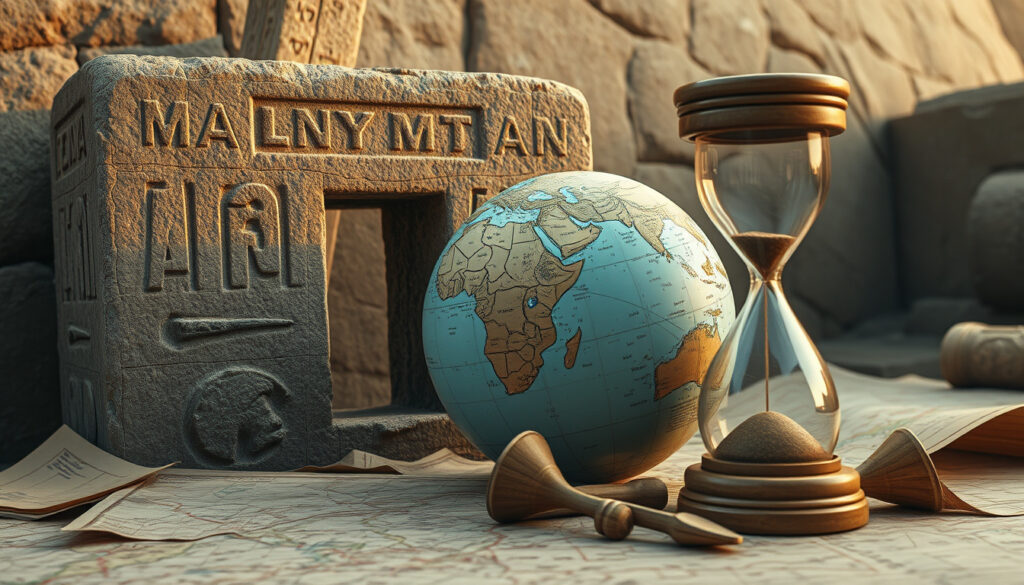
What Is the Oldest Country in the World? Facts & Myths
Asking which country is the oldest feels a bit like asking which is the best pizza topping – the answer changes depending on who you ask and what you’re measuring, because three different yardsticks point to three different contenders: continuous civilization, modern statehood, and recorded history.
Oldest modern sovereign state: San Marino (founded 301 CE) ·
Oldest continuous civilization: Iran (c. 3200 BCE) ·
Oldest recorded history: Egypt (c. 3100 BCE)
Quick snapshot
- Iran is one of the oldest continuous civilizations, dating to around 3200 BCE (Times of India, Indian daily newspaper)
- Egypt unified as a state around 3100 BCE (World History Encyclopedia, educational resource)
- San Marino is the world’s oldest surviving republic, founded in 301 CE (Encyclopaedia Britannica, reference publisher)
- Which country is truly the oldest depends on the definition used (Live Science, science news outlet)
- The age of China and India as continuous states is debated (Live Science, science news outlet)
- Many countries have mythological founding dates that blur the line between legend and history (Live Science, science news outlet)
- c. 3200 BCE – Elam civilization emerges in present-day Iran (Times of India)
- Archaeological discoveries continue to push back the dates of early civilizations, potentially reshaping the rankings
Five quick facts that illustrate how the age of a country is more complicated than a single number.
| Label | Value |
|---|---|
| Oldest country (civilization) | Iran (c. 3200 BCE) (Times of India) |
| Oldest country (modern state) | San Marino (301 CE) (Encyclopaedia Britannica) |
| Oldest country (Egypt) | c. 3100 BCE (World History Encyclopedia) |
| Oldest country (Japan) | 660 BCE (legendary) (Encyclopaedia Britannica) |
| Oldest country (China) | c. 2070 BCE (Xia dynasty) (American Historical Association) |
What is the first country in the world?
Definition of ‘first country’
The word “first” is slippery. If we mean the earliest organized political entity that resembles a modern state, the answer leads to San Marino, which claims continuous sovereignty since 301 CE (Encyclopaedia Britannica, reference publisher). If we mean the earliest civilization with a unified government, Iran and Egypt both appear around 3200–3100 BCE. The World History Encyclopedia (educational resource) notes that Egyptian unification under Narmer is the standard benchmark.
There is no single universally accepted “oldest country” because the answer changes with the definition used, as Live Science (science news outlet) explains.
Civilization vs modern state
- Civilization: continuous culture, language, and urban centers over millennia
- Modern state: a sovereign entity recognized by the international community with continuous political institutions
The catch: many ancient civilizations – like Mesopotamia – never evolved into the modern countries that now occupy those lands. Encyclopaedia Britannica (reference publisher) notes that Mesopotamia is usually treated as the oldest known civilization, but it is not a modern country.
What this means: when you ask “what is the oldest country,” you’re really asking two separate questions – one about people, one about passports.
Is there a country older than Egypt?
Countries with older civilizations
Yes, by one measure. Iran (the Elam civilization) shows organized government as early as 3200 BCE, predating Egypt’s unification around 3100 BCE (Times of India, Indian daily newspaper). The Indus Valley civilization in present-day India and Pakistan flourished around 2600 BCE (National Geographic Education, educational arm of Nat Geo). But modern India is a much younger political entity.
Mesopotamia, in modern Iraq, produced the first writing systems in the late 4th millennium BCE (Encyclopaedia Britannica, reference publisher). Yet Iraq as a nation-state was only formed in the 20th century.
Evidence from archaeology
- Sumerian cuneiform tablets date to c. 3100 BCE – some of the oldest writing found
- Chinese oracle bones appear around 1250 BCE, but Chinese historical tradition claims over 4,000 years of recorded history (University of California, Irvine, academic institution)
The pattern: older civilizations exist, but they didn’t automatically become today’s countries. The modern political map is much younger than the cultures beneath it.
Which country is 6000 years old?
Countries claiming 6000-year history
Armenia occasionally claims cultural roots dating to 6000 BCE, but these are prehistoric and unverified. Iran’s civilization is often cited as 4000 BCE – about 6000 years ago from 2025. Egypt’s state formation at 3100 BCE is roughly 5100 years ago. Live Science (science news outlet) notes that no country has maintained a continuous political structure for 6000 years.
Mythological vs archaeological dates
Japan’s imperial line is traditionally dated to 660 BCE, but that founding is legendary, not archaeological (Encyclopaedia Britannica, reference publisher). Similarly, China’s Xia dynasty (c. 2070 BCE) is still debated by historians – some consider it mythological (American Historical Association, professional historians’ organization).
The trade-off: a 6000-year-old country sounds impressive, but no modern nation can prove an unbroken government across that span.
What are the top 10 oldest countries in the world?
Ranking by civilization origin
A typical list based on earliest known civilization includes: Iran (c. 3200 BCE), Egypt (c. 3100 BCE), China (c. 2070 BCE), India (c. 2600 BCE Indus Valley), Iraq (Mesopotamia), Greece (Minoan), Japan (660 BCE legendary), Ethiopia (c. 980 BCE), San Marino (301 CE), and France (843 CE). But the order shifts dramatically when you rank by modern statehood.
Ranking by modern statehood
If you require continuous sovereign government, Encyclopaedia Britannica (reference publisher) recognizes San Marino (301 CE) as the oldest surviving republic. Japan’s imperial institution is also ancient, but as a constitutional monarchy it dates from the Meiji period. The Live Science (science news outlet) notes that Chinese civilization is often described as one of the longest-lasting in the world.
List of oldest countries
- San Marino (301 CE) – oldest republic
- Japan (660 BCE legendary) – oldest hereditary monarchy
- Iran (3200 BCE) – oldest continuous civilization
- Egypt (3100 BCE) – earliest unified state
- China (2070 BCE) – long recorded history
- India (2600 BCE) – Indus Valley roots
- Greece (9th century BCE) – early city-states
- Ethiopia (980 BCE) – ancient kingdom
- Iraq (Mesopotamia) – cradle of civilization
- Armenia (mythological) – claimed prehistory
Why this matters: the top 10 are not fixed; they change every time a new archaeological discovery pushes back a date or a political border shifts.
What are the oldest countries in Europe and Asia?
Oldest country in Europe
San Marino, founded in 301 CE, is widely considered Europe’s oldest continuously existing sovereign state (Encyclopaedia Britannica). Greece, with its classical city-states emerging in the 9th century BCE, has an older civilization but not a continuous modern state.
Oldest country in Asia
Asia boasts the world’s oldest civilizations. Iran (Elam) around 3200 BCE is the strongest candidate for oldest continuous civilization on the continent (Times of India). Japan’s legendary 660 BCE foundation makes it a contender for oldest monarchy.
Comparison between continents
Asia’s age advantage is clear: its civilizations are thousands of years older than Europe’s. Egypt, though in Africa, is often grouped with the Middle East in these lists. Live Science (science news outlet) notes that the earliest writing systems emerged in Asia, giving the continent a head start on recorded history.
Comparing the Oldest Countries by Different Metrics
One pattern: the same countries appear again and again, but their ranks depend entirely on the yardstick used.
| Country | Civilization age | Modern statehood | Recorded history |
|---|---|---|---|
| Iran | c. 3200 BCE (Times of India) | 20th century | Elamite cuneiform |
| Egypt | c. 3100 BCE (World History Encyclopedia) | 1922 (independence) | Hieroglyphs c. 3100 BCE |
| China | c. 2070 BCE (American Historical Association) | 1912 (Republic) | Oracle bones c. 1250 BCE |
| San Marino | 301 CE (Encyclopaedia Britannica) | 301 CE (continuous) | Medieval records |
| Japan | 660 BCE legendary (Encyclopaedia Britannica) | 1889 (Meiji Constitution) | 8th century chronicles |
The implication: if you want the oldest country that still exists as the same political entity, San Marino wins. If you want the deepest cultural roots, Iran and Egypt are the frontrunners.
Timeline of Early State Formation
- – Elam civilization in Iran (Times of India)
- – Unification of Upper and Lower Egypt (Encyclopaedia Britannica)
- – Xia dynasty established in China (American Historical Association)
- – Traditional founding of Japan by Emperor Jimmu (Encyclopaedia Britannica)
- – Founding of San Marino (Encyclopaedia Britannica)
The catch: only San Marino’s date is unbroken political continuity. The others represent cultural or dynastic origins, not modern statehood.
Clarity Check: What We Know vs What Remains Debated
Confirmed facts
- Iran is one of the oldest continuous civilizations (Times of India)
- Egypt is one of the oldest recorded civilizations (World History Encyclopedia)
- San Marino is the oldest continuously existing sovereign state (Encyclopaedia Britannica)
What’s unclear
- Which country is truly the oldest depends on definition (Live Science)
- The age of China and India as continuous states is debated (American Historical Association)
- Many countries have mythological founding dates that blur the line between legend and history
The pattern: the debate itself reveals that “oldest country” is a modern question layered over ancient ground.
The oldest country in the world is a moving target because the definition moves. For travelers and history buffs: if you want to visit the oldest republic, book a flight to San Marino. If you want to walk through 5,000-year-old ruins, head to Iran or Egypt.
Expert Perspectives
“Iran’s history as a continuous political entity goes back to the Elamite civilization around 3200 BCE, making it one of the oldest in the world by that measure.” Times of India (Indian daily newspaper)
“San Marino might be the oldest country in the world if you define ‘country’ as a continuous sovereign state that has survived since its founding.” Encyclopaedia Britannica (reference publisher)
“On Reddit geography discussions, users frequently point out that the answer depends entirely on whether you’re asking about civilization, state, or culture – and that no single answer will ever satisfy everyone.” Reddit geography discussion (community forum)
The implication: three different speakers, three different answers, and none of them wrong.
So, What Is the Oldest Country in the World?
There is no one answer – and that’s the honest truth. For the traveler who wants to stand in the oldest continuously functioning republic, San Marino is your stop. For the history enthusiast who wants to trace the deepest continuous cultural roots, Iran and Egypt offer millennia of heritage. The debate itself is a reminder that “country” is a modern idea layered over ancient worlds. For anyone researching this question, the implication is clear: choose your metric, then choose your winner.
New archaeological digs in Iran and Egypt could push back the dates of early state formation. If you’re betting on the oldest country, keep an eye on the excavation reports from the Elamite and Predynastic periods.
studocu.com, geoguesser.in, thepressjournal.co.uk, face.meei.harvard.edu, ultimatekilimanjaro.com, facebook.com, trekgo.in, timesofindia.indiatimes.com, facebook.com, studycountry.com
Historians often disagree on the criteria, but a detailed analysis of the oldest country in the world highlights the leading contenders.
Frequently asked questions
How old is Iran?
Iran’s civilization traces back to the Elamite period around 3200 BCE, making it one of the oldest continuous civilizations in the world (Times of India).
How old is San Marino?
San Marino was founded in 301 CE and is the world’s oldest surviving republic (Encyclopaedia Britannica).
What is the oldest country in Africa?
Egypt, with its unification around 3100 BCE, is widely considered the oldest country in Africa (World History Encyclopedia).
Is Egypt older than Iran?
By civilization origin, Iran’s Elam civilization (3200 BCE) predates Egypt’s unification (3100 BCE) by about a century. However, Egypt has the older recorded state formation (Live Science).
What is the oldest country in South America?
No South American country has a continuous political history reaching back before European colonization. The oldest modern states are Peru (1821) and Brazil (1822).
Does the age of a country include its modern government?
Yes, if you define “oldest” by modern statehood. San Marino’s government has been continuous since 301 CE. Most other countries have had revolutions or changes of regime that reset the political clock.
What is the oldest country in the world that still exists?
San Marino is the oldest continuously existing sovereign state. Japan is the oldest hereditary monarchy, but its modern constitutional government is much younger.
How old is Japan according to legend?
Japan’s traditional founding by Emperor Jimmu is dated to 660 BCE, though this is considered mythological rather than historical (Encyclopaedia Britannica).
Related reading: For a visual overview of all the countries mentioned, check our Flags of the World: Complete List, History & Quiz Help. Also see Saint Vincent de Paul: His Life and the Charity He Inspired for a deep look at historical institutions that have lasted centuries.
More related posts
 Drury Street Car Park: Rates, Hours & Parking Tips
 How to Create a Backup Plan Step by Step: 3-2-1 Rule Explained
 Seasons of the Year: Months, Ireland & Weather
 The Lake Hotel Killarney – Comprehensive Guide to Rates and Amenities
 Shameless (British TV Series): UK vs US, Cast, Ending & Guide
 Next Bank Holiday in Ireland: 2026 Dates
 Sunderland vs Burnley Lineups: Feb 2, 2026 Premier League
 Birth Stones for Months: Modern & Traditional Chart