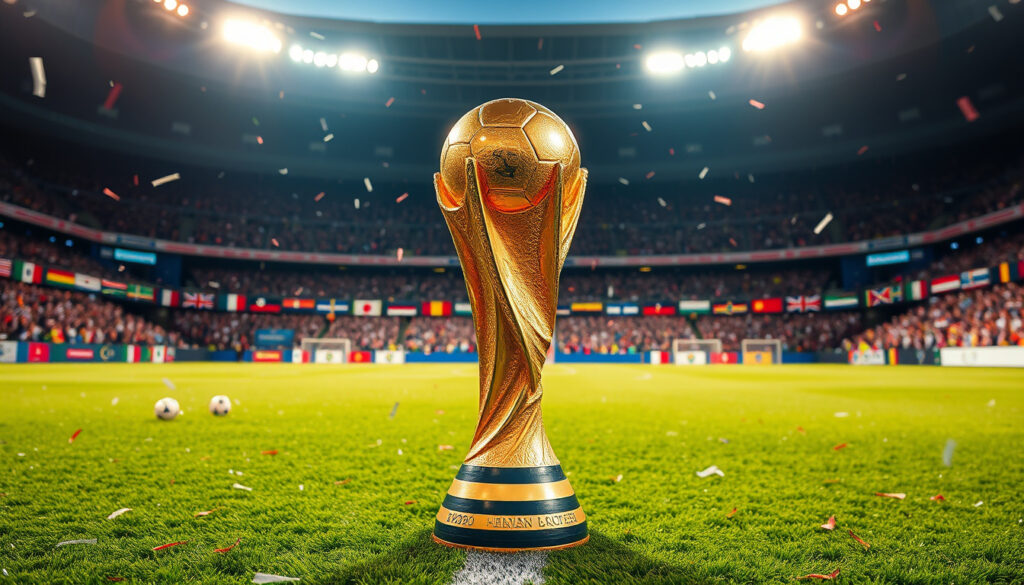
World Cup Winners List: All FIFA Champions 1930-2022
If you grew up watching soccer, the World Cup trophy probably feels inevitable—something that always existed, always would. But it started with a bang in 1930, when Uruguay beat Argentina 4–2 in Montevideo in front of roughly 68,000 fans, and it’s been handed out just 22 times since. Only eight nations have ever lifted it, and the list of champions tells a story about dominance shifting from South America to Europe and back again. This page runs through every single winner from Uruguay’s first to Argentina’s most recent, with the scores, the title counts, and the numbers that tie it all together.
Most Wins: Brazil (5) · Total Editions: 22 · Latest Winner: Argentina (2022) · Runners-Up Wins: Germany/Italy (4 each) · Undefeated Teams: Uruguay (1930), Italy (1934, 1938)
Quick snapshot
- Exact attendance for the 1930 final varies by source (some cite 93,000)
- No contested or disputed winners in any edition
- Uruguay won in 1930; Argentina claimed it again in 2022 (92-year span)
- Brazil’s golden era covered 1958–1970; Germany’s most recent came in 2014
- 2026 World Cup will be held in the United States, Canada, and Mexico
- Brazil remains the only team to have competed in every tournament
In 22 editions spanning more than nine decades, eight nations have shared the World Cup trophy—with one standing far above the rest.
| Category | Value |
|---|---|
| Total World Cups | 22 |
| Most Titles | Brazil (5) |
| First Winner | Uruguay (1930) |
| Current Champion | Argentina (2022) |
| Host Wins | 6 times |
| Back-to-Back Winners | Italy (1934–38), Brazil (1958–62) |
| Most Final Appearances | Germany (8) |
Which Countries Have Won the World Cup?
Eight nations have won the FIFA World Cup from 1930 to 2022, and the distribution is lopsided: Brazil alone has five titles, while Germany and Italy are tied at four each. Argentina has three, France and Uruguay two apiece, and England and Spain one each. No other country has ever won the tournament.
- 5 titles
- 1958, 1962, 1970, 1994, 2002
- 4 titles
- 1954, 1974, 1990, 2014
- 4 titles
- 1934, 1938, 1982, 2006
- 3 titles
- 1978, 1986, 2022
- 2 titles
- 1998, 2018
- 2 titles
- 1930, 1950
- 1 title
- 1966
- 1 title
- 2010
The pattern is clear: the trophy has never left the hands of South American or European nations. Every final in history has featured one team from each confederation, and no Asian, African, or CONCACAF team has come within a match of changing that. The implication: whoever hosts the next World Cup, the winner will almost certainly come from the same limited pool that has always claimed the trophy.
Which Country Has Won the Most World Cups?
Brazil stands alone as the most successful nation in World Cup history, with five titles won across six decades. Germany’s four titles are impressive but came in bursts separated by decades. Italy, too, has four titles, though its first two came back-to-back in the 1930s.
Brazil’s Five Titles
Brazil’s five World Cup victories span 1958 to 2002: Topend Sports records each final result. The 1958 win over Sweden (5–2) introduced Pelé to the world at age 17. Two years later, Brazil defended the trophy by beating Czechoslovakia 3–1 in Chile. The 1970 victory in Mexico against Italy (4–1) is widely considered the greatest team performance in tournament history, with Pelé, Jairzinho, and Tostão dismantling the Italian defense. After a 24-year gap, Brazil won again in 1994, beating Italy on penalties after a 0–0 draw in Pasadena. The 2002 triumph in Japan and South Korea saw Ronaldo and Rivaldo dismantle the German defense 2–0. Pelé remains the only player to have won the World Cup three times, earning medals in 1958, 1962, and 1970 (Sports Illustrated).
Germany and Italy (4 Each)
Germany’s titles include wins under the West Germany banner in 1954, 1974, 1990, and under reunified Germany in 2014. Italy’s four titles came in 1934, 1938, 1982, and 2006. Both nations share the runner-up position behind Brazil, and both have experienced long gaps between championships—Italy waited 44 years between 1938 and 1982; Germany went 24 years between 1990 and 2014. What this means: dominance in World Cup soccer requires either a deep talent pipeline sustained across generations or periodic golden generations that arrive rarely but win decisively.
Argentina’s Recent Success
Argentina has three titles (1978, 1986, 2022), but the 2022 win in Qatar carries unique weight. Argentina defeated France 4–2 on penalties after a 3–3 draw in one of the greatest finals ever played, giving Lionel Messi his first World Cup trophy at age 35. That 2022 victory ended a 36-year drought since Argentina’s 1986 win under Diego Maradona (Topend Sports).
Argentina won the 2022 World Cup against France in what many analysts called the greatest final in tournament history—yet it came after three straight losses in major finals (2014 World Cup, 2015 Copa América, 2016 Copa América). The wait made the win feel earned in a way that a routine victory would not have.
Who Won the World Cup Before Argentina?
The most recent World Cup before Argentina’s 2022 victory was held in 2018, when France won in Russia by defeating Croatia 4–2 in the final.
2022 Final
The 2022 final between Argentina and France drew global attention for the margin and the drama. After 90 minutes ended 2–2, the match went to extra time, then penalties. Kylian Mbappé scored a hat-trick for France but Argentina held its nerve, winning 4–2 in the shootout (Topend Sports).
Recent Champions (2018–2006)
The 10 tournaments before 2022 produced five different winners: France (2018), Germany (2014), Spain (2010), Italy (2006), and a run from Germany (1990) back through Brazil (2002). France reached the 2022 final again, making it the first team to reach back-to-back finals since Germany in 2002.
Last 10 Years
Looking at the most recent decade-plus: France won in 2018, Germany in 2014, Spain in 2010, Italy in 2006, and Brazil in 2002. Spain’s 2010 win marked the first and only title for a nation that had never won before and has not repeated the feat. The pattern: the winner’s circle outside Brazil and Germany has been unpredictable, but the overall field remains limited to European and South American teams.
Argentina’s 2022 win is the only instance of a team winning its third World Cup in the past 40 years—every other recent champion was either winning for the first time or winning after a multi-decade gap. The implication for 2026: any team that adds a second or third title will stand out dramatically against this trend.
Which Country Has Never Lost a World Cup Match?
Two nations have finished a World Cup tournament without a single defeat and with the trophy to show for it: Uruguay in 1930 and Italy in both 1934 and 1938.
Undefeated Champions
Uruguay won the inaugural World Cup in 1930 without losing a match, completing a perfect 4–0 record en route to the final. Italy matched the feat across two consecutive tournaments: 1934 (hosting and winning every match) and 1938 (repeating the unbeaten run in France). No other team in history has finished unbeaten in a tournament it won. Brazil came close in 1970 but played in more games; Italy and Uruguay hold the unique distinction of having done it in fewer matches with zero losses.
Perfect Records in Tournaments
The context matters: Uruguay in 1930 played only three knockout matches after the group stage. Italy in 1934 and 1938 also faced smaller fields and fewer games than modern World Cups. In the 24-team format used since 1998, no team has gone unbeaten and won. The closest recent call was France in 1998, which lost none but drew one match. The catch: “never lost a match” as a standalone claim is impressive, but the conditions that made it possible in the 1930s no longer exist in a 48-team format.
The 2026 World Cup in the United States, Canada, and Mexico will feature 48 teams for the first time. An unbeaten run to the title would be historically unprecedented given the volume of matches, and if any team manages it, the achievement would surpass what Uruguay and Italy accomplished in much smaller tournaments.
FIFA World Cup Winners List from 1930 to 2022
Twenty-two editions of the World Cup have been held from 1930 to 2022, with no tournaments in 1942 and 1946 due to World War II.
1930–1950
The first three editions established the early order. Uruguay won the inaugural World Cup on July 30, 1930, defeating Argentina 4–2 at Estadio Centenario in Montevideo. Italy won in 1934, beating Czechoslovakia 2–1 after extra time. Italy won again in 1938, defeating Hungary 4–2. FIFA did not award official winners’ medals retroactively to players from 1930 to 1974 until November 2007.
| Year | Winner | Runner-Up | Score | Host |
|---|---|---|---|---|
| 1930 | Uruguay | Argentina | 4–2 | Uruguay |
| 1934 | Italy | Czechoslovakia | 2–1 aet | Italy |
| 1938 | Italy | Hungary | 4–2 | France |
| 1950 | Uruguay | Brazil | 2–1 | Brazil |
| 1954 | West Germany | Hungary | 3–2 | Switzerland |
The pattern in the first five editions shows Uruguay and Italy establishing themselves as the first powers, with West Germany emerging as a contender by 1954.
1958–1986
This era belongs to Brazil. Brazil won in 1958 (5–2 over Sweden), 1962 (3–1 over Czechoslovakia), and 1970 (4–1 over Italy), forming the golden era that Sports Illustrated credits to Pelé’s dominance. England won once, in 1966, defeating West Germany 4–2 with Geoff Hurst’s disputed goal in extra time. Argentina won in 1978 (3–1 over Netherlands) and again in 1986 (3–2 over West Germany), with Diego Maradona leading the second run.
| Year | Winner | Runner-Up | Score | Host |
|---|---|---|---|---|
| 1958 | Brazil | Sweden | 5–2 | Sweden |
| 1962 | Brazil | Czechoslovakia | 3–1 | Chile |
| 1966 | England | West Germany | 4–2 aet | England |
| 1970 | Brazil | Italy | 4–1 | Mexico |
| 1974 | West Germany | Netherlands | 2–1 | West Germany |
| 1978 | Argentina | Netherlands | 3–1 aet | Argentina |
| 1982 | Italy | West Germany | 3–1 | Spain |
| 1986 | Argentina | West Germany | 3–2 | Mexico |
What this means: Brazil’s three titles in 12 years represent the most dominant run any nation has had in World Cup history, and no team has come close to replicating that span of success.
1990–2022
Germany reunified in 1990 and won that same year, defeating Argentina 1–0. Brazil then won in 1994 (penalty shootout over Italy after 0–0) and again in 2002 (2–0 over Germany). France won in 1998 (3–0 over Brazil) in what many call the greatest performance in a final. Germany won again in 2014 with Mario Götze’s extra-time goal. France won a second time in 2018 (4–2 over Croatia), and Argentina closed the era with its 2022 penalty victory over France.
| Year | Winner | Runner-Up | Score | Host |
|---|---|---|---|---|
| 1990 | West Germany | Argentina | 1–0 | Italy |
| 1994 | Brazil | Italy | 0–0 (penalties) | United States |
| 1998 | France | Brazil | 3–0 | France |
| 2002 | Brazil | Germany | 2–0 | Japan/South Korea |
| 2006 | Italy | France | 1–1 (penalties) | Germany |
| 2010 | Spain | Netherlands | 1–0 | South Africa |
| 2014 | Germany | Argentina | 1–0 aet | Brazil |
| 2018 | France | Croatia | 4–2 | Russia |
| 2022 | Argentina | France | 3–3 (penalties) | Qatar |
Timeline
Uruguay defeats Argentina 4–2 to win the inaugural World Cup in Montevideo
Italy wins back-to-back titles, the first nation to achieve consecutive victories
Brazil enters its golden era, winning three titles in 12 years with Pelé leading the way
Argentina claims three titles, including the most recent victory in 2022
Confirmed facts
- All 22 World Cup winners from 1930 to 2022 are confirmed by FIFA and multiple sports publications
- Brazil has competed in every single World Cup tournament since the first edition in 1930
- Germany has reached more finals (8) than any other nation
- All World Cup finals have featured a UEFA (European) and CONMEBOL (South American) team
What’s unclear
- Exact attendance figures for the 1930 final vary between sources (68,346 vs 93,000)
- Third-place match details are not consistently verified across all editions for pre-1970 tournaments
What analysts say
Brazil stands alone as the most successful nation in World Cup history, lifting the trophy five times.
— Sports Illustrated (sports outlet)
Argentina won the most recent World Cup in 2022, defeating France in a thrilling final that went to penalties after a 3–3 draw.
— Topend Sports (sports database)
Pelé is the only player ever to win the World Cup three times, earning medals in 1958, 1962, and 1970.
— Sports Illustrated (sports outlet)
For soccer fans in South America or Europe, the World Cup has always been a contest between familiar rivals—but the trophy has rarely been shared equally. Brazil’s five titles gave the tournament its most reliable champion for decades. The 2026 tournament will test whether a new nation can break into that tight winner’s circle, or whether the same eight countries continue to divide the prize among themselves.
Related reading: Galway United vs Cork City – Head-to-Head Preview and Stats
Brazil leads with five titles while Germany and Italy follow with four each, patterns echoed in the year-by-year champions list since 1930.
Frequently asked questions
How many times has Brazil won the World Cup?
Brazil has won the World Cup five times: 1958, 1962, 1970, 1994, and 2002. No other nation has won more titles.
Who won the 2018 World Cup?
France won the 2018 World Cup, defeating Croatia 4–2 in the final held in Moscow, Russia.
Which teams have won as hosts?
Six teams have won the World Cup while hosting: Uruguay (1930), Italy (1934), England (1966), West Germany (1974), Argentina (1978), and France (1998).
How many World Cups has Germany won?
Germany has won the World Cup four times: 1954, 1974, 1990, and 2014 (including West Germany results before reunification).
Who was the first World Cup winner?
Uruguay won the first World Cup in 1930, defeating Argentina 4–2 in the final at Estadio Centenario in Montevideo.
Has any team won consecutive World Cups?
Two teams have won back-to-back World Cups: Italy (1934 and 1938) and Brazil (1958 and 1962).
How many titles does Argentina have?
Argentina has won the World Cup three times: 1978, 1986, and 2022. The 2022 win in Qatar ended a 36-year drought since the 1986 victory.
More related posts
 Du Plessis vs Chimaev: UFC 319 Winner, Scorecard & Stats
 When Is High Tide Today? Dublin, Cork & Ireland Times
 BBC Sport Football News: Scores, Tables & Gossip
 John Lewis Christmas Adverts: Stories, Songs, Twists
 Happy Mother’s Day Message: Heartfelt Ideas & Tips
 Galway United vs Cork City – Head-to-Head Preview and Stats
 Barcelona vs Celta Vigo Lineups: Predicted XI & Preview
 261 Bus Timetable Cork – Schedules, Stops and Frequencies