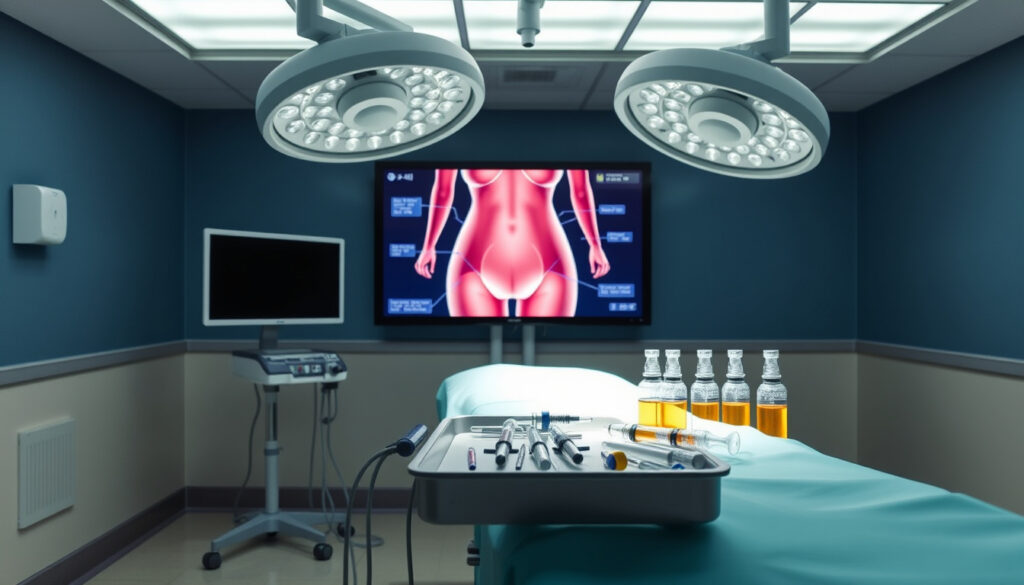
What Is a BBL? Brazilian Butt Lift Guide, Risks & Recovery
You’ve seen the acronym BBL everywhere—on Instagram captions and in celebrity headlines—but what actually happens during a Brazilian Butt Lift? It’s a surgery that uses your own fat to reshape your backside, with a recovery more demanding than social media suggests and a mortality risk of about 1 in 3,000.
Annual BBL procedures in the US (2020): 20,000+ · Estimated mortality risk: 1 in 3,000 · Average cost range: $4,000 – $15,000 · Typical recovery time before daily activities: 2–3 weeks
Quick snapshot
- A Brazilian Butt Lift uses your own fat to enhance buttock shape (Healthline (medical resource)).
- Fat is liposuctioned from donor areas and re-injected (Healthline (medical resource)).
- Popular but carries serious risks (Healthline (medical resource)).
- Moderate to severe pain first week; pain meds prescribed (Tran Plastic (plastic surgery practice)).
- No sitting directly on buttocks for 2–3 weeks (Tran Plastic (plastic surgery practice)).
- Full recovery takes 6–8 weeks. (Tran Plastic (plastic surgery practice))
- Fat embolism (rare but fatal) (Healthline (medical resource)).
- Infection, asymmetry, fat necrosis. (Healthline (medical resource))
- Results not permanent; can change with weight. (Healthline (medical resource))
- Most fat loss occurs in first 3 months (Healthline (medical resource)).
- Stable weight helps maintain results. (Healthline (medical resource))
- After 10 years, natural aging affects appearance. (Healthline (medical resource))
Six key facts, one pattern: everything from procedure length to risk rate is tightly documented, yet the long-term survival of transferred fat remains the biggest variable.
| Fact | Value |
|---|---|
| Procedure length | 2–3 hours |
| Anesthesia type | General anesthesia |
| Hospital stay | Outpatient (same-day) |
| Return to work | 2–3 weeks |
| Final results visible | 3–6 months post-op |
| Fat embolism risk | ~1 in 3,000 (GoodRx (citing ASPS)) |
What does BBL mean for a girl?
The term BBL stands for Brazilian Butt Lift, a cosmetic procedure that suction fat from areas like the abdomen, flanks, or thighs and re-injects it into the buttocks to improve shape and volume. Despite the name, the “Brazilian” part doesn’t describe a unique surgical technique—it refers to the aesthetic ideal popularized by Brazilian culture (Dr. Yael Rojas (citing ASPS)).
Why is it called BBL?
The nickname took off in the early 2000s when Brazilian models and celebrities made the curvy silhouette a global trend. Surgeons adopted the term to distinguish the fat-transfer method from implant-based buttock augmentation.
What is a BBL for face?
A “BBL for the face” is a fat transfer to the cheeks, lips, or under-eye area for restoring volume. It’s the same principle—liposuction and re-injection—but targets the face rather than the buttocks.
The implication: understanding the terminology is just the first step—knowing what the procedure entails matters more.
Does a BBL smell?
A temporary odor is a known post-operative side effect. It can arise from fat necrosis—dead fat cells—or the natural healing process. The smell is usually mild and clears up with proper hygiene. However, if the odor persists or becomes foul, it may signal an infection requiring medical attention (Tran Plastic (plastic surgery practice)).
Keeping the surgical area clean and dry is the main way to reduce odor. Patients are advised to follow their surgeon’s wound-care instructions closely.
A mild smell is a temporary nuisance. An infection that goes untreated can turn into a serious complication. The boundary is simple: watch for fever, redness, or worsening odor.
What this means: a temporary odor is common, but vigilance is key to avoiding complications.
Is BBL very painful?
Pain levels after a BBL are moderate to severe in the first week. The liposuction sites—usually the abdomen, back, or thighs—tend to hurt more than the buttock injections. Prescription pain medication is typically provided. Pain begins to subside after about two to three weeks, but patients must avoid sitting directly on their buttocks for at least that long to reduce discomfort and protect the transferred fat.
Most people can return to desk work after two to three weeks, though vigorous exercise is off-limits for six to eight weeks.
The catch: the pain is manageable, but the sitting restriction is the real challenge.
How long will BBL last?
During the first three months, the body reabsorbs 30–50% of the injected fat—this is normal. The fat cells that survive that period are permanent, but their size changes with your weight.
What happens 10 years after a BBL?
After a decade, natural aging, gravity, and weight changes can alter the appearance. Some patients opt for a touch-up procedure to restore volume. Dr. Matthew Schulman, a board-certified plastic surgeon, notes that patients who maintain stable weight tend to retain the most satisfying results over the long term (GoodRx (citing Dr. Schulman)).
Fat cells may be permanent, but the shape you achieve is fragile: a 10-pound weight gain can redistribute fat unpredictably, and a weight loss can shrink the buttocks again.
The implication: long-term success depends on weight stability and realistic expectations.
What are the negatives of a BBL?
The most serious downside is the risk of fat embolism, where injected fat enters a large blood vessel and travels to the lungs or heart. The American Society of Plastic Surgeons reports a mortality rate of roughly 1 in 3,000 BBLs (GoodRx (citing ASPS)). Other negatives include:
- Infection, asymmetry, fat necrosis, and scarring
- Weight changes distort results
- High cost and possible need for revision
- Lengthy recovery with restrictions on sitting and activity
Insurance typically doesn’t cover BBL because it’s cosmetic (GoodRx (citing ASPS)).
Fat embolism is rare but catastrophic. That’s why safety guidelines have been updated—surgeons now inject only superficial fat layers and avoid deep gluteal vessels.
The takeaway: the risks are real, but modern safety protocols have reduced them.
Upsides
- Uses your own tissue, no foreign material
- Dual benefit: liposuction in donor areas plus augmentation
- Surviving fat cells are permanent
- Results look and feel natural
Downsides
- Mortality risk of 1 in 3,000 (Healthline, medical resource)
- Infection, asymmetry, fat necrosis
- Results vary with weight
- Costs up to $15,000, not insured
- Strict recovery: no sitting for 2 weeks
Step-by-step: what a BBL involves
- Consultation and planning. Surgeon evaluates your fat distribution, skin quality, and health. Marks donor areas.
- Liposuction. Under general anesthesia, fat is extracted from the abdomen, flanks, or thighs using a cannula.
- Purification. The extracted fat is separated from fluid and debris.
- Injection. Purified fat is re-injected into the buttocks in small amounts to maximize survival.
- Recovery. You wear a compression garment 24/7 for swells. No sitting directly on buttocks for 2–3 weeks (Tran Plastic (plastic surgery practice)).
The procedure is straightforward in concept but requires precise execution.
What we know—and what remains unclear
Confirmed facts
- BBL transfers autologous fat to the buttocks (Healthline (medical resource)).
- Fat embolism is the most serious complication (GoodRx (citing ASPS)).
- Recovery requires avoiding direct pressure on the buttocks.
What’s unclear
- The exact long-term survival rate of transferred fat cells.
- Whether BBL results are permanent without weight changes.
- The precise prevalence of post-operative odor and its medical definition.
The uncertainty around fat survival underscores why patient selection matters.
What surgeons and experts say
“The key to a safe BBL is injecting fat only into the superficial subcutaneous plane—avoiding the deep gluteal vessels that can cause fatal embolisms. Our updated guidelines have dramatically reduced the mortality rate.”
American Society of Plastic Surgeons spokesperson (via GoodRx)
“I tell patients that about half the injected fat will be reabsorbed in the first few months, but the cells that survive are yours for life. If you stay within 5 to 10 pounds of your post-op weight, you’ll likely be happy with the shape years later.”
Dr. Matthew Schulman, plastic surgeon (via GoodRx)
The BBL landscape is changing. With stricter safety protocols and more realistic patient education, the procedure is becoming safer—but it will never be risk-free. For anyone considering a BBL, the choice comes down to this: you can achieve the shape you want, but only if you’re prepared for a recovery that demands patience, a budget that covers $5,000 to $15,000, and an acceptance that some fat will disappear no matter what you do.
Frequently asked questions
How much does a BBL cost?
In the US, the total cost typically ranges from $5,000 to $15,000, with the surgeon’s fee averaging $4,000–$7,000 according to the ASPS (Dr. Yael Rojas (citing ASPS)).
Can you sit after a BBL?
You must avoid sitting directly on your buttocks for at least two weeks. A BBL pillow or a donut cushion allows you to sit without compressing the treated areas.
Is BBL safe?
When performed by a board-certified plastic surgeon following modern safety protocols, the risk of serious complications is low but not zero. The mortality risk is estimated at about 1 in 3,000 procedures.
What is the recovery like after a BBL?
Recovery involves moderate to severe pain for the first week, wearing a compression garment 24/7, and avoiding sitting directly on the buttocks for two to three weeks. Most people return to work after 2–3 weeks and resume full activity after 6–8 weeks.
Will BBL results be permanent?
The fat cells that survive the first three months are permanent, but their size changes with your weight. Maintaining a stable weight is essential to preserve results.
How is a BBL different from butt implants?
BBL uses your own fat and offers a natural look and feel, plus the benefit of liposuction in donor areas. Butt implants are silicone devices that require a larger incision and carry a higher risk of visible rippling or displacement.
Can men get a BBL?
Yes, men can undergo BBL to achieve a more athletic or contoured backside. The procedure is the same, though typical fat distribution and aesthetic goals may differ.
What is the ideal BMI for a BBL?
Most surgeons recommend a BMI under 30 and sufficient body fat for liposuction. Too low a BMI may mean inadequate fat for transfer; too high increases surgical risk.
More related posts
 Houses for Sale in Lusk: Current Listings & Market Insights
 Man City vs West Ham Stats: Head-to-Head Record & Results
 Audi Q7 for Sale in Ireland: 2025 Guide – Problems & Reliability
 WWE Night of Champions 2025: Full Results and How to Watch
 The Best Apps for Work in 2026: Top Productivity Tools Tested
 Claddagh Ring How to Wear: Meaning, Finger Position & Rules
 Dingle v St Brigid’s: Extra-Time Victory in All-Ireland Final
 How to Improve Work: 1-3-5 Rule, 4 Pillars, and Tips