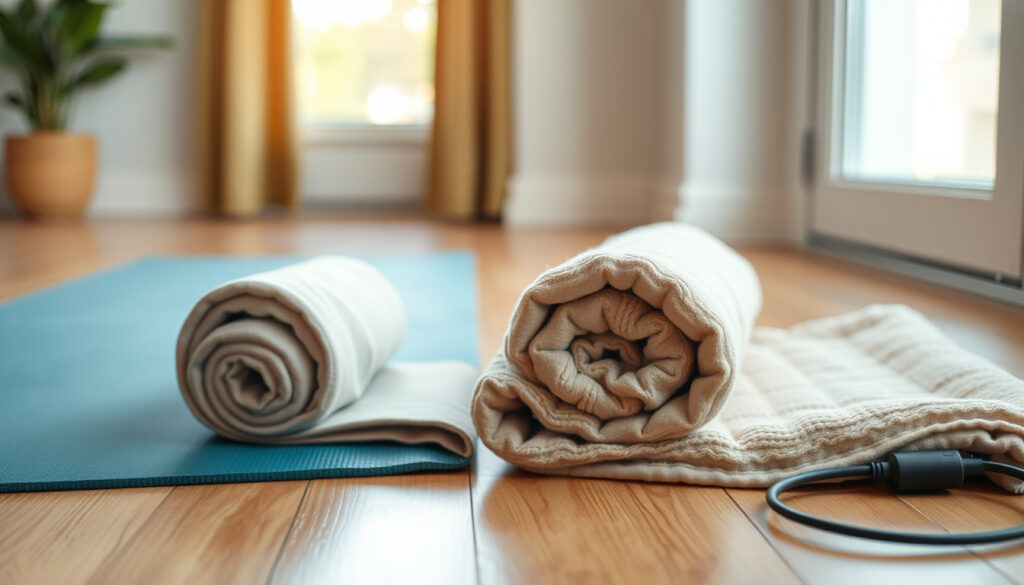
How to Relieve Back Pain Fast: 7 Simple Home Care Tips
Almost every adult has a back-pain story: the wrong bend, the long car ride, or an ache that appears on a Monday morning for no obvious reason. If your lower back is complaining right now, the reassuring part is that most acute episodes settle within 4 to 6 weeks with simple self-care (NICE (UK clinical guidance)).
Typical recovery: 4–6 weeks for most acute low back pain (NICE (UK clinical guidance)) · Herniated disc: most improve without surgery (Mayo Clinic News Network (Mayo Clinic’s news service)) · Red flag: new bladder or bowel dysfunction needs urgent assessment (NHS Greater Glasgow and Clyde (UK health board))
Quick snapshot
- Most acute low back pain improves within 4 to 6 weeks (NICE (UK clinical guidance)).
- Prolonged bed rest is not recommended (Mayo Clinic (US medical center)).
- Most herniated discs improve without surgery (Mayo Clinic News Network (Mayo Clinic’s news service)).
- The exact cause of non-specific back pain is often unclear (NICE (UK clinical guidance)).
- The best type and dose of exercise for disc pain varies by individual (Mayo Clinic (US medical center)).
- OTC medicine choice depends on medical history and local labeling (Mayo Clinic (US medical center)).
- Days 1–3: heat, OTC pain relief, light activity as tolerated (Mayo Clinic (US medical center)).
- Weeks 2–6: most acute low back pain starts to improve (NICE (UK clinical guidance)).
- 3+ months: persistent nerve symptoms need specialist review (NHS Greater Glasgow and Clyde (UK health board)).
- Keep moving within tolerance (NICE (UK clinical guidance)).
- Get prompt clinical review for progressive leg weakness (Mayo Clinic News Network (Mayo Clinic’s news service)).
- Ask for urgent assessment if bladder or bowel control changes (NHS Greater Glasgow and Clyde (UK health board)).
Key facts at a glance
Six facts, one pattern: back pain is common, most of it settles quickly, and a small set of warning signs separates home care from urgent care.
| Fact | What the evidence says |
|---|---|
| Lifetime prevalence | About 80% of adults experience low back pain at some point (NICE (UK clinical guidance)). |
| Global disability ranking | Low back pain is a leading cause of years lived with disability (NICE (UK clinical guidance)). |
| Acute episode recovery | Most acute low back pain improves within 4 to 6 weeks (NICE (UK clinical guidance)). |
| Disc herniation outlook | Most herniated discs improve without surgery (Mayo Clinic News Network (Mayo Clinic’s news service)). |
| Common symptom pattern | Slipped disc pain often radiates below the knee (Mayo Clinic (US medical center)). |
| Red-flag warning | New bladder or bowel dysfunction with back or leg symptoms requires urgent assessment (NHS Greater Glasgow and Clyde (UK health board)). |
The pattern: the same statistics that make back pain feel universal also make it treatable — the real job is identifying the minority of cases that are not simple.
How can I relieve lower back pain fast?
Fast relief usually comes from a short menu: heat, an over-the-counter pain reliever if it’s safe for you, and gentle movement that doesn’t spike the pain. The goal is not to erase the ache instantly — it’s to break the spasm-stiffness cycle so your back can settle. Most of what counts as “instant relief” is really about timing: doing the right things in the first 48 hours, then trusting the trend.
How to cure lower back pain?
- A “cure” for mechanical low back pain usually means symptom relief and a return to normal activity, not a permanent fix (NICE (UK clinical guidance)).
- Most acute episodes improve within 4 to 6 weeks with self-care (NICE (UK clinical guidance)).
- Prolonged bed rest is not recommended; staying active supports recovery (Mayo Clinic (US medical center)).
If the pain is coming from a muscle strain, that’s usually the whole story: treat symptoms, stay active, and wait for the tissue to heal. If it’s coming from a disc, the same advice applies with narrower margins — avoid the positions that reproduce radiating symptoms, not just the pain in your back.
What gives instant back pain relief?
Nothing erases back pain on command. Heat, short walks, and anti-inflammatory medication are the closest first-line options (Mayo Clinic (US medical center)), and the faster you return to normal movement, the faster the spasm fades.
Cold packs can help in the first couple of days, with gentle heat sometimes more comfortable after that (Mayo Clinic (US medical center)). Neither is a fix; both make movement bearable enough to keep going.
How can I treat back pain at home?
- Heat or cold packs for comfort (Mayo Clinic (US medical center))
- OTC pain relievers if suitable for your medical history (Mayo Clinic (US medical center))
- Short, gentle walks instead of bed rest (NICE (UK clinical guidance))
The order matters: get pain under control first, then move. Pain-free movement is the goal; pain-driven avoidance is what keeps people stiff for weeks.
What are home remedies for lower back pain in females?
- Most back pain in females is musculoskeletal, just as it is in males (NICE (UK clinical guidance)).
- Reproductive and hormonal conditions can refer pain to the low back, so note whether the pain tracks your cycle or comes with pelvic symptoms (NHS Greater Glasgow and Clyde (UK health board)).
That distinction matters for one reason: if the pain follows a clear hormonal or pelvic pattern, it’s worth raising with a gynecologist rather than assuming the problem is purely spinal.
The pattern: fast relief and a “cure” are the same process on different timelines — settle the spasm, then let movement do the healing.
What are the symptoms of lumbar strain?
A lumbar strain is a muscle or tendon injury in the lower back. It is the most common mechanical explanation for sudden back pain, and its symptoms are deliberately narrow compared with a disc problem — that narrowness is what makes the diagnosis useful.
What does a slipped disc feel like?
- Lower-back pain that can radiate into the buttock, thigh, calf, or foot (Mayo Clinic (US medical center))
- Numbness, tingling, or weakness in the affected leg (Mayo Clinic (US medical center))
- Sciatic pain that can be sharp, burning, electric, or shooting along the lower back, buttock, and leg (Mayo Clinic (US medical center))
What is mistaken for a herniated disc?
- Lumbar strain: a localized ache, stiffness, and tenderness in the lower back and buttock (NICE (UK clinical guidance))
- Sciatica: radiating nerve pain, often on one side, that may worsen with coughing, sneezing, or prolonged sitting (Mayo Clinic (US medical center))
- Spinal stenosis: pain that shows up with walking or standing and eases when you lean forward or sit (NHS Greater Glasgow and Clyde (UK health board))
The pattern: strain pain stays local, disc pain travels. If the symptom extends below the knee or brings numbness, the nerve is the story, not the muscle.
What could be causing severe pain in my lower back when I walk or stand?
Pain that reliably appears when you walk or stand and fades when you sit is a clue, not a mystery. The usual mechanisms are a muscle strain, a herniated disc pressing on a nerve, or narrowing of the spinal canal — and each one changes the treatment priorities.
- Muscle strain (NICE (UK clinical guidance))
- Herniated disc with nerve irritation (Mayo Clinic (US medical center))
- Lumbar spinal stenosis — narrowing of the spaces within the spine (NHS Greater Glasgow and Clyde (UK health board))
What causes back pain in females?
The common assumption is that women’s back pain is usually gynecological. The evidence points the other way: most female back pain is musculoskeletal, but hormonal and reproductive conditions can refer pain to the low back (NHS Greater Glasgow and Clyde (UK health board)).
- Musculoskeletal strain is the most common source in women, as in men (NICE (UK clinical guidance)).
- Pelvic, menstrual, or post-childbirth timing matters — if pain tracks those cycles, it belongs on the radar of a gynecologist, not just a spine specialist (NHS Greater Glasgow and Clyde (UK health board)).
How painful is a herniated disc on a scale of 1 to 10?
- Pain intensity varies widely; there is no fixed number that marks severity (Mayo Clinic (US medical center)).
- What matters more than the score is the trend: progressive weakness, pain at rest, or pain that doesn’t ease with position changes warrants review (Mayo Clinic News Network (Mayo Clinic’s news service)).
Severe pain alone is not automatically an emergency. Progressive leg weakness, fever, or a change in bladder or bowel control is — and those need urgent assessment (Mayo Clinic News Network (Mayo Clinic’s news service)).
- Severe or progressive leg weakness (Mayo Clinic News Network (Mayo Clinic’s news service))
- Fever, chills, feeling generally unwell, or a rash with back pain (Mayo Clinic News Network (Mayo Clinic’s news service))
- New numbness in the groin or between the legs (NHS Greater Glasgow and Clyde (UK health board))
- Unexplained weight loss, a history of cancer, immune suppression, or persistent night pain (NHS Greater Glasgow and Clyde (UK health board))
How to relieve herniated disc pain in lower back at home?
A herniated disc sounds heavily structural, but treatment usually begins at home. Most disc symptoms settle with the same toolkit as a strain — with stricter rules about bending, sitting, and sleeping positions.
What is the best position to sleep with a herniated disc?
- Side sleeping with a pillow between the knees can reduce pressure on the spine during a flare (Mayo Clinic (US medical center)).
- Pain that does not improve with position changes may need medical review (Mayo Clinic News Network (Mayo Clinic’s news service)).
What is the worst thing you can do for a herniated disc?
- Heavy lifting, bending with a rounded back, and twisting under load (Mayo Clinic (US medical center))
- Prolonged sitting without lumbar support (Mayo Clinic (US medical center))
- Extended bed rest — rest increases stiffness and muscle weakness (Mayo Clinic (US medical center))
Short-term anti-inflammatory medication can also help, but suitability depends on your medical history, other medicines, pregnancy status, and local labeling (Mayo Clinic (US medical center)). When in doubt, a pharmacist can screen that for you.
The trade-off: home care works for most disc flares, but it has zero tolerance for new nerve symptoms. The moment weakness, numbness, or bladder changes appear, the home plan is over.
Is walking good for lower back herniated discs?
Walking is the most debated exercise in back pain, and for disc patients the answer is usually yes — with conditions. The nerve, not the step counter, decides how far you go.
How long does it take for a herniated disc in the lower back to heal?
Days–weeks: most disc symptoms improve with nonsurgical care (Mayo Clinic (US medical center)) · 4–6 weeks: typical window for acute low back pain (NICE (UK clinical guidance)) · Weeks–months: severe cases may take longer (Mayo Clinic News Network (Mayo Clinic’s news service))
Walking is part of that recovery for most people. It improves circulation, reduces stiffness, and keeps the spine moving through a normal range (Mayo Clinic (US medical center)).
- Walking is safe for most people with a herniated disc (Mayo Clinic (US medical center))
- If walking causes sharp leg pain, weakness, or loss of balance, stop and consult a clinician (Mayo Clinic News Network (Mayo Clinic’s news service))
- Low-impact activity is preferable to bed rest (Mayo Clinic (US medical center))
How can I treat lower back strain at home?
- Heat or cold packs in the first days for comfort (Mayo Clinic (US medical center))
- Gentle walking, then a gradual return to normal tasks (NICE (UK clinical guidance))
- Slow, controlled bending and lifting when you resume activity (Mayo Clinic (US medical center))
The distinction: walking is a nervous-system test, not just exercise. When the nerve tolerates movement, recovery is on track; when it doesn’t, that is a signal, not a failure.
What are the signs that a herniated disc is getting worse?
The danger of a herniated disc is not the pain — it’s silent nerve damage. Compression of the spinal nerves at the base of the spine can permanently affect bladder, bowel, and leg function if decompression is delayed (NHS Greater Glasgow and Clyde (UK health board)).
Most worsening follows a pattern: pain, then numbness, then weakness, then loss of control. The earlier you act, the more reversible it tends to be.
- Progressive leg weakness or foot drop (Mayo Clinic News Network (Mayo Clinic’s news service))
- New numbness in the groin or between the legs (NHS Greater Glasgow and Clyde (UK health board))
- Difficulty urinating, or loss of bladder or bowel control (NHS Greater Glasgow and Clyde (UK health board))
- Worsening pain that does not improve with position changes (Mayo Clinic News Network (Mayo Clinic’s news service))
The pattern: worsening nerve symptoms outrank pain. If pain is the only symptom, home care has time; once weakness or bladder signs appear, the clock moves to hours.
Lumbar strain vs herniated disc: how to tell them apart
Two common diagnoses, one main difference: whether pain stays local or travels with the nerve.
| Feature | Lumbar strain | Herniated disc |
|---|---|---|
| Pain location | Ache and stiffness mostly in the lower back and buttock (NICE (UK clinical guidance)) | Pain that can extend into the thigh, calf, or foot (Mayo Clinic (US medical center)) |
| Nerve symptoms | Usually none | Numbness, tingling, or weakness in the affected leg (Mayo Clinic (US medical center)) |
| Pain quality | Dull ache, stiffness, tenderness (NICE (UK clinical guidance)) | Sharp, burning, electric, or shooting when the sciatic nerve is involved (Mayo Clinic (US medical center)) |
| Worse with | Bending, lifting, prolonged sitting (Mayo Clinic (US medical center)) | Coughing, sneezing, prolonged sitting, certain movements (Mayo Clinic (US medical center)) |
| Typical course | Days to a few weeks (NICE (UK clinical guidance)) | Days to months; most improve without surgery (Mayo Clinic News Network (Mayo Clinic’s news service)) |
The takeaway: if the pain crosses the knee or brings numbness, think nerve. If it stays in the lower back and buttock, a strain is more likely — and both still get the same first step: keep moving within tolerance.
Home care for back pain: the upsides and downsides
Self-care is the right first line for most back pain, but it has a boundary. Here is what it can do, and what it can’t.
Upsides
- Fast, low-cost relief with heat, OTC medication, and gentle activity (Mayo Clinic (US medical center))
- Movement beats bed rest for recovery and avoids deconditioning (NICE (UK clinical guidance))
- Most herniated discs and acute episodes resolve without surgery or injections (Mayo Clinic News Network (Mayo Clinic’s news service))
Downsides
- Self-care can delay diagnosis if red flags are missed (Mayo Clinic News Network (Mayo Clinic’s news service))
- OTC pain relievers are not risk-free; suitability depends on medical history and local labeling (Mayo Clinic (US medical center))
- Prolonged rest worsens stiffness and weakness (Mayo Clinic (US medical center))
The trade-off: home care trades a little certainty for a lot of convenience — and the only way to keep that trade safe is to know the red-flag list by heart.
How to relieve back pain at home: a 7-step routine
The order matters as much as the actions. Run this sequence in the first 48 hours, then repeat until the pain trend is clearly improving.
- Screen yourself for red flags first. New bladder or bowel dysfunction, groin numbness, progressive leg weakness, or fever with back pain is a stop sign — get medical advice before self-care (NHS Greater Glasgow and Clyde (UK health board)).
- Take anti-inflammatory medication if it’s appropriate for you. Ibuprofen, naproxen, or acetaminophen can reduce pain and help you move sooner; check medical history, pregnancy status, and local labeling first (Mayo Clinic (US medical center)).
- Apply heat or cold. Cold can help in the first couple of days; gentle heat may be more comfortable afterward (Mayo Clinic (US medical center)).
- Keep moving within tolerance. Short, gentle walks beat bed rest; avoid activities that clearly worsen symptoms (NICE (UK clinical guidance)).
- Reset your sleep position. Side sleeping with a pillow between the knees can reduce pressure on the spine for disc-related pain (Mayo Clinic (US medical center)).
- Return to activity gradually. Use slow, controlled movements for bending and lifting — no loaded twists with a rounded back (Mayo Clinic (US medical center)).
- Reassess on a schedule. By week 6, most acute pain has improved; if there is no change, or if nerve symptoms worsen at any point, get a clinical review (Mayo Clinic News Network (Mayo Clinic’s news service)).
What this means: the routine is boring on purpose. The most powerful back-pain interventions are also the least glamorous — movement, positioning, and time, plus a plan for when time doesn’t deliver.
Back pain recovery timeline: what to expect, week by week
Recovery is rarely a straight line, but it follows a rhythm. Use this as a rough calendar, not a contract.
- Days 1–3: Use heat, OTC pain relief, and light activity as tolerated (Mayo Clinic (US medical center)).
- Days 4–7: Gradually increase walking and gentle stretching if pain settles (Mayo Clinic (US medical center)).
- Weeks 2–6: Most acute low back pain starts to improve; keep a regular movement routine (NICE (UK clinical guidance)).
- Weeks 6–12: Herniated disc symptoms often improve; schedule a review if there is no change or things worsen (Mayo Clinic News Network (Mayo Clinic’s news service)).
- 3+ months: Persistent pain or progressive nerve symptoms need specialist assessment (NHS Greater Glasgow and Clyde (UK health board)).
The pattern: the first 4 to 6 weeks are the healing window. If the trend is downward by then — or if nerve signs appear earlier — the wait-and-see phase is over.
What’s confirmed, what’s still unclear about back pain
Back pain research has settled some questions, while a few others remain surprisingly open.
Confirmed facts
- Heat and gentle activity are safe for most non-specific low back pain (Mayo Clinic (US medical center)).
- Prolonged bed rest is not recommended (Mayo Clinic (US medical center)).
- Acute low back pain commonly improves within 4 to 6 weeks (NICE (UK clinical guidance)).
- Bladder or bowel changes with back pain require urgent assessment (NHS Greater Glasgow and Clyde (UK health board)).
What’s unclear
- The exact cause of non-specific back pain is often unclear (NICE (UK clinical guidance)).
- The best type and dose of exercise for disc pain varies by individual (Mayo Clinic (US medical center)).
- Whether cold or heat is better at each stage is not firmly settled; both are reasonable comfort tools (Mayo Clinic (US medical center)).
- OTC pain reliever choice depends on individual risk factors and medical history (Mayo Clinic (US medical center)).
The pattern: what’s confirmed is behavioral — movement, time, and red-flag awareness. What’s unclear is mostly fine-tuning: which exercise, which drug, which temperature.
What the experts and guidelines say
Four voices, one message: back pain responds to movement, not immobility.
“Most uncomplicated acute lower-back pain can initially be managed with self-care, including remaining active within tolerance and avoiding activities that clearly worsen symptoms.”
— NICE (UK clinical guidance)
“Prolonged bed rest can increase stiffness and muscle weakness; short periods in a comfortable position followed by gentle movement are generally preferred.”
— Mayo Clinic (US medical center)
“Severe or progressive leg weakness warrants prompt medical assessment.”
— Mayo Clinic News Network (Mayo Clinic’s news service)
“New bowel or bladder dysfunction with back or leg symptoms can indicate serious nerve compression and requires urgent assessment.”
— NHS Greater Glasgow and Clyde (UK health board)
The consistent thread: movement is medicine, immobility is the risk, and nerve signs are the boundary. When your symptoms match the fourth sentence, stop reading and call.
The takeaway
Most back pain — including most herniated discs — settles with time, movement, and sensible self-care; surgery is the exception, not the default. For anyone whose pain is radiating, whose leg is getting weaker, or whose bladder habits have changed, the decision is clear: get urgent medical assessment and skip the home experiment (NHS Greater Glasgow and Clyde (UK health board)). For anyone in the middle of an acute episode, the choice is equally clear: keep moving within tolerance for the next 4 to 6 weeks — or risk stiffness, deconditioning, and a slower recovery that no topical cream will fix.
mcpress.mayoclinic.org, mayoclinic.org, mayoclinichealthsystem.org, dgft.nhs.uk
Frequently asked questions
Is heat or ice better for a lower back strain?
Both have a place. Cold packs may be more useful in the first couple of days to ease pain and swelling; gentle heat can be more comfortable after that (Mayo Clinic (US medical center)). Neither is a treatment on its own — the goal is to keep moving within tolerance.
What over-the-counter medicine works best for back pain?
Ibuprofen, naproxen, and acetaminophen are common first-line options, but the best choice depends on your medical history, other medicines, pregnancy status, and local labeling (Mayo Clinic (US medical center)). An anti-inflammatory is the usual starting point for muscle strain; ask a pharmacist if you have any doubts.
Can poor posture cause lower back pain?
Posture is one of many mechanical factors, but most acute back pain is non-specific — the exact cause is often unclear (NICE (UK clinical guidance)). Avoiding prolonged sitting and changing position regularly is more useful than chasing perfect posture.
Does stress make back pain worse?
What is unclear is how much stress contributes for any given person; what is confirmed is that prolonged rest is not the answer (Mayo Clinic (US medical center)). Movement and activity within tolerance are the foundation of recovery.
Should I stretch a strained lower back or let it rest?
Do not force a stretch into sharp pain. Short periods in a comfortable position are fine, but prolonged bed rest increases stiffness and muscle weakness (Mayo Clinic (US medical center)). Gentle walking and gradual movement are the better plan.
When can I return to normal exercise after back pain?
Start low and go slow. Low-impact activity is preferable to bed rest (Mayo Clinic (US medical center)); once pain settles, gradually return to walking, then stretching, then your usual training. Stop any activity that causes sharp leg pain or weakness and get clinical advice (Mayo Clinic News Network (Mayo Clinic’s news service)).
More related posts
 Ryanair Share Price Today: Real-Time Data & Expert Analysis
 What’s On in Dublin Today? Events, Concerts & Free Things To Do
 PSC Centre Near Me: Appointments, Documents & How to Apply
 Trump News Now Live: Latest Updates & Where He Is Today
 Land for Sale Near Me: A Buyer’s Guide to Rural Ireland
 Brentford F.C. vs Liverpool F.C. Timeline: Key Matches & Record
 Rainbow Six Siege X: Year 11 Rebrand and Free Access
 Limerick to Dublin Train: Timetable, Prices & Tips