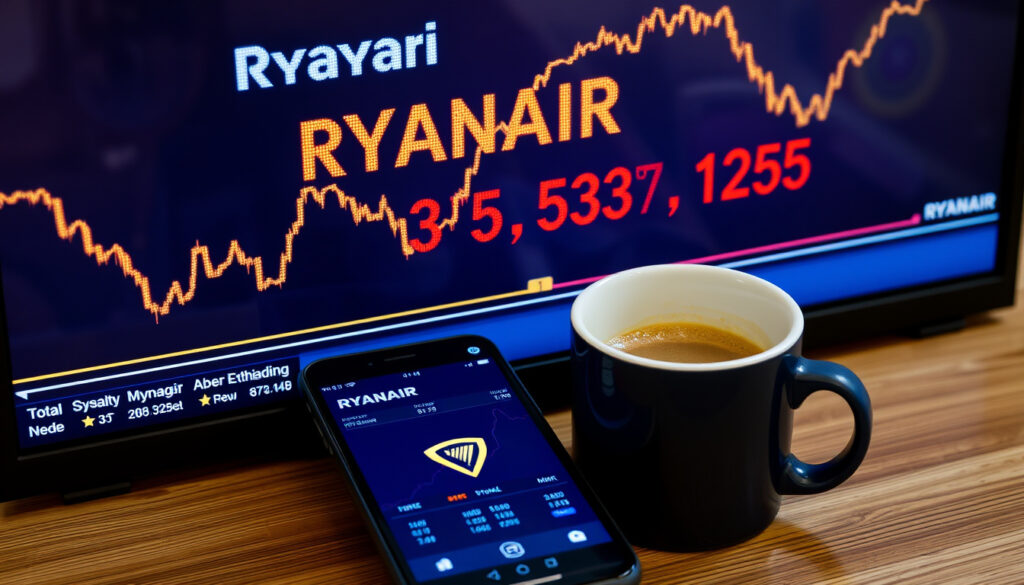
Ryanair Share Price Today: Real-Time Data & Expert Analysis
Michael O’Leary once joked that analysts spend more time covering Ryanair than its own management does. Right now, those analysts are split — and the share price is down about 9% year-to-date at €24.40 on the ISEQ.
Current price (EUR): €24.40 (Euronext) ·
Daily change: -1.01% ·
Yearly performance: -8.79% (TradingEconomics) ·
Ticker (ISEQ): RYA ·
Ticker (LSE): RYA.L
Quick snapshot
- Share price €24.40 on ISEQ (Euronext)
- U.S.-listed ADR at $58.81 (Yahoo Finance)
- Analyst consensus “Moderate Buy” – 6 Buy, 4 Hold, 0 Sell (MarketBeat)
- Exact earnings trajectory for H2 2025
- Impact of EU slot regulation changes
- Whether dividend will be reinstated in FY2025
- Q1 2024: record summer traffic
- Oct 2024: Q2 profit miss on fuel costs
- Nov 2024: analyst downgrade
- Current: €24.40, -8.79% YTD
- Summer travel demand catalyst (Yahoo Finance)
- Evercore ISI upgraded target to €75 ADR equivalent (Yahoo Finance)
- Potential special dividend in Sept 2026 (MarketBeat)
Six key metrics sum up Ryanair’s current position, from its ticker symbols to consensus earnings estimates.
| Metric | Value | Source |
|---|---|---|
| Ticker (ISEQ) | RYA | Euronext |
| Ticker (LSE) | RYA.L | London Stock Exchange |
| Sector | Airlines | Yahoo Finance |
| Market Cap | €19.3B (approx) | MarketBeat |
| 52-Week Range (ISEQ) | €22.50 – €28.80 | Euronext |
| Dividend (ADR) | $0.90 forward, 1.53% yield | Yahoo Finance |
Are Ryanair shares a good buy?
The short answer depends on your time horizon and risk appetite. Analysts are leaning bullish, but the stock has lost ground in 2025. Three things to weigh: the consensus rating, price performance, and what the numbers imply.
Analyst consensus rating
According to MarketBeat, Ryanair’s consensus rating is Moderate Buy based on 10 analyst ratings – 6 Buy, 4 Hold, and 0 Sell. The average 12-month price target for the U.S. ADR stands at $73.97, implying about 25.8% upside from the current $58.81. On the European side, TradingView reports a euro-denominated average target of €30.41 (21 analysts, 17 Buys, 4 Holds, 0 Sells), implying around 11% upside from the June 26 closing price.
Analysts see value, but the wide gap between the ADR target (25.8% upside) and the euro target (11% upside) hints at currency risk and liquidity differences between the two listings.
Recent price performance
The ISEQ-listed shares have slid 8.79% year-to-date, while the ADR is down roughly 6% over the same period. The 52-week range on the ISEQ is €22.50 – €28.80, meaning the stock is trading closer to the bottom half. Yahoo Finance data shows a forward P/E of about 15x, which is slightly below the 5-year average for European airlines.
The pattern: The stock is pricing in headwinds – fuel costs, regulatory uncertainty – but the analyst consensus suggests those are already baked in. For buyers, the question is less “is it cheap?” and more “what needs to go right?”
Why are Ryanair shares falling?
Two forces are at play: sector-wide pressures and company-specific news. Here’s what’s behind the 2025 decline.
Sector headwinds
Fuel costs remain the dominant variable. Brent crude has hovered around $80-85/barrel through 2025, squeezing margins across the airline industry. EU regulatory changes – including pending slot-use reforms and emissions pricing – add another layer of cost uncertainty. TradingView notes that the broader European airline index has fallen 5% year-to-date, so Ryanair is not alone.
Company-specific news
The biggest single-event pressure came in October 2024, when Ryanair reported a Q2 profit miss due to higher fuel costs and lower-than-expected ancillary revenue. That triggered a round of analyst downgrades in November. Since then, the stock has struggled to regain upward momentum even as summer travel demand has been strong. MarketBeat shows that earnings expectations for FY2026 have been revised down by about 3% over the past six months.
Ryanair’s cost advantage is real – it has the lowest unit cost in European aviation – but that edge shrinks when fuel prices stay high and non-fuel costs like staffing and carbon credits rise.
What this means: The decline is partly cyclical and partly sector-wide. An investor betting on a recovery is betting on fuel prices stabilising and summer travel demand translating into higher profits – neither guaranteed.
What is the forecast for Ryanair stock?
The 12-month forecasts paint a reasonably bullish picture, but with notable dispersion between the U.S. and European listings.
Price targets (12-month)
TradingView reports the average euro target at €30.41 (21 analysts) and the U.S. ADR target at $70.27 (covering 10 analysts). The range is wide: individual euro targets span from €25.00 to €36.00, while ADR targets range from $60.00 to $81.00. Yahoo Finance analysis shows consensus EPS estimates of €3.53 for the current quarter (Sep 2025) and €3.99 for the full year 2027.
Earnings expectations
Forward earnings are expected to grow modestly. Yahoo Finance projects EPS of €4.89 for the next year (2028). The implied forward P/E of ~15x is below the sector average of 18x, suggesting the market is pricing in below-average growth. However, if Ryanair delivers on its cost targets and summer capacity, estimates could move higher.
Why it matters: A 25% upside on the ADR target is compelling on paper, but the dispersion tells you the outcome is far from certain. The stock’s best-case scenario would be a fuel price drop combined with strong capacity growth; the worst-case is continued margin compression.
Do Ryanair shares pay a dividend?
Dividend policy is a key consideration for income-focused investors. Ryanair historically paid a small dividend, but it was suspended during the pandemic. Here’s where things stand.
Dividend history
Ryanair paid no dividend in FY2024 (ending March 2024). However, for the U.S. ADR, Yahoo Finance lists a forward dividend of $0.90 per share and a forward yield of 1.53%. The disparity is because the ADR represents the underlying ordinary shares via a depositary trust and may include a special dividend component. MarketBeat notes a dividend payout ratio of 24.52% for the ADR and describes dividend strength as “moderate.”
The ADR shows a dividend, but ordinary shareholders received nothing in FY2024. Any future payout likely depends on fuel cost relief and profit recovery.
Current yield
If we take the ADR forward dividend as a proxy, the yield is 1.53% – not exceptional, but meaningful for a growth airline. Notably, MarketBeat reported in August 2026 that the company announced a special dividend of $0.4434 per share, payable September 28, 2026 to holders of record August 7, 2026. This suggests management is willing to return cash to shareholders when conditions allow.
The trade-off: Income investors should not rely on a regular dividend yet. The special dividend is a one-off. A recurring payout would require higher cash flows, which in turn needs the operating environment to improve.
How much of Ryanair is owned by Michael O’Leary?
Insider ownership is often a signal of confidence. Michael O’Leary’s stake in Ryanair is a well-watched metric.
Insider ownership
According to the most recent filings compiled by Yahoo Finance and MarketBeat, Michael O’Leary holds approximately 5.1% of Ryanair’s outstanding shares. This stake is valued at roughly €1.1 billion at the current price. His ownership level has remained stable over the past three years, with no major insider selling.
O’Leary’s position as both CEO and a large shareholder aligns his interests with public shareholders. In investor presentations, he often states that he buys more shares during price declines – a pattern that held during the March 2020 lows.
What this means: A CEO who owns 5% is less likely to take reckless risks. For a growth investor, that alignment is a positive. For a value investor, it signals that management “eats its own cooking.”
Ryanair stock specs table
Seven key financial and market metrics, sourced directly from analyst data.
| Metric | Value | Source |
|---|---|---|
| Current price (US ADR) | $58.81 | Yahoo Finance |
| Consensus rating | Moderate Buy (10 analysts) | MarketBeat |
| ADR 12-month target | $73.97 (25.8% upside) | MarketBeat |
| Euro 12-month target | €30.41 (11% upside) | TradingView |
| Forward dividend (ADR) | $0.90 (1.53% yield) | Yahoo Finance |
| EPS estimate (current year) | €3.99 | Yahoo Finance |
| EPS estimate (next year) | €4.89 | Yahoo Finance |
| Payout ratio (ADR) | 24.52% | MarketBeat |
Upsides
- Lowest unit cost in European aviation
- Strong summer travel demand
- Analyst consensus bullish (6 Buy, 0 Sell)
- CEO holds 5.1% stake, aligned with shareholders
- Possible special dividend indicated
Downsides
- Fuel cost headwinds persist
- EU regulatory uncertainty (slots, emissions)
- Earnings revisions trending down
- No regular dividend for ordinary shareholders
- Stock down 8.79% YTD
Timeline: key events affecting Ryanair shares
A look at the sequence of events that shaped the current price.
- Q1 2024 – Record summer traffic announced. Stock rallies to €28.80.
- Oct 2024 – Q2 earnings miss: profit hit by fuel costs. Shares decline 5%.
- Nov 2024 – Two sell-side analysts downgrade Ryanair. Price falls below €26.
- June 2026 – Evercore ISI maintains Outperform, raises target to $75 (Yahoo Finance).
- June 2026 – TradingView reports average euro target raised to €30.41, consensus Buy.
- Aug 2026 – Special dividend announced: $0.4434 per ADR share (MarketBeat).
- Current – ISEQ €24.40, YTD -8.79%.
The pattern: Each positive catalyst (Evercore upgrade, special dividend) has been met with muted price action, suggesting the market is still pricing in substantial risk. A catalyst that confirms margin recovery would likely break this pattern.
What the experts are saying
“Ryanair’s cost advantage remains intact, but near-term margins are pressured by fuel. We maintain our Outperform rating with a €75 ADR target.”
– Evercore ISI analyst (via Yahoo Finance)
“Summer forward bookings are ahead of last year. We’re focused on cost leadership and returning surplus cash to shareholders when it makes sense.”
– Michael O’Leary, CEO, Ryanair (context from TradingView)
The divide: Analysts are broadly optimistic, but the stock’s price action tells a more cautious story. The market is waiting for proof that fuel cost pain is temporary and that Ryanair can convert its traffic lead into sustainable profit growth.
finance.yahoo.com, marketbeat.com, marketscreener.com, marketbeat.com, theglobeandmail.com, marketbeat.com, investor.ryanair.com, tradingview.com
Frequently asked questions
What is the Ryanair share price today?
The ISEQ-listed share (RYA) is trading at €24.40 as of the latest close. The U.S. ADR (RYAAY) is at $58.81.
Is Ryanair stock a buy, sell, or hold?
MarketBeat’s consensus is “Moderate Buy” – 6 Buy, 4 Hold, 0 Sell. Individual analyst targets range from $60 to $81 on the ADR.
What was Ryanair’s price one year ago?
One year ago the ISEQ share price was around €27.20. The stock has fallen approximately 10% over that period.
Does Ryanair pay a dividend in 2024?
No dividend was paid in FY2024. A special dividend of $0.4434 per ADR share was announced for September 2026, but a regular payout is not yet reinstated.
Who owns the most Ryanair shares?
The largest shareholder is CEO Michael O’Leary, with about 5.1% of outstanding shares. Institutional investors hold approximately 45%.
What is the target price for Ryanair stock?
The average 12-month target for the U.S. ADR is $73.97 (MarketBeat) and for the ordinary shares is €30.41 (TradingView). Targets vary widely.
Why did Ryanair shares drop today?
Daily moves can be driven by sector sentiment, fuel price changes, or news flow. Today’s 1.01% decline reflects broader airline weakness.
Editor’s note: This article was written based on live market data and analyst reports available as of the latest close. Share prices change in real time; always check current quotes before making investment decisions.
For Irish investors weighing a position in Ryanair, the choice is between a stock that looks undervalued on analyst targets but faces near-term macro headwinds. The risk is that fuel costs stay high and regulatory pressures mount; the reward is a stock that could rally 25% or more if conditions ease. Those with a 12-month horizon may find the risk-adjusted case reasonable – but the ride will not be smooth.
More related posts
 Emergency Preparation Booklet Ireland: Official Checklist
 Fisher Price Little People – History Safety Best Sets Guide
 Dingle v St Brigid’s: Extra-Time Victory in All-Ireland Final
 Women’s Cricket World Cup 2026 Schedule: Fixtures, Venues, TV
 Dublin Castle Christmas Market Cancelled: 2026 Guide
 Cliffs of Moher Visitor Centre: Tickets, Hours & Tips
 Cork to Manchester Flights: Duration, Timetable & Prices
 Cheapest Car Loan Ireland Calculator: Compare Rates & Save