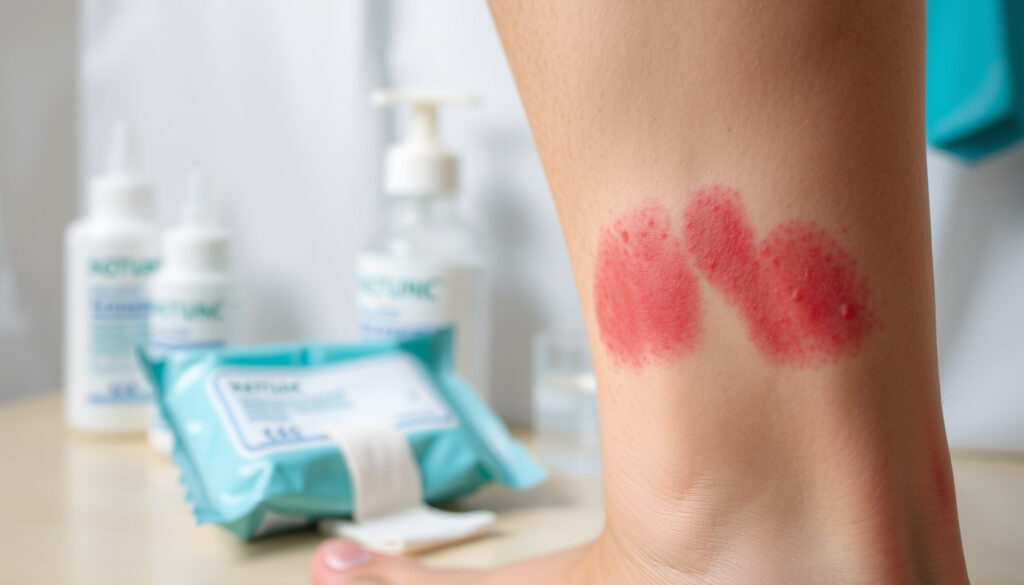
Pictures of Cellulitis on Legs: Symptoms & Healing Guide
If you’ve ever noticed a patch of red, warm, swollen skin on your leg that seems to spread quickly, you know the immediate worry that follows. Cellulitis typically shows up as a tender, expanding area of redness on the lower leg, but it’s easy to mistake for other conditions like stasis dermatitis or a deep vein clot.
Common cause: Streptococcus or Staphylococcus (DermNet NZ (dermatology reference)) ·
Improvement with antibiotics: Typically within 24–48 hours (VisualDx (clinical decision support)) ·
Healing signal: Redness fades over 1–2 days (GoodRx (health information))
Quick snapshot
- Redness, swelling, warmth, pain (VisualDx)
- May blister or develop red streaks (DermNet NZ)
- On darker skin: darkening, minimal redness (VisualDx)
- Venous stasis dermatitis (Cleveland Clinic Journal of Medicine (peer-reviewed))
- Deep vein thrombosis (VisualDx)
- Lymphedema (DermNet NZ)
- Gout / pseudogout (VisualDx)
- Days 1–2: redness and swelling peak (GoodRx)
- Days 3–7: gradual fading of redness (VisualDx)
- Weeks after: skin peeling, mild discoloration (DermNet NZ)
- Worsening redness or pain (GoodRx)
- Fever or chills (Healthline (health media))
- Rapid spread of infection (DermNet NZ)
- Blistering or black spots (VisualDx)
The data below summarizes key statistics about cellulitis.
| Label | Value | Source |
|---|---|---|
| Incidence | Affects ~1.4 million people annually in the US | VisualDx (clinical resource) |
| Common pathogen | Group A Streptococcus or Staphylococcus aureus | DermNet NZ |
| Typical treatment | Oral antibiotics (e.g., cephalexin, clindamycin) for 7–10 days | Healthline (medical reference) |
| Healing time | Most patients improve within 48 hours; full resolution ~1–2 weeks | GoodRx |
What does cellulitis on the legs look like?
Cellulitis usually begins as a small red patch that enlarges over hours to days. The skin feels hot, tender, and may look stretched or shiny. On darker skin tones, the redness can be subtle—look for a darkening of the area and a feeling of warmth.
- Redness, swelling, warmth, and pain (VisualDx)
- Often starts after a break in the skin—cut, insect bite, ulcer (DermNet NZ)
- Common sites are lower legs, but can occur elsewhere (Healthline)
How does cellulitis on legs start?
Early cellulitis appears as a small red patch around a wound or rash that expands outward. According to Ubie Health (symptom triage tool), the infection starts when bacteria enter through a tiny break in the skin—something as small as a crack in dry skin.
What are early signs of cellulitis?
- A small red, warm spot that grows (VisualDx)
- Tenderness and swelling around the spot (DermNet NZ)
- Mild fever or fatigue may accompany (GoodRx)
On lighter skin, redness is obvious; on darker skin, the leg may just look darker and feel warm. If you suspect cellulitis, draw a pen line around the red area—if it moves past the line in a few hours, it’s spreading fast.
“Cellulitis typically presents as red, swollen, warm, and tender skin, most commonly on lower legs in adults.”
VisualDx
The pattern: Early recognition of these signs can prevent complications.
What can be mistaken for cellulitis in the leg?
Several conditions mimic the redness and swelling of cellulitis. The Cleveland Clinic Journal of Medicine notes that up to 30% of suspected cellulitis cases in hospitalized patients are actually misdiagnosed. Here’s how to spot the difference.
| Condition | Unilateral / Bilateral | Systemic symptoms | Response to antibiotics |
|---|---|---|---|
| Cellulitis | Usually unilateral | Possible fever, chills | Improves within 48 hours |
| Venous stasis dermatitis | Bilateral (both legs) | No fever | No response |
| Deep vein thrombosis | Usually unilateral | No fever (may have mild warmth) | No response |
| Lymphedema (acute) | Often bilateral | No fever | No response |
| Gout / pseudogout | Usually unilateral (joint) | May have fever | No response |
One major clue: if both legs are affected, it’s rarely cellulitis. DermNet NZ states that bilateral lower leg redness should prompt a search for alternative diagnoses like stasis dermatitis or lymphedema.
How is cellulitis different from staph infection?
Staph infections (especially MRSA) tend to form abscesses with pus, while cellulitis is a diffuse infection without a defined pocket. According to DermNet NZ, if there is a boil or draining wound, it’s likely a staph abscess needing drainage.
What other conditions mimic lower limb cellulitis?
- Eosinophilic cellulitis (Wells syndrome): itchy/painful red plaques that fade over 4–8 weeks (DermNet NZ)
- Lipodermatosclerosis: painful red rash on legs from chronic venous insufficiency, often bilateral, no fever (VisualDx)
- Allergic contact dermatitis: warm erythematous plaque, often post-surgery (Cleveland Clinic Journal of Medicine)
“Unlike cellulitis which affects one area, venous stasis dermatitis affects both legs and does not cause systemic symptoms like fever.”
VisualDx
The implication: Always consider bilateral involvement as a red flag against cellulitis.
How long does it take for cellulitis of the leg to heal?
With appropriate antibiotic treatment, most people see improvement within 24–48 hours. Full resolution of redness and swelling typically takes 7–14 days.
- Days 1–3: redness and pain decrease; swelling subsides (GoodRx)
- Week 1–2: skin may start to peel (DermNet NZ)
- Weeks after: discoloration can persist for weeks to months (Healthline)
What helps cellulitis heal faster?
Elevating the affected leg and resting helps reduce swelling and speed recovery. Keeping the area clean and dry is also important. The NHS recommends taking the full course of antibiotics even if symptoms improve.
Will skin go back to normal after cellulitis?
Yes, but it can take time. After the infection clears, the skin may peel or appear mildly discolored for several weeks. In rare cases, chronic changes like swelling or thickening can persist, especially in recurrent infections (DermNet NZ).
What are the healing stages of cellulitis?
- Day 0–3: Infection peaks with redness, swelling, pain; fever possible
- Day 3–7: With antibiotics, redness fades, pain lessens, swelling goes down
- Week 2–4: Skin peels; mild discoloration may remain for weeks
Here is a visual summary of the healing stages.
| Stage | Timeline | Key features |
|---|---|---|
| Infection onset | Day 0–1 | Small red spot, warmth, swelling |
| Peak inflammation | Day 1–3 | Redness expands, pain increases, fever may appear |
| Antibiotic response | Day 3–7 | Redness decreases, pain lessens, swelling subsides |
| Recovery | Week 2–4 | Skin peels, mild discoloration, full healing |
The pattern: Patients who start antibiotics within 48 hours typically see redness and pain decrease significantly, speeding recovery.
The catch: While antibiotics resolve the infection, skin discoloration may linger for weeks.
Can you walk if you have cellulitis in your leg?
Walking is generally safe but may be painful. Rest and elevation are strongly recommended to help reduce swelling. Avoid prolonged standing or activity that increases leg swelling.
- Walking may worsen pain and swelling (Healthline)
- Elevate the leg above heart level when sitting or lying (GoodRx)
When should you worry about cellulitis?
Certain signs indicate the infection is worsening and needs urgent medical attention:
- Fever or chills (Healthline)
- Rapid spread of redness (DermNet NZ)
- Severe pain that doesn’t improve (GoodRx)
- Blisters, black spots, or skin breakdown (VisualDx)
- Confusion or dizziness (Healthline)
If the redness spreads beyond a drawn line in 24 hours, or if you develop a fever over 100.4°F (38°C), seek emergency care immediately. Sepsis can develop rapidly from untreated cellulitis.
What are signs that cellulitis is worsening?
Watch for the “spread line” trick: mark the border of redness with a pen. If the redness moves past it within a few hours, the infection is advancing. Also check for red streaks moving up the leg—that’s a sign of lymphangitis (DermNet NZ).
The implication: Rapid progression beyond a marked line demands immediate medical attention.
What foods should you avoid with cellulitis?
There is no strong evidence that specific foods cause or cure cellulitis. However, a balanced diet supports immune function. Limiting sugar and processed foods may help overall recovery.
- Focus on fruits rich in vitamin C (oranges, strawberries, kiwis) (Healthline)
- Hydrate well; limit alcohol consumption (GoodRx)
- Avoid excessive sugar, which can impair immune function (Healthline)
Which fruit is good for cellulitis?
Vitamin C-rich fruits support collagen production and immune health. Oranges, strawberries, bell peppers, and kiwis are good choices. No single fruit can cure cellulitis, but a varied diet helps.
Can diet affect cellulitis recovery?
Indirectly, yes. Malnutrition and dehydration delay healing. The evidence for specific foods is weak, but staying well-nourished and hydrated supports your body’s ability to fight infection (Healthline).
Timeline of cellulitis on the leg
- Day 0: Infection begins – small break in skin, bacteria enter (DermNet NZ)
- Day 1–3: Redness, swelling, pain develop; fever may appear (VisualDx)
- Day 3–7 (with antibiotics): Redness and pain decrease; swelling subsides (GoodRx)
- Week 2–4: Skin may peel; discoloration can persist for weeks (DermNet NZ)
The pattern: Each stage has distinct characteristics that help track healing progress.
What’s confirmed — and what’s still unclear
Confirmed facts
- Cellulitis is caused by bacterial infection of the deep layers of skin (DermNet NZ).
- Prompt antibiotic treatment resolves most cases (VisualDx).
- Elevation and rest aid recovery (GoodRx).
What’s unclear
- Role of diet in prevention or speed of recovery is not well-established (Healthline).
- Why some individuals develop recurrent cellulitis is not fully understood (DermNet NZ).
- The most effective long-term prevention strategies for recurrent cellulitis are not well-defined.
“Cellulitis is caused by Streptococcus pyogenes or Staphylococcus aureus, presenting as enlarging red, hot, swollen tender skin.”
DermNet NZ
“Signs of healing cellulitis include less redness after 1–2 days of antibiotics, reduced pain, and resolving fever within 48–72 hours.”
GoodRx
The key takeaway: cellulitis is highly treatable if caught early, but it demands respect. Left untreated, it can spread to deeper tissues or cause sepsis. For anyone with a red, warm leg, the safest move is to see a clinician and start antibiotics promptly.
For those in Ireland seeking quick care, Walk In Doctor Waterford offers same-day appointments for leg symptoms. And if you’re managing high blood pressure, check our guide on High Blood Pressure Symptoms — high BP can worsen complications from infections.
Frequently asked questions
Is cellulitis contagious?
Cellulitis itself is not contagious because the infection is deep in the skin. The bacteria on the surface can potentially spread to others, but it’s rare. Good hygiene is recommended (Healthline).
Can cellulitis recur?
Yes, some people experience recurrent cellulitis, especially if they have chronic lymphedema, venous insufficiency, or repeated skin breaks (DermNet NZ).
What are the risk factors for cellulitis?
Risk factors include wounds, ulcers, lymphedema, athlete’s foot, obesity, diabetes, and a weakened immune system (Healthline).
How is cellulitis diagnosed?
Diagnosis is usually based on the appearance of the skin and symptoms. A doctor may check temperature, draw a border around the redness, and sometimes order blood tests or a wound culture (VisualDx).
Do I need hospitalization for cellulitis?
Most cases are treated with oral antibiotics at home. Hospitalization may be needed for severe infections, high fever, rapid spread, or if you have a weakened immune system (GoodRx).
Can cellulitis lead to sepsis?
Yes, if the infection spreads into the bloodstream. Signs include high fever, rapid heart rate, confusion, and low blood pressure. Emergency care is critical (Healthline).
How to prevent cellulitis in legs?
Keep skin clean and moisturized, treat cuts promptly, manage conditions like athlete’s foot and lymphedema, and elevate legs if you have swelling (DermNet NZ).
More related posts
 Devil Wears Prada 2: Release, Cast, Streaming & Reviews
 Ireland Soccer Jersey 2025: Design, Price, Where to Buy
 Saint Vincent de Paul: His Life and the Charity He Inspired
 261 Bus Timetable Cork – Schedules, Stops and Frequencies
 Simple Banana Bread Recipe – Easy One-Bowl Loaf
 Cliffs of Moher Visitor Centre: Tickets, Hours & Tips
 Conor McGregor Wedding Reason: Why He Married in Vatican
 Stauntons on the Green: Dublin Hotel Menu, Reviews, Parking