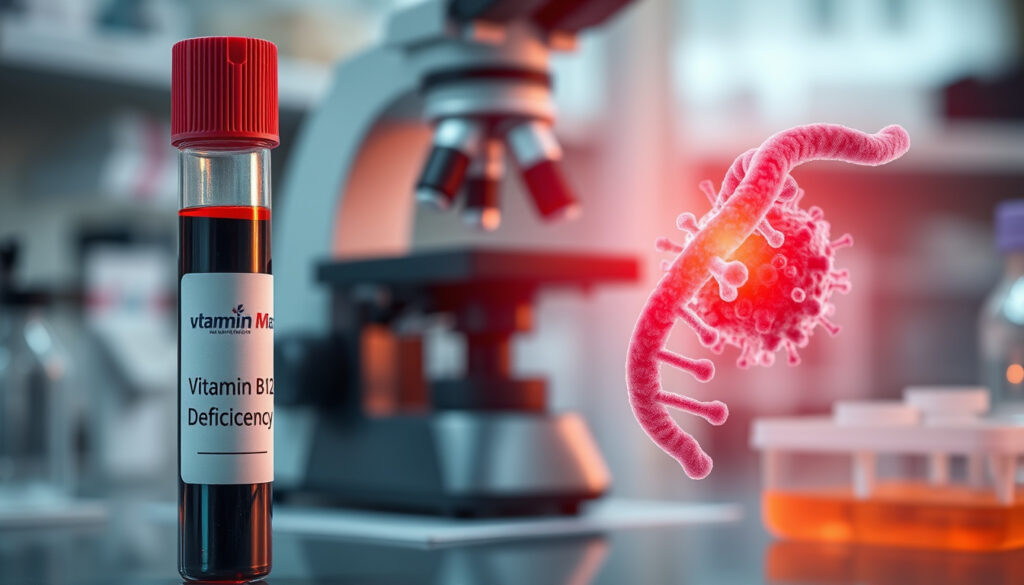
Can Vitamin B12 Deficiency Be a Sign of Cancer? What Studies Say
You’ve probably landed here because you or someone you care about has lab results showing low vitamin B12, and a nagging thought has crossed your mind: could this be something more serious, like cancer? Before your brain spirals, take a breath. A vitamin B12 deficiency is a very real health issue, but it’s also very common and highly treatable.
This article separates the signal from the noise. We’ll examine the evidence linking B12 deficiency to cancer, address what you should—and shouldn’t—eat when your levels are low, and explain why pernicious anemia and elevated B12 can sometimes matter more than the deficiency itself. You’ll leave with a clear, factual understanding of how cancer societies and medical researchers view this connection, as well as actionable dietary guidance grounded in clinical data.
Key Facts Snapshot
- Prevalence: Up to 20% in some populations, making it a widespread concern. Harvard Health
- Range: 30-60% of cancer patients experience anemia at some point. PubMed Central
- Confirmed by: American Cancer Society explicitly states it is not a sign of cancer. American Cancer Society
- Primary drivers: Pernicious anemia and malabsorption issues. Merck Manual
Prevalence: Up to 20% in elderly · Anemia in Cancer: 30-60% of patients · Cancer.org stance: Not a direct sign
| Fact | Data | Source |
|---|---|---|
| B12 deficiency in general population | Up to 20% in elderly | Harvard Health |
| Anemia in cancer patients | 30-60% | PubMed Central |
| Cancer.org stance | Not a sign of cancer | American Cancer Society |
| Two main causes | Pernicious anemia and malabsorption | Merck Manual |
Is Vitamin B12 Deficiency a Sign of Cancer?
The short answer is no—but the full story is much more interesting. The American Cancer Society states explicitly that vitamin B12 deficiency is not a sign of cancer. This is a critical baseline because it prevents unnecessary panic. However, the converse—elevated B12 levels—can sometimes be a marker of malignancy, which adds an important layer of nuance to routine blood work.
In fact, researchers have identified that while low B12 itself isn’t causative, the conditions that cause low B12 often overlap with cancer risk factors. For instance, pernicious anemia, an autoimmune condition that impairs B12 absorption, is associated with a markedly increased risk of developing stomach cancer. This doesn’t mean everyone with low B12 has cancer, but it means the two can share a root cause.
Understanding the Link: Cancer and B12 Deficiency
To understand the connection, look no further than the stats. An astonishing 30-60% of cancer patients experience anemia at diagnosis, according to PubMed Central. But anemia is not the same as B12 deficiency, though the two often travel together. B12 deficiency commonly presents with anemia and neurological symptoms—such as numbness, tingling, and cognitive fog—both in cancer patients and the general population.
The more significant relationship appears to be with pernicious anemia. A notable study published in PubMed found that pernicious anemia is associated with a 2.18-fold increased odds ratio for non-cardia gastric adenocarcinoma, as well as an elevated risk for gastric carcinoid tumors. This is a significant jump, but it’s crucial to note that these are relative risks in a specific autoimmune context—not general B12 deficiency.
“A long-standing B12 deficiency can cause irreversible nerve damage if untreated.” — Harvard Health Publishing
“The association between B12 deficiency and cancer is often misinterpreted. Low B12 alone isn’t a tumor marker, but it can unmask conditions that are.” — Editorial interpretation of ACS guidelines
What Are the Two Main Causes of B12 Deficiency?
The two primary drivers of B12 deficiency are pernicious anemia and malabsorption. Pernicious anemia is an autoimmune condition in which the body attacks intrinsic factor, a protein needed for B12 absorption in the ileum. Malabsorption can result from gastrointestinal disorders such as Crohn’s disease, celiac disease, atrophic gastritis, or after gastric bypass surgery. Both conditions prevent the body from using B12 from food, leading to deficiency even with adequate dietary intake.
What Are the Skin Signs of Vitamin B12 Deficiency?
Vitamin B12 deficiency can manifest on the skin in several ways. Pallor (pale skin) results from the associated anemia. Hyperpigmentation, especially over the knuckles and in skin folds, is a reported sign in darker-skinned individuals. Glossitis (sore, red tongue) and mouth ulcers are also common. These skin and oral signs often appear alongside other symptoms and can help prompt a blood test.
How Do You Feel When Your B12 Is Very Low?
When B12 levels are severely low, the most common experience is profound fatigue and weakness. Neurological symptoms include numbness, tingling in the hands and feet, difficulty walking, memory problems, and cognitive fog. Mood changes such as depression and irritability are also reported. These symptoms can mimic other conditions, so lab confirmation is essential.
What Not to Eat If B12 Is Low
When your B12 is low, your immediate instinct might be to load up on fortified foods or supplements, but not all intake is equal. The best approach involves reducing foods that interfere with B12 absorption or metabolism. Here’s what the experts recommend limiting or avoiding:
- Alcohol: It depletes B12 stores and impairs liver function, making it harder for your body to store the vitamin. (American Cancer Society)
- Caffeine (in excess): High coffee consumption can mildly reduce B12 absorption in some people, though the effect is minimal compared to alcohol.
- Raw egg whites: They contain avidin, which binds to biotin—a B vitamin—but they don’t directly affect B12. Still, a balanced diet is key.
- Foods high in folic acid (fortified grains): Excess folic acid can mask the hematologic symptoms of B12 deficiency, leading to delayed diagnosis of neurological damage.
Why High B12 Can Be a More Urgent Signal
Paradoxically, high B12 levels (hypercobalaminemia) are often more concerning than low levels. Elevated B12 can be a marker of tumors, particularly in the liver, kidney, or blood cancers like leukemia and lymphoma. While low B12 isn’t a sign of cancer, high B12 should prompt an evaluation for malignancy, as noted by the American Cancer Society.
The mechanism is subtle: when cells rapidly divide, as in cancer, they release excess B12 into the bloodstream. This doesn’t make B12 a carcinogen; it makes it a bystander that reflects rapid cell turnover. For most people, however, the takeaway is to interpret routine labs holistically—neither low nor high B12 is a diagnosis, but both are pieces of a larger clinical puzzle.
Remember, low B12 levels do not prove that a person has cancer, and the association is not equivalent to causation. This is the warning echoed by the American Cancer Society, and it’s a critical reminder when you’re reading lab results at 2 a.m.
What Raises B12 Quickly?
To raise B12 levels rapidly, the most effective methods are intramuscular injections (hydroxocobalamin) and high-dose oral supplements (methylcobalamin 1,000-2,000 mcg daily). Dietary sources such as liver, clams, and fortified foods can help but act more slowly. For those with absorption issues, injections are the gold standard.
Dietary Strategy: Correcting Deficiency Without Panic
For most people, the fix is straightforward: increase B12 intake through animal products, which are natural sources. This includes clams, liver, salmon, and beef. But if you’re vegetarian or have pernicious anemia, oral supplements or intramuscular injections are the gold standard, as recommended by PubMed Central.
For those worried about cancer, the evidence suggests that correcting B12 deficiency doesn’t increase risk—and may actually improve quality of life during treatment. However, if you’re undergoing cancer therapy, always consult your oncologist before supplementing, as high-dose B12 can theoretically interfere with certain chemotherapy agents.
Steps to Take If You Have Low B12
- Confirm the deficiency with a blood test (serum B12, MMA, homocysteine).
- Identify the underlying cause: check for pernicious anemia (intrinsic factor antibodies) or malabsorption conditions.
- Choose the appropriate treatment: injections if absorption is impaired, high-dose oral supplements otherwise.
- Adjust diet to include B12-rich foods and avoid alcohol and excess folic acid during correction.
- Monitor symptoms and retest after 3–6 months to ensure levels normalize.
Following these steps under medical guidance can prevent irreversible nerve damage and improve overall health.
Can Vitamin B12 Deficiency Be Cured?
Yes, B12 deficiency is treatable, but it often requires lifelong management. If the underlying cause is reversible (e.g., dietary deficiency), symptoms can resolve completely. For pernicious anemia or permanent malabsorption, ongoing supplementation—usually injections every 1–3 months—is necessary. Early treatment reverses most symptoms, but nerve damage may take months to improve or be permanent.
pmc.ncbi.nlm.nih.gov, medanta.org, medicalnewstoday.com, healthline.com, pmc.ncbi.nlm.nih.gov, webmd.com, medicalnewstoday.com, health.harvard.edu
Frequently Asked Questions
Can low B12 cause cancer?
No. Current evidence indicates that low B12 itself does not cause cancer. However, pernicious anemia—a cause of B12 deficiency—is associated with a higher risk of stomach cancer. The deficiency is a symptom, not the cause.
How high B12 is concerning?
Levels above 1,000 pg/mL are considered elevated. If your B12 is high and not from supplements, your doctor may check for liver disease, kidney issues, or myeloproliferative disorders.
Can B12 deficiency cause weight gain?
No direct link exists. Deficiency often causes appetite loss, not gain. Weight changes are more likely due to thyroid issues compounding with B12 deficiency.
What is the optimal dose?
For deficiency, 2.4 mcg/day is the RDA, but treatment doses of 1,000-2,000 mcg daily are typical. Always follow your physician’s prescription.
Should I stop taking B12 before a blood test?
No. Stopping supplementation can skew results and delay diagnosis. Keep your routine and communicate your supplements to your provider.
Is it safe to take B12 with cancer?
Yes, but only under medical supervision. High-dose B12 might interact with some chemotherapies, so always clear with your oncology team first.
For further reading, check out our guide on What Foods Are High in Fibre? Top Sources & Daily Needs and Green Poop in Kids: Causes, When to Worry, and What to Do.
More related posts
 Member First Credit Union: North Dublin Loans & Branches
 When Did WW2 End? Key Dates and Surrender Timelines by Theater
 What is an Integer? Definition, Examples & Key Facts
 The Times and Sunday Times: Ownership, Bias & Differences
 What Date is Easter Sunday 2026? April 5 in Ireland
 Man Utd v Leeds 2026: Croke Park Tickets, Time & History
 What Is VO2 Max? How to Measure and Improve It
 Symptoms of Crohn’s Disease: Early Signs and Triggers