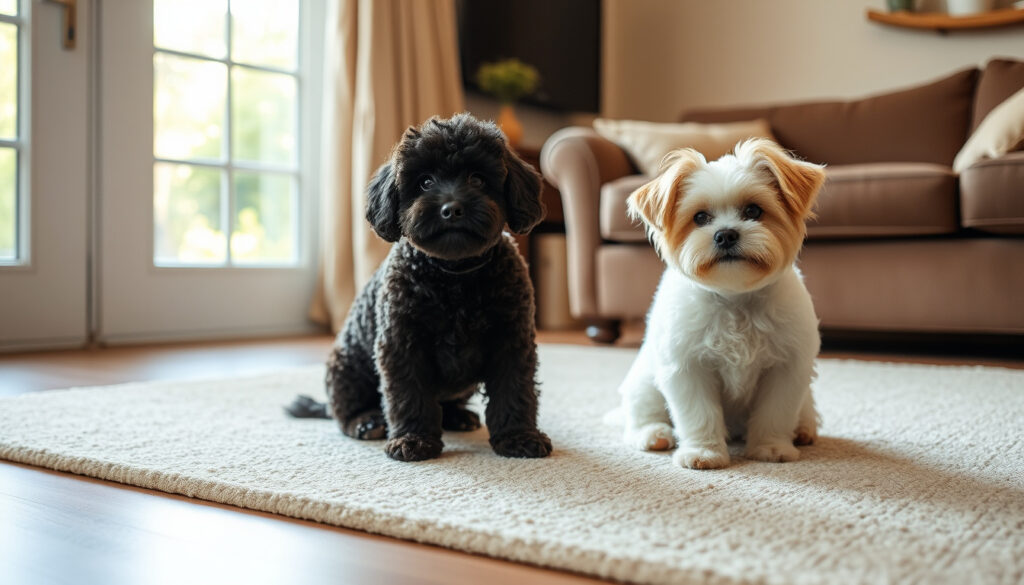
Dogs That Don’t Shed: A Complete Guide to Low-Shedding Breeds
Anyone who loves dogs but hates the fur tumbleweeds rolling across the floor has typed ‘dogs that dont shed’ into a search bar at least once. The good news: the American Kennel Club lists 24 breeds among its lower-allergen picks, and several of them shed remarkably little — but low-shedding is not the same as allergy-proof, and keeping a curly coat takes real grooming work.
Low-allergen breeds on the AKC list: 24 (AKC’s allergy guidance for owners) · Breeds named by VCA Animal Hospitals: 13 (VCA Animal Hospitals (veterinary network)) · Allergen gap for “hypoallergenic” dogs: none found (American Journal of Rhinology & Allergy study (PubMed Central))
Quick snapshot
- No breed is scientifically proven to be completely hypoallergenic (Clinical and Experimental Allergy review, PubMed Central).
- The AKC lists 24 breeds as lower-allergen candidates, from Poodles to Xoloitzcuintlis (AKC’s allergy guidance for owners).
- Whether a particular dog will trigger your allergies, since allergen levels differ from one dog to the next even within a breed (VCA’s guide to “hypoallergenic” reality).
- How many breeds count as “hypoallergenic”: expert lists range from 13 breeds (VCA) to 24 breeds (AKC) (VCA Animal Hospitals; AKC’s allergy guidance for owners).
- A 2012 study flagged high Can f 1 allergen levels in some Poodle coat samples, so a low-shedding coat is no allergy guarantee over time (American Kennel Club).
- Grooming becomes a standing appointment: Schnauzers and Poodles often need professional clipping because their hair keeps growing (VCA Animal Hospitals).
- Meet the individual dog before you commit, because reactions vary from animal to animal (VCA’s guide to “hypoallergenic” reality).
- Budget for brushing, clipping, and coat care from day one (AKC’s hypoallergenic breeds guide).
One pattern cuts across every expert list: “low-shedding” and “hypoallergenic” describe different things, and knowing the difference changes which breed you take home.
| Fact | What the research says | Source |
|---|---|---|
| “100% hypoallergenic” dog breeds | Not scientifically proven to exist | Clinical and Experimental Allergy review (PubMed Central) |
| Allergen levels in “hypoallergenic” homes | No difference found versus other dog homes | American Journal of Rhinology & Allergy study (PubMed Central) |
| Low shedding and allergen exposure | Low shedding does not equal low allergen exposure | Allergy, Asthma & Immunology Research study (PubMed Central) |
| Breeds on AKC’s lower-allergen list | 24 breeds | AKC’s allergy guidance for owners |
| Bichon Frise coat type | Continuously growing hair; regular grooming needed | AKC’s hypoallergenic breeds guide |
| Poodle coat samples, 2012 study | High Can f 1 allergen found in some samples | American Kennel Club (U.S. breed registry) |
| Hairless breeds and allergies | Still produce dander; not automatically safe | VCA Animal Hospitals (veterinary network) |
| Individual dogs within one breed | Can trigger different allergy responses in different people | VCA’s guide to “hypoallergenic” reality |
What is the best dog to not shed?
Ask five experts for the single best low-shedding dog and you’ll get five polite but different answers. Ask which names appear on the most lists, though, and the same three keep showing up: Poodles, Bichon Frises, and Portuguese Water Dogs.
Poodle
Size: Standard, Miniature, Toy · Shedding: Minimal · Grooming: Professional clipping often needed
The Poodle appears on every major lower-allergen list, in three sizes, which makes it the closest thing to a default answer (AKC’s allergy guidance for owners). The American Kennel Club also points to a 2012 study that found high Can f 1 allergen levels in some Poodle coat samples, so “low-sheding” is not the same as “zero-allergen” (American Kennel Club (U.S. breed registry)).
- Because Poodle hair grows continuously, professional clipping and regular coat maintenance are the norm, not the exception (VCA Animal Hospitals).
Bichon Frise
Size: Small · Temperament: Gentle, happy, playful · Shedding: Minimal
The Bichon Frise is the breed the AKC points to for a reason: it is gentle, happy, and playful, with a curly coat that sheds very little (AKC’s hypoallergenic breeds guide).
- That same coat grows continuously, so matting is a real risk without a steady grooming routine (AKC’s hypoallergenic breeds guide).
Portuguese Water Dog
Size: Medium · Energy: High · Shedding: Low
The Portuguese Water Dog sits on the AKC’s lower-allergen list, recognized for its working heritage (AKC’s allergy guidance for owners). Its energetic, affectionate temperament makes it a strong match for active households.
- The same grooming caveat applies here as with most low-shedding coats: plan the upkeep before you bring the dog home.
The trade-off: the best low-shedding dog is the one whose size, energy, and grooming load match your actual week — not the one with the best marketing.
What is the friendliest dog that doesn’t shed?
“Friendly” is a personality result, not a coat type. But several low-shedding breeds are known for people-loving temperaments, and the AKC notes that some of them support family placement well when training and supervision are in place (AKC’s hypoallergenic breeds guide).
Havanese
Size: Small · Group: Companion · Shedding: Low
The Havanese appears on the AKC’s 24-breed lower-allergen list and belongs to the companion group — dogs bred to be around people all day (AKC’s allergy guidance for owners).
- Small, sociable, and adaptale, as long as the company shows up.
Soft Coated Wheaten Terrier
Size: Medium · Group: Terrier · Shedding: Low
The Soft Coated Wheaten Terrier is one of the few terriers on both the AKC and VCA lower-allergen lists, which gives it a broader recommendation base than most breeds (AKC’s allergy guidance for owners; VCA Animal Hospitals).
- Expect an energetic, spirited temperament that needs structure — friendliness with a volume knob.
The family-fit factor
- Designer crosses like the Labradoodle are also marketed as low-shedding family dogs, but the AKC is blunt on this: no purebred, mixed-breed, or designer dog can guarantee an allergy-free experience (AKC’s hypoallergenic breeds guide).
The pattern: the friendliest low-shedding dogs are companion breeds built to share your daily life — which also means they don’t love being left alone for long stretches.
What is the cleanest house dog?
“Cleanest” usually means “least fur on the floor.” Low-shedding breeds genuinely deliver there — but the house stays clean only if you replace the vacuuming rhythm with brushing, clipping, and skin care.
The grooming reality
- Bichon Frises have continuously growing hair and need regular grooming to reduce matting (AKC’s hypoallergenic breeds guide).
- Schnauzers and Poodles often need professional clipping or regular coat maintenance because their hair keeps growing instead of shedding in a seasonal wave (VCA Animal Hospitals).
- Hairless breeds like the Chinese Crested skip the fur cleanup but still produce dander, so “hairless” is not “allergen-free” (AKC’s hypoallergenic breeds guide; VCA Animal Hospitals).
Hairless doesn’t mean allergen-free
- Chinese Crested — sheds little to no hair and is a small companion dog that thrives on human companionship (AKC’s hypoallergenic breeds guide).
- American Hairless Terrier — lively, friendly, intelligent, and suited to city living (AKC’s hypoallergenic breeds guide).
VCA Animal Hospitals warns that hairless breeds still produce dander and other allergens, so they are not automatically safe for people with dog allergies (VCA Animal Hospitals).
A study of dog-owning homes found no difference in allergen levels between homes with dogs marketed as hypoallergenic and other homes (American Journal of Rhinology & Allergy study, PubMed Central). The dog may shed less; the allergens don’t automatically follow.
The catch: a clean house with a low-shedding dog is a grooming routine with a dog attached — budget the time before you budget the breed.
Which dog is most ADHD?
Veterinary medicine does not recognize ADHD as a canine diagnosis, so the honest answer is: no dog has it. The question behind the question is real, though — some breeds seem endlessly wired, and several low-shedding breeds are exactly the ones that need the most exercise.
High-energy low-shedding breeds
- Portuguese Water Dog — an energetic working breed that needs serious daily exercise (AKC’s allergy guidance for owners).
- Giant Schnauzer — a protective, low-shedding working dog with a strong drive to move (AKC’s allergy guidance for owners).
- Standard Schnauzer — a low-shedding working breed with a high-activity reputation (VCA Animal Hospitals).
- Poodle — highly trainable and clever; when understimulated, that intelligence shows up as chaos (American Kennel Club).
When a low-shedding dog seems hyperactive, check the exercise budget before blaming the breed. Working dogs like Schnauzers and Portuguese Water Dogs were bred for jobs; a 30-minute walk reads as a warm-up to them, not a workout.
What this means: if your low-shedding dog is bouncing off the walls, the breed did its part — the missing variable is usually the exercise debt, not a diagnosis.
What is the most emotionally needy dog breed?
Neediness in dogs is usually a companion-breed trait: dogs bred to work beside humans tend to bond intensely. Among low-shedding breeds, the Chinese Crested is the clearest example in the research — the AKC describes it as a small companion dog that thrives on human companionship (AKC’s hypoallergenic breeds guide).
Companion breeds want to be near you
- Chinese Crested — thrives on human companionship; not the right match for a long empty apartment (AKC’s hypoallergenic breeds guide).
- Maltese — a small, lower-allergen companion breed that appears on the AKC’s list (AKC’s allergy guidance for owners).
- Havanese — a companion-group breed from the same list, bred for close human contact (AKC’s allergy guidance for owners).
A velcro dog is wonderful on the couch and stressful at 8 a.m. If your schedule keeps you away for ten hours, a companion-breed low-shedder may develop the very separation behaviors you hoped to avoid.
The trade-off: you get a dog that adores you without shedding on you — but the same breed needs you around, and that is a lifestyle decision, not a breed decision.
Four sizes, four grooming loads, one consistent pattern: the lower the shed, the higher the upkeep.
| Breed | Size class | Shedding profile | Grooming reality | Best matched to |
|---|---|---|---|---|
| Bichon Frise | Small | Minimal shedding, continuously growing hair (AKC’s hypoallergenic breeds guide) | Regular grooming to prevent matting (AKC’s hypoallergenic breeds guide) | Families and first-time owners |
| Maltese | Small | Lower-allergen list; minimal shed (AKC’s allergy guidance for owners) | Regular brushing for a long, silky coat | Apartment living and companionship |
| Poodle | Small to large | Low-shedding coat; some samples showed high Can f 1 in a 2012 study (American Kennel Club) | Professional clipping often required (VCA Animal Hospitals) | Owners who can keep up with grooming |
| Portuguese Water Dog | Medium | On AKC’s lower-allergen list (AKC’s allergy guidance for owners) | Comitted brushing and professional trims as the coat grows | Active households |
| Standard Schnauzer | Medium | Low-shedding coat; hair grows continuously (VCA Animal Hospitals) | Professional clipping often required (VCA Animal Hospitals) | Owners who want a working-breed spirit |
| Chinese Crested | Small | Little to no hair (AKC’s hypoallergenic breeds guide) | Still produces dander, so allergies can persist (VCA Animal Hospitals) | Companionship-focused owners (AKC’s hypoallergenic breeds guide) |
Upsides
- Far less fur on floors and furniture: continuously growing coats keep loose hair in the coat instead of the carpet (AKC’s hypoallergenic breeds guide).
- Many low-shedding breeds are working or companion dogs with trainable, people-focused temperaments (AKC’s allergy guidance for owners).
- Regular grooming becomes built-in bonding time — a brushing routine, not a monthly argument.
Downsides
- “Hypoallergenic” is not a medical guarantee; no breed is completely allergen-free (Clinical and Experimental Allergy review, PubMed Central).
- Grooming costs and time: several of these dogs need professional clipping because the hair never stops growing (VCA Animal Hospitals).
- Companion breeds bond hard and need company; the Chinese Crested, for one, thrives on human companionship (AKC’s hypoallergenic breeds guide).
Confirmed facts
- The Poodle is a low-shedding breed whose hair grows continuously (American Kennel Club; VCA Animal Hospitals).
- The Bichon Frise is gentle, happy, and playful, sheds minimally, and needs regular grooming against matting (AKC’s hypoallergenic breeds guide).
- No breed is scientifically proven to be completely hypoallergenic (Clinical and Experimental Allergy review, PubMed Central).
What’s unclear
- How many breeds “count” as hypoallergenic — expert lists range from 13 (VCA) to 24 (AKC) (VCA Animal Hospitals; AKC’s allergy guidance for owners).
- Whether a specific dog will trigger your allergies — individual dogs vary even within a breed (VCA’s guide to “hypoallergenic” reality).
- Whether “hypoallergenic” homes actually have lower allergen levels — one study found no difference (American Journal of Rhinology & Allergy study, PubMed Central).
“Hypoallergenic is a marketing term; no dog is 100% allergen-free.”
— PetMD veterinary contributor
A review in Clinical and Experimental Allergy reaches the same conclusion with less sentiment: no breed is scientifically proven to be completely hypoallergenic (Clinical and Experimental Allergy review, PubMed Central).
“Low-shedding breeds produce less dander, which can reduce allergic reactions.”
— Purina breed guide (paraphrased)
The caveat comes from a study of real homes: allergen levels were no different in households with dogs marketed as hypoallergenic than in other dog homes (American Journal of Rhinology & Allergy study, PubMed Central).
“No purebred, mixed-breed, or designer dog can guarantee an allergy-free experience.”
— American Kennel Club (AKC’s hypoallergenic breeds guide)
Low-shedding breeds solve the fur problem — and quietly hand you a grooming problem instead. The research is consistent: allergen production varies by individual dog, “hypoallergenic” homes don’t reliably have cleaner air, and the breeds that shed least often need the most upkeep. For the owner typing “dogs that dont shed” into a search bar, the decision is clear: meet the actual dog, budget the grooming, and treat “hypoallergenic” as a description of coat type, not a promise about your immune system.
Frequently asked questions
Do hypoallergenic dogs really exist?
No breed is scientifically proven to be completely hypoallergenic. All dogs produce allergenic proteins in saliva, dander, and other biological material — low-shedding breeds just put less of that material on the floor (Clinical and Experimental Allergy review, PubMed Central).
Do low-shedding dogs still cause allergies?
Yes. A study found no difference in dog-allergen levels between homes with dogs marketed as hypoallergenic and other homes, and low shedding does not necessarily mean low allergen exposure (American Journal of Rhinology & Allergy study, PubMed Central; Allergy, Asthma & Immunology Research study, PubMed Central).
What is the best small dog that doesn’t shed?
Bichon Frise, Maltese, Yorkshire Terrier, Shih Tzu, and Chinese Crested are among the small breeds on the AKC’s lower-allergen list. The best one depends on how much grooming time and daily companionship you can offer (AKC’s allergy guidance for owners).
How much grooming do non-shedding dogs need?
More than most people expect. Bichon Frises need regular grooming to reduce matting, and Schnauzers and Poodles often require professional clipping because their hair continues growing rather than shedding in a seasonal pattern (AKC’s hypoallergenic breeds guide; VCA Animal Hospitals).
Are hairless dogs hypoallergenic?
Not automatically. Hairless breeds still produce dander and other allergens, so they can still trigger reactions in sensitive people (VCA Animal Hospitals).
Can low-shedding breeds be left alone all day?
Companion breeds struggle with long absences. The Chinese Crested, for example, thrives on human compaionship, so a breed that needs you nearby is a risky match for a house that stays empty all day (AKC’s hypoallergenic breeds guide).
More related posts
 The Best Apps for Work in 2026: Top Productivity Tools Tested
 Everton F.C. vs Leeds United Standings: Key Stats & History
 Du Plessis vs Chimaev: UFC 319 Winner, Scorecard & Stats
 Best Lomito Sandwich Near Me in Dublin: 2025 Guide
 Dublin by Night Fest 2025: Schedule, Locations & Nightlife Guide
 Fuel Allowance Ireland: Partial Payment Warning Explained
 When Are Oasis Playing in Dublin? Croke Park Dates & Tickets
 5STAR TV Guide: Catch Up & Channel Numbers