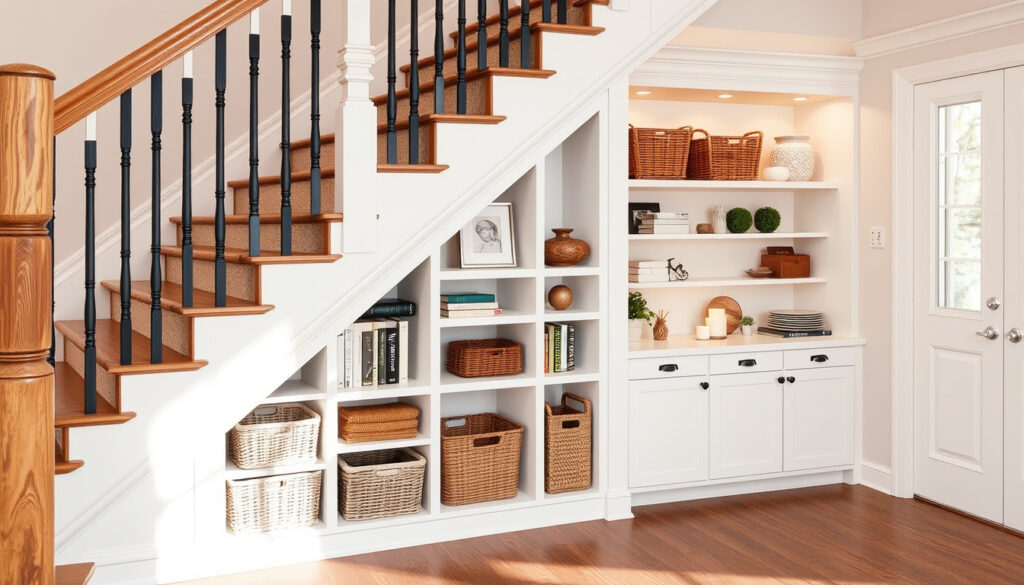
Clever Under Stairs Storage Ideas: DIY vs Custom Built-in
That awkward triangle under the stairs—the one you walk past every day wondering what to do with—is probably the most underrated square footage in your home. With a few clever ideas, that dead space can become a storage hub, a mini office, or even a cozy reading nook, and you don’t have to spend a fortune to get there.
Average under stairs area: 20–30 sq ft ·
DIY vs professional cost difference: Often 30–50% savings ·
Most popular use: Storage and home office
Quick snapshot
- Under stairs can be used for storage, home office, pet area (The Spruce)
- DIY pullout drawers cost roughly $200–$500 (Budget Dumpster)
- Custom professional installation runs $2,000–$5,000 (Budget Dumpster)
- Modular cube storage is a super-affordable option (Ideal Home)
- DIY vs buy cost depends on specific measurements and regional labor rates
- Ventilation requirements for enclosed under‑stairs rooms vary by local building codes
- Growing demand for space‑saving home solutions is driving innovation in flat‑pack under‑stairs kits from major retailers
- More homeowners will combine custom joinery with modular components to balance cost and fit
Four key dimensions to know before you start planning your under‑stairs storage project.
| Metric | Typical value |
|---|---|
| Average under stairs width | 3–6 ft |
| Typical depth | 4–8 ft |
| Height at tallest point | 6–7 ft |
| Common use | Storage (60%), Home office (20%), Other (20%) |
What are clever under stair storage ideas?
Pull-out drawers and cabinets
- Customizable to the sloping angle, pull-out drawers turn the deepest part of the under‑stairs void into accessible storage. Budget Dumpster estimates DIY costs of $200–$500 for this approach.
- Professional carpenters can build a bank of cupboards that neatly hides coats, shoes, and umbrellas, as Checkatrade recommends.
Custom pullouts maximize every inch but cost 10× more than a simple shelf. For renters, a freestanding drawer unit wedged into the space is a smarter compromise.
Open shelving and display
- Open shelves are the most budget-friendly option. The Spruce notes that DIY shelving, freestanding furniture, and storage baskets work well when funds are tight.
- Ideal Home highlights modular cube storage as a super‑affordable option that’s easy to assemble and can be configured to fit the slope.
The implication: Open shelving gives you visibility and quick access, but dust collects on displayed items. It’s a good choice for books, plants, or decorative baskets that hide clutter.
Built-in desk or workspace
- A custom desk tucked under the stairs creates a compact home office. The Spruce says this works well when the staircase is large enough to allow a seated position.
- Proper lighting is essential—consider adding a slim LED strip or wall sconce to avoid a cave-like feel.
Pet nook or feeding station
- The low, sloping end of the stair void is perfect for a dog bed, food bowls, and storage for pet supplies. Designers recommend a custom-fit solution to keep the space tidy.
Wine rack or bar area
- Wine storage under the stairs is a popular transformation. The angled space can hold custom racks or a small countertop for a home bar. House Beautiful suggests a built‑in bench with wicker baskets, but a wine rack is equally achievable.
How to make under stairs storage on a budget?
1. Measure and plan your space
- Budget Dumpster advises measuring the under‑stair space first, then buying shelves based on those exact dimensions. A tape measure and a quick sketch cost nothing but prevent expensive mistakes.
2. Choose DIY or flat‑pack kits
- IKEA UK suggests mounting hooks under the stairs for outerwear and adding a hinged door front with hooks for shoes and a mirror behind it. Flat‑pack units from IKEA or similar retailers can be assembled in a weekend.
3. Use inexpensive materials like plywood
- Plywood is a reliable, low‑cost material for building custom shelves. Paint it to match the wall, and it looks like a built‑in without the price tag.
4. Install simple shelving and racks
- Checkatrade recommends stacking shoe racks under the stairs and stabilizing them by attaching them to the walls—a truly DIY solution that costs under $50.
5. Paint and finish for a polished look
- A coat of paint or a peel‑and‑stick wallpaper transforms raw plywood into a design feature. Ideal Home notes that even modular cube storage looks intentional when color‑coordinated.
Is it cheaper to DIY or buy under stairs storage?
Three approaches, one pattern: cost rises with customization, but so does space efficiency.
| Approach | Estimated cost | Skills required |
|---|---|---|
| DIY (shelves, racks, repurposed furniture) | $50–$500 | Basic measuring, drilling, leveling |
| Flat‑pack / pre‑made kits | $100–$800 | Assembly, light wall anchoring |
| Custom built‑in (professional carpenter) | $2,000–$5,000 | None (hired) |
Cost breakdown: DIY vs custom vs pre‑made
- Budget Dumpster puts professional custom pullout drawers at $2,000–$5,000, while DIY versions run $200–$500—a 30–50% savings.
- Ideal Home reports that modular cube storage is a super‑affordable middle ground that requires no special skills.
Pros and cons of each approach
Upsides
- DIY: Lowest cost, full control over design, satisfying personal project
- Pre‑made: Quick installation, predictable sizing, renter‑friendly
- Custom built‑in: Maximizes every inch, seamless look, adds home value
Downsides
- DIY: Requires time, tools, and skills; mistakes can be costly
- Pre‑made: May not fit irregular slopes exactly; limited design flexibility
- Custom built‑in: High upfront cost; permanent modification
The catch: The hidden cost of DIY is your time—and the risk of a sub‑optimal fit. For a one‑weekend project, flat‑pack kits offer the best balance of cost and finish.
What should be kept under the staircase?
Seasonal items and luggage
- Suitcases, holiday decorations, and camping gear fit well because they are infrequently used. Stair101 advises that under‑stair storage is best for non‑combustible, non‑perishable, infrequently used items.
Shoes and coats
- IKEA UK recommends a hinged door front with hooks for shoes and a mirror—turning the awkward gap into a mudroom hub.
Books and media
- Open shelves for books or a small media library are a classic use. The slope naturally creates varying shelf heights for different book sizes.
Pet supplies
- Food, toys, and bedding can be stored in low baskets or a dedicated drawer. The space is often at floor level, which is convenient for pet access.
Home office equipment
- Printers, paper, and supplies that don’t need daily access can be tucked away in cabinets under the stairs.
What this means: Think “infrequently used but still needed” before you fill the space. And remember: iHasco warns that flammable objects like paper and cardboard should not be stored under stairs if the area is part of a fire escape route.
How to use dead space under stairs?
Transforming into a reading nook
- Add a cushion, a wall lamp, and a small shelf for books. House Beautiful features a built‑in bench with wicker baskets that doubles as seating and storage.
Creating a compact home office
- A floating desk, a stool, and a power strip are all you need. The Spruce says this is feasible if the staircase is large enough to sit comfortably.
Installing a wine cellar
- Custom wine racks or a small climate‑controlled cabinet fit neatly under the slope. This is a higher‑end transformation but a popular one for entertaining.
Building a mudroom bench and hooks
- Checkatrade recommends a tailor‑made bank of cupboards for coats, shoes, wellies, and umbrellas—a neat storage hub for everyday comings and goings.
Adding a guest bed or pull‑out couch
- If the space is deep enough, a custom pull‑out bed creates a spare sleeping area for guests. Proper ventilation and lighting are critical to avoid a stuffy, cramped feel.
Any enclosed under‑stairs room must have adequate ventilation. Stair101 warns that temperature and humidity fluctuations can damage valuables and documents stored in unventilated spaces.
The paradox: The more you try to hide under the stairs, the more you need to consider fire safety, airflow, and access. A well‑ventilated, fire‑retardant enclosure turns dead space into a genuine asset.
Confirmed facts vs. what’s still unclear
Confirmed facts
- Under‑stairs storage can significantly reduce visible clutter when properly organized.
- DIY pullout drawers cost $200–$500; professional custom install runs $2,000–$5,000 (Budget Dumpster).
- Modular cube storage is a super‑affordable, easy‑to‑assemble option (Ideal Home).
- Flammable items (paint, gasoline, propane) must never be stored under stairs (Stair101; iHasco).
What’s unclear
- Whether DIY or pre‑made is cheaper in the long run depends on your specific stair dimensions and local labor rates.
- Ventilation requirements for under‑stairs rooms vary by local building codes and home layout.
What the experts say
“Mount hooks under the stairs for outerwear. Lower hooks are easier for children to reach, and a hinged door front with hooks for shoes and a mirror behind it maximizes wall storage.”
“A built‑in bench with wicker baskets is a classic way to store shoes and seasonal accessories while creating a cozy seating nook.”
“DIY solutions such as shelving, freestanding furniture, and storage baskets are suitable when the budget is limited.”
— The Spruce (home improvement resource)
“A tailor‑made bank of cupboards for coats, shoes, wellies, and umbrellas creates a neat storage hub that makes the most of the awkward space.”
— Checkatrade (home services platform)
Final takeaway
Under‑stairs storage is one of the few home improvements that pays for itself in reclaimed space and reduced clutter. The verdict: if you’re handy, a DIY project with plywood and flat‑pack kits can deliver a functional solution for under $500. If you’re planning to stay in your home long‑term, a custom built‑in by a professional carpenter—at $2,000–$5,000—adds real value and a seamless look. For renters, the smartest move is a modular cube system or a wall‑mounted hook set that leaves no permanent marks. Whichever path you choose, start with a tape measure, check your local fire safety rules, and never store flammable materials under those stairs. For the homeowner in the UK, the choice is clear: invest in a fire‑retardant enclosure and a well‑designed layout, or keep it simple with IKEA and a weekend of assembly.
Another way to reclaim unused floor area is with clever under-bed storage solutions, which can complement your under-stairs setup.
Frequently asked questions
What is the best material for under stairs storage?
Plywood is a reliable, affordable choice for DIY shelves. For custom built‑ins, MDF or solid wood offer a more polished finish. Use fire‑retardant materials if the area is part of a fire escape route, as iHasco advises.
Can I install under stairs storage myself?
Yes, if you have basic DIY skills—measuring, drilling, and leveling. Flat‑pack kits from IKEA or similar retailers are designed for self‑assembly. Budget Dumpster recommends starting with simple wire shelving to avoid mistakes.
How much does a custom under stairs storage unit cost?
Professional custom installations typically run $2,000–$5,000, depending on the complexity of the design and materials. Budget Dumpster provides this range for pullout drawer systems.
Does under stairs storage add home value?
Yes, a well‑designed, permanent storage solution can increase a home’s appeal and value, especially in smaller homes where every square foot counts. Custom joinery is seen as a premium feature by estate agents.
What are the best under stairs storage ideas for a kid’s play area?
A low bookshelf, toy bins, and a small soft mat create a mini play nook. Use the deeper end for larger toys and the shallow end for picture books. Ensure the space is well‑lit and ventilated.
How to ventilate under stairs storage?
Install a small vent grille or a passive airbrick to allow airflow. For enclosed spaces like a powder room or office, a mechanical extractor fan may be required by building codes. Stair101 warns that humidity fluctuations can damage stored items.
Are there any Vastu restrictions for under stairs storage?
Vastu Shastra traditionally advises against storing heavy items directly under the stairs, as it may block energy flow. Light, tidy storage is considered acceptable. Always consult a local Vastu expert for specific guidance.
More related posts
 Express Red Car Park Dublin Airport: Prices, Shuttle & Booking
 Nkuku Discount Code UK: 15% Off, NHS, Blue Light & More
 Virgin Media Two Champions League: Channel, Schedule & Stream
 Premier Inn Cork City Centre: Phone, Prices, Parking & Reviews
 Seasons of the Year: Months, Ireland & Weather
 VAT Number Check Ireland: Free VIES & Revenue.ie Guide
 Great Western Mining Share Price: GWMO Forecast & Analysis
 Is Jeffrey Epstein Dead? Official Facts and 2026 Updates